Already a subscriber? Make sure to log into your account before viewing this content. You can access your account by hitting the “login” button on the top right corner. Still unable to see the content after signing in? Make sure your card on file is up-to-date.
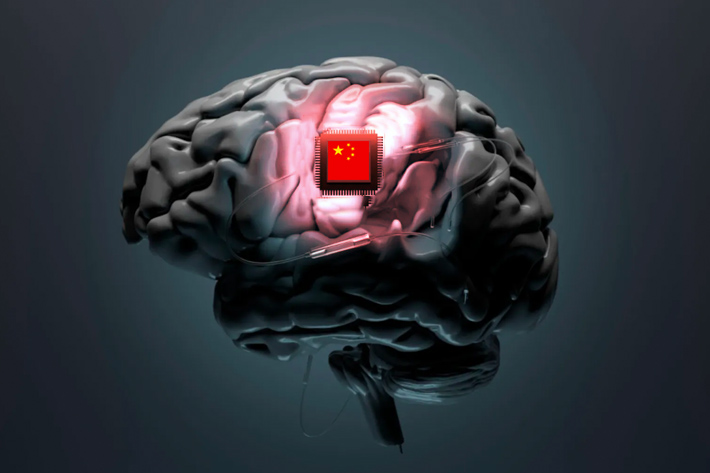
China has approved the world’s first brain-computer chip cleared for commercial sale.
Getting into it: China’s National Medical Products Administration greenlit NEO, described as the first invasive brain-computer interface to complete clinical trials and win approval to go to market, beating Elon Musk’s Neuralink to the milestone. The coin-sized implant, developed by Shanghai-based Neuracle Technology, was cleared for paralyzed patients between the ages of 18 and 60 with cervical spinal cord injuries and is set to enter mass production for China’s state-run health system.

Rather than penetrating brain tissue, the device sits between the skull and the brain, pressing eight sensors against the dura mater (the brain’s protective outer membrane) and converting brainwaves into commands that operate external hardware such as a robotic glove. The implant was tested in 36 patients, reportedly with success, and one participant was able to write his name again.
Notably, Musk’s company has been running human trials of its N1 implant since 2024 in nine patients, but that device threads electrodes directly into the cerebral cortex and has yet to clear US regulators for a wider commercial rollout. Researchers credit NEO’s less invasive design for its faster path, since keeping the sensors out of brain tissue reduces the risk of bleeding, scarring and immune rejection.
This type of technology could eventually help more than 3 billion people worldwide living with neurological conditions, from paralysis and epilepsy to Parkinson’s and stroke, and one investment firm projects the sector growing from roughly $500 million now to almost $2 billion by 2035.
This all comes as cybersecurity experts warn that this technology carries steep privacy and safety risks. In an interview with the New York Post, Dr. David Tuffley warned that brain implants could theoretically let hackers “access sensitive neural data, such as patients’ thoughts and memories,” and even disrupt a patient’s concentration or movement.