Already a subscriber? Make sure to log into your account before viewing this content. You can access your account by hitting the “login” button on the top right corner. Still unable to see the content after signing in? Make sure your card on file is up-to-date.
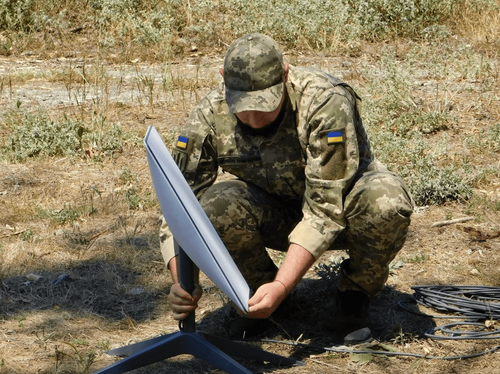
Ukrainian President Volodymyr Zelensky says Ukraine’s Starlink and Starshield service has been restored to full speed after more than a week of restrictions, just hours before Elon Musk admitted SpaceX throttled it, claiming the Ukrainian military violated its terms of service.
Getting into it: Zelensky said Saturday that speeds were back to where they were before the restrictions, which capped service at about 100 mph and cut off fast-moving drones mid-flight, sending them crashing down. Ukraine’s Defense Ministry said connections were stable again at more than 400 km/h (about 250 mph), crediting talks with Washington. Musk then posted on X that the Ukrainian military “used it for offensive drone strikes to kill people,” and that SpaceX had closed that “loophole” last week, while adding that Starshield is controlled by the US government.
Musk had previously blamed the US military and Trump for the slowdown, and Trump had denied any involvement, though Reuters reported Friday that the White House gave the order to throttle Starshield. Ukrainian officials say Musk’s claim doesn’t add up, with presidential adviser Serhii Beskrestnov saying commercial Starlink terminals in Ukraine have been capped at 70 to 90 km/h (about 43 to 56 mph) for months and don’t work inside Russia, making it “PHYSICALLY IMPOSSIBLE” to use them for deep strikes. Musk hasn’t explained why Ukraine wasn’t warned before the restrictions.

The slowdown has European lawmakers pushing the EU to get Ukraine off its dependence on Musk. They’re calling on the European Commission to fast-track Ukraine’s access to Govsatcom, the bloc’s secure government satellite program, after talks that began in March have yet to produce a deal. The Commission says it’s “currently in talks with Ukraine to fully associate” the country with the program.
Lawmakers are also urging the EU to speed up IRIS², its planned Starlink rival, which isn’t expected to launch its first satellites until 2029. Ukraine, meanwhile, has signed deals with Norway and Finnish companies Nokia and ICEYE to develop its own alternatives, with Zelensky saying “we must all rely on capabilities that we can control.”
This all comes as there’s still no quick replacement for Starlink, with SpaceX operating around 11,000 satellites and analysts estimating a European alternative is at least two to three years away.
Related posts:
 Updates From Middle East
 Russia & Iran Accuse Elon Musk’s Starlink of Violating International Law Over Unauthorized Operations Inside Their Borders
 Report: Elon Musk Personally Ordered Starlink Slowdown That Crippled Ukraine’s Drones
 Lawmakers Request Answers From SpaceX, Over Claims of Starlink Use By Russian Troops in Ukraine