Already a subscriber? Make sure to log into your account before viewing this content. You can access your account by hitting the “login” button on the top right corner. Still unable to see the content after signing in? Make sure your card on file is up-to-date.
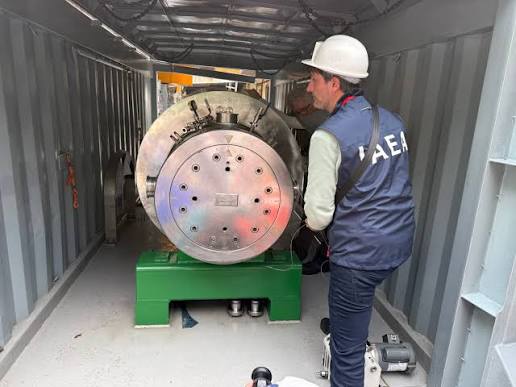
IAEA inspectors verified several tons of uranium metal at a previously undeclared site near Damascus, material left behind by Bashar al-Assad’s covert nuclear program and reported to the agency by Syria’s new government last month.
Some shit you should know before you dig in: Syria spent the early 2000s putting up a secret reactor at Al-Kibar in Deir ez-Zur with North Korean help, a gas-cooled, graphite-moderated build that closely tracked Pyongyang’s own reactor at Yongbyon. Israel destroyed it with airstrikes on Sept. 6, 2007, in an operation it would not acknowledge for another 11 years. For years the US accused Syria of building a covert reactor, laying out its case publicly in 2008, and the IAEA concluded in 2011 that the bombed site very likely held one. Assad’s government bulldozed the location and never answered the agency’s questions. Inspectors took samples at three locations in 2024 and reported finding uranium particles. Assad denied any weapons work until the day his government fell in late 2024, and Ahmed al-Sharaa pledged cooperation with the IAEA almost immediately after taking over.

What’s going on now: IAEA chief Rafael Grossi and a team of inspectors went into Syria Tuesday and visited two sites, the Deir ez-Zur reactor location and the newly declared one holding the material. Foreign Minister Asaad al-Shaibani explained how the agency found out. “On July 17, we sent an official letter to the agency, in which we declared of our own free will the presence of nuclear materials at an undeclared site within the legacy left by the former regime,” he said.
Grossi called the disclosure a courageous decision and did not soften what was sitting there. “We are talking about a few tons of nuclear material that could be put to bad use,” he said, adding that it will be accounted for and brought under the international safeguards system, with Syrian and IAEA experts working together on safe storage. “We are starting to turn a page, and turning a page does not mean forgetting the past,” he said. The IAEA and the Syrian government said in a joint statement that the visit marked the biggest step the two sides have taken together.
Uranium metal can fuel a reactor or serve as a core component of a warhead. Al-Shaibani said technical assessments show the material poses no danger, that it will remain in Syrian custody under agency safeguards, and that Syria has a sovereign and legal right to a peaceful nuclear energy program.
Grossi also walked the Deir ez-Zur site, closed for 18 years, where excavation is underway. He said the work validates what the agency has argued for years: a nuclear facility was being built there in secret. Big questions remain. Nobody outside Syria knows how much of the fuel-making chain Assad built at home, or how close his scientists came to separating plutonium and shaping it into a form a warhead could use.
Related posts:
 Updates From Middle East
 Top Iranian Official Says Iran May Be Willing to Resume Cooperation With the IAEA Only Under Certain Conditions
 IAEA Report Claims No Major Shift in Iran’s Nuclear Program, Warns it Can’t Track Their Uranium Stockpile
 IAEA Warns North Korea Is Building More Nuclear Weapons Faster