Already a subscriber? Make sure to log into your account before viewing this content. You can access your account by hitting the “login” button on the top right corner. Still unable to see the content after signing in? Make sure your card on file is up-to-date.
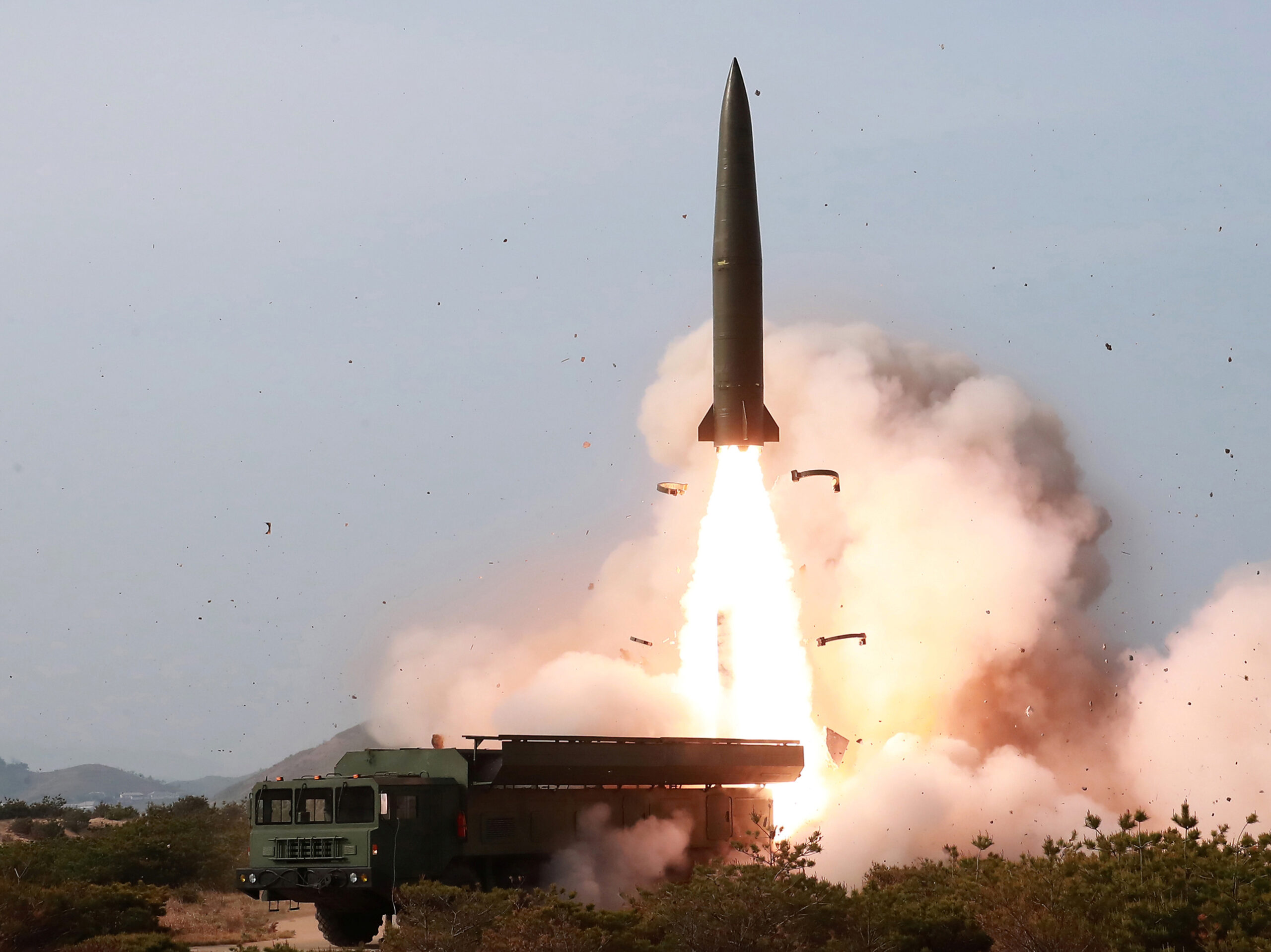
On Wednesday, North Korea launched a ballistic missile into the waters on its eastern side. This marks their second launch within the past week.
Getting into it: According to South Korea’s Joint Chiefs of Staff, the missile departed from the Wonsan region approximately at 6 a.m. local time and traveled roughly 435 miles above the water body that South Korea refers to as the East Sea and Japan designates as the Sea of Japan. South Korean and US officials are still analyzing its technical details. Japan’s Defense Ministry characterized the object as a suspected ballistic missile that had “already landed,” and provided no additional information. This marks the 11th such launch recorded by Seoul this year.

Hours following the launch, Seoul’s National Security Office convened an urgent session, referring to the recent trials as “provocative actions” that violate United Nations Security Council resolutions and calling on North Korea to cease such activities. Japanese Defense Minister Shinjiro Koizumi described the launch as “a danger to regional peace and stability” and announced that Tokyo had “issued a firm protest” to the North Korean government through their respective diplomatic missions in Beijing.
US Pacific Command acknowledged the launch and is coordinating closely with allied nations and partner states. According to its current evaluations, there was no indication of a direct risk to US citizens, land, or allied forces.
The timing is notable as it occurs during the period leading up to Ulchi Freedom Shield, the annual exercise conducted by the United States and South Korea that begins on Monday and lasts for 11 days. This year’s exercise involves 18,000 South Korean soldiers participating alongside 28,500 US military personnel stationed in the region. Pyongyang has characterized these drills as a rehearsal for invasion for many years and typically responds with missile tests and stern declarations.
Prior to the joint drills, North Korea increased its hostile comments toward Japan, criticizing Tokyo’s military expansion on at least seven occasions since July. Japan has responded by increasing its defense spending, establishing new security agreements, and deploying missile systems on its remote islands. Koizumi stated last week that the nation needs to strengthen its military with a sense of urgency and danger.
Related posts:
 US & South Korea Hold Large-Scale Military Drills, North Korea Pissed
 US Energy Department Labels South Korea ‘Sensitive’ as South Korean Lawmakers Push for Nuclear Deterrence Against North Korea
 South Korean Military Parade Unveils New Ballistic Missile Launcher
 South Korea & the US Set to Begin Annual Joint Military Drills