Already a subscriber? Make sure to log into your account before viewing this content. You can access your account by hitting the “login” button on the top right corner. Still unable to see the content after signing in? Make sure your card on file is up-to-date.
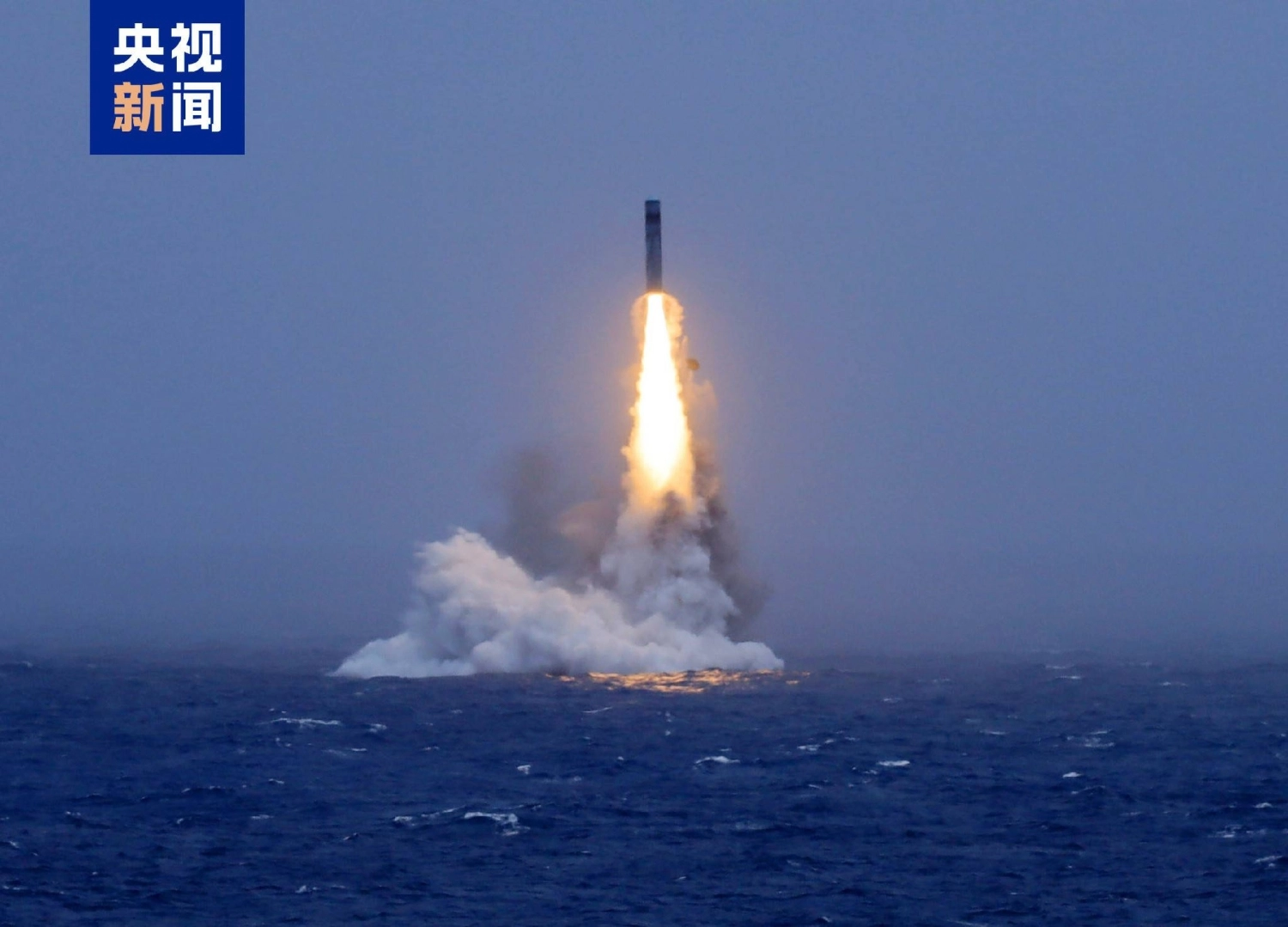
The United States has joined Australia, Japan, and New Zealand in condemning China’s test-firing of a nuclear-capable ballistic missile from a submarine into the Pacific on Monday.
Some shit you should know before you dig in: China rarely reports its missile tests and almost always fires them within its own borders, typically into the deserts of its west. Launching one into the Pacific, where its neighbors can see it and complain, is a notable break from that pattern. It follows a September 2024 test when China fired an intercontinental ballistic missile with a dummy warhead into waters near French Polynesia, its first ICBM launch into the open ocean in 44 years. The buildup fits a broader push by leader Xi Jinping to modernize and expand China’s nuclear forces, with the Pentagon expecting Beijing to top 1,000 warheads by 2030.

What’s going on now: The US State Department has released a statement saying it monitored the launch of the nuclear-capable but unarmed missile and called Beijing’s “rapid and opaque nuclear weapons buildup” a great concern to the region and the world, urging China to engage in meaningful arms control talks and commit to a regular notification arrangement for its missile and space launches.
The People’s Liberation Army Navy said a Type 094 Jin-class submarine launched the missile carrying a dummy warhead at 12:01 p.m. Monday, and that it landed precisely in a designated area of the Pacific.
Senior Capt. Wang Xuemeng, a navy spokesman, said the launch was a “routine part of China’s annual military training schedule.” He added that it was in line with international law and “targeting no specific country or objective.”
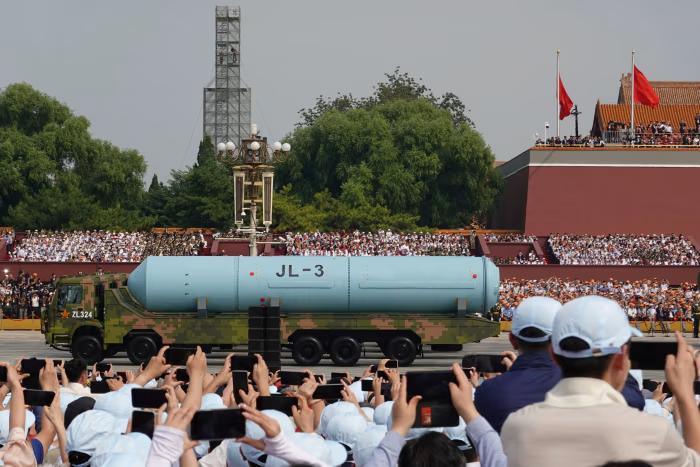
China didn’t say what type of missile it fired, but analysts pegged it as likely a JL-3, a newer submarine-launched missile with enough range to reach the continental US from waters off China’s coast. A regional source said the missile flew over the exclusive economic zones of the Federated States of Micronesia, Nauru, Kiribati, and Tuvalu before landing near the Kiribati-Tuvalu EEZ border.
Australian Foreign Minister Penny Wong, speaking in Fiji, called the test “destabilizing to the region” and tied it to a “rapid military build-up by China, which is lacking in the transparency and reassurance as to intent that the region expects.”
New Zealand Foreign Minister Winston Peters called the test “unwelcome and concerning development.” He added, “We, like our neighbors in other Pacific countries, have no interest in China using the South Pacific as a testing site for missile capability.”

Japan condemned the launch too, raising “serious concern” over China’s intensifying military activities and urged Beijing to reconsider its actions.
Taiwan, which Beijing has vowed to bring under its control, also criticized the launch, with a presidential spokesperson saying it caused “unease” and highlighted China’s “increasingly obvious ambitions for expansion in the Western Pacific.”
The launch came just as Australia and Fiji announced a mutual defense treaty, one of several security pacts Canberra has been locking in with Pacific Island nations, moves broadly read as an effort to blunt China’s expanding influence, and on the eve of a NATO summit in Ankara where China’s military ambitions are on the agenda.
Despite this, China’s foreign ministry urged calm, with spokesperson Mao Ning saying, “We hope relevant countries will not read too much into it.”
Related posts:
 Updates From Middle East
 Top US Official Discloses More Information Supporting Claim That China Secretly Conducted Nuclear Test in 2020
 Top US Official Accuses China of Rapidly Expanding Nuclear Arsenal, Comes After Claims China Tested a Nuclear Weapon
 Annual US Threat Assessment Again Identifies China as Largest Threat to US National Security, Warns of Growing Military Power