Already a subscriber? Make sure to log into your account before viewing this content. You can access your account by hitting the “login” button on the top right corner. Still unable to see the content after signing in? Make sure your card on file is up-to-date.
Eight protesters the government says are tied to antifa have been sentenced to decades in prison over a shooting that wounded a police officer outside a Texas immigration detention center.
Getting into it: Benjamin Song, a former Marine reservist convicted of attempted murder, received the maximum 100 years on Tuesday for opening fire during a July 4 demonstration outside the Prairieland Detention Center near Dallas. The seven others were sentenced to between 30 and 70 years on charges including rioting, providing material support to terrorists, and conspiracy involving explosives, with all but one convicted on terrorism counts.

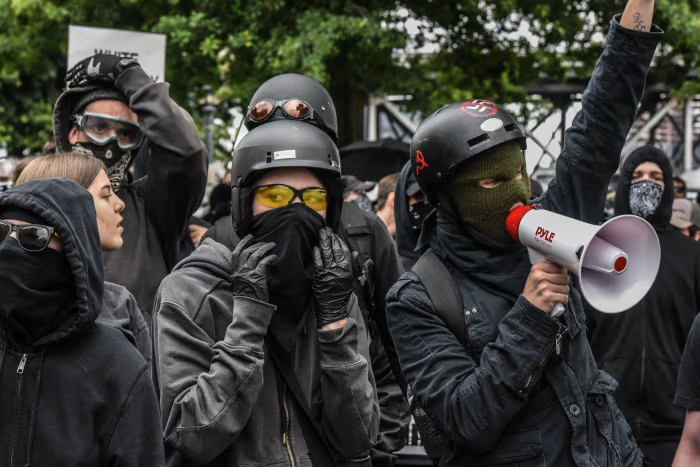
Prosecutors called the gathering an act of terrorism, saying the group arrived dressed in black, vandalized the property and set off fireworks before Song yelled “Get to the rifles!” and shot Lieutenant Thomas Gross through the shoulder. They argued the firearms, body armor and radios signaled nefarious intent and “antifa tactics.”
Defense lawyers pushed back hard, denying any antifa affiliation and calling the case politically motivated. They said the protesters planned a peaceful late-night “noise demonstration” to support detained illegal immigrants, that those who were armed had legal guns, and that Song believed the officer was about to shoot a protester.
US District Judge Reed O’Connor said the night was not a protest but “an assault on democracy.” Song’s lawyer rejected this, calling the defendants “a bunch of kids and young adults who really have a really big heart,” and said he will appeal.
Notably, five of the government’s own cooperating witnesses denied under oath that they or others considered themselves antifa.
This all comes as the case stems from Trump’s executive order last fall designating antifa a “domestic terrorist organization,” a label that does not exist under US law, and a directive expanding the definition of domestic terrorism to include beliefs like “anticapitalism.”