Already a subscriber? Make sure to log into your account before viewing this content. You can access your account by hitting the “login” button on the top right corner. Still unable to see the content after signing in? Make sure your card on file is up-to-date.
A French appeals court on Thursday found Airbus and Air France guilty of involuntary manslaughter over the 2009 crash of Flight AF447, which killed all 228 people on board in the worst aviation disaster in France’s history.
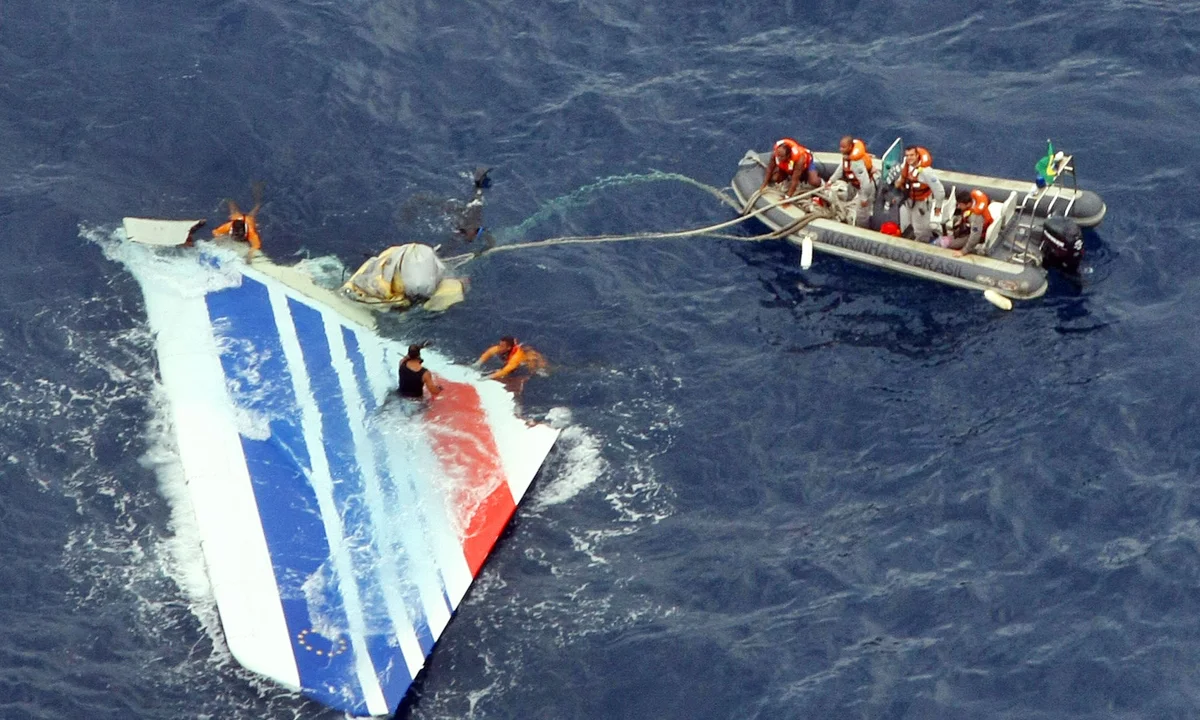
Some shit you should know before you dig in: Back in 2009, Air France Flight AF447 took off from Rio de Janeiro bound for Paris with 216 passengers and 12 crew aboard an Airbus A330, then flew into an overnight thunderstorm over the mid-Atlantic hours after departure. Ice crystals blocked the plane’s pitot tubes (the sensors that measure airspeed), which caused faulty readings, set off cockpit alarms, and disconnected the autopilot. A 2012 investigation found that the confused pilots responded to the resulting stall by pointing the plane’s nose up rather than down, the opposite of the correct maneuver, sending the jet plummeting into the ocean from 38,000 feet. Investigators concluded that “the crew never understood they were in a stall situation, and therefore never undertook any recovery maneuvers.” The plane vanished from radar more than 700 miles off the coast of South America, and its black boxes weren’t recovered until 2011, after a deep-sea search turned them up at a depth of more than 10,000 feet. The victims came from 33 different nations, mainly French, Brazilian, and German citizens.

What’s going on now: The Paris Court of Appeal ruled that the aircraft manufacturer and Air France were “solely and entirely responsible” for the crash, ordering each to pay $261,000 (the maximum fine allowed) for corporate manslaughter. The ruling wipes out a 2023 acquittal that a lower court had handed both companies. While the companies had long maintained the disaster came down to pilot error, the court held Airbus responsible for downplaying how dangerous the sensor problems were and for keeping airlines in the dark, and blamed Air France for never preparing its pilots to handle the icing scenario.
One admission proved especially damning, as Air France lawyer Pascal Weil acknowledged in court that the company “had the means to conduct high-altitude training, but we did not do so because we sincerely believed it was unnecessary.”
Both companies, which have repeatedly denied any criminal liability, immediately announced they would appeal to France’s highest court. Airbus said the decision clashed with what prosecutors had argued and with how the case had been ruled before, while Air France noted that its criminal liability “had previously been ruled out twice” and extended its “deepest sympathy” to the victims’ loved ones.
Related posts:
 Updates From Middle East
 A Deep Dive: Influencers and “Independent” Journalists on Both Sides Being Paid to Advance Political Talking Points
 France Criticizes US After Rubio Says Their Move to Recognize Palestine Could Collapse Ceasefire Talks
 Trump Calls for French Opposition Leader to Be Freed After Embezzlement Conviction