Already a subscriber? Make sure to log into your account before viewing this content. You can access your account by hitting the “login” button on the top right corner. Still unable to see the content after signing in? Make sure your card on file is up-to-date.
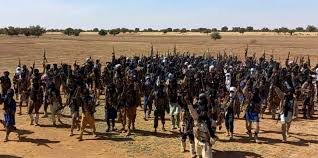
An Al-Qaeda-linked group has attacked a high-security prison in Mali while continuing to blockade the country’s capital, Bamako.
Some shit you should know before you dig in: If you’re unaware, Mali is a landlocked West African country that has been run by a military junta led by Assimi Goita since a 2020 coup. The country has been dealing with a long-running insurgency from two main groups: Jama’at Nusrat al-Islam wal-Muslimin (JNIM), an Al-Qaeda affiliate, and the Azawad Liberation Front (FLA), a Tuareg-dominated separatist group. Shit really hit the fan last month when both groups launched a coordinated wave of attacks across multiple cities. This resulted in the capture of the strategic northern city of Kidal and the assassination of the country’s defense minister (who was killed after a bomb targeted his home). JNIM has since imposed a full blockade on Bamako (a city of more than 3 million people).

What’s going on now: The attack, which targeted the Kenieroba Central Prison about 40 miles from Bamako, was carried out by JNIM fighters Wednesday and is currently being repelled by Malian armed forces. The recently built complex (which has been nicknamed “Africa’s Alcatraz”) currently holds 2,500 prisoners total — at least 72 of whom Mali tags as “high value” (with many of the prisoners being JNIM fighters and people arrested following the April attacks).
JNIM and FLA forces have also continued tightening the noose around Bamako, with fighters shutting down half of the city’s six main entry roads for hours on end before pulling back to hit somewhere else.
The blockade is creating a humanitarian crisis. The town of Ségou, less than 50 miles from the capital, has been completely blockaded. This has trapped hundreds of buses, trucks, and other vehicles outside the town. Diafarabe village’s mayor (in the Mopti region) put out a public plea Saturday begging the government to step in (the village is out of food and he warned people will start starving if nothing changes). One mother stranded on the Bamako-Kéniéba highway with her two kids told the BBC, “Our army isn’t capable of protecting us, how are we going to get back home?” A truck driver added, “I’ve never seen something like this before. I’ve been doing this job for so many years. I’m stuck here and it sounds dangerous. I would rather run away to save my life than fight for the goods I have to deliver.”
The junta’s response has drawn its own controversy. On May 1, Mali’s military prosecutor announced it had “solid evidence” that some soldiers helped organize and pull off the attacks. The government has since arrested or “abducted” multiple opposition figures, military officers, lawyers, civil society members, and other political opponents.
Mali’s foreign minister has separately told Reuters that neighboring states and foreign powers are supporting the terrorist groups, but declined to name the countries.
Related posts:
 Updates From Middle East
 Terrorists Launch Coordinated Attacks Across Mali, Strike Capital & Four Cities
 Mali’s Military Leader Emerges After Three Days of Silence Following Coordinated Attacks
 A Deep Dive: Influencers and “Independent” Journalists on Both Sides Being Paid to Advance Political Talking Points