Already a subscriber? Make sure to log into your account before viewing this content. You can access your account by hitting the “login” button on the top right corner. Still unable to see the content after signing in? Make sure your card on file is up-to-date.
The US and Indonesia have officially created a Major Defense Cooperation Partnership that will deepen military relations between both countries.
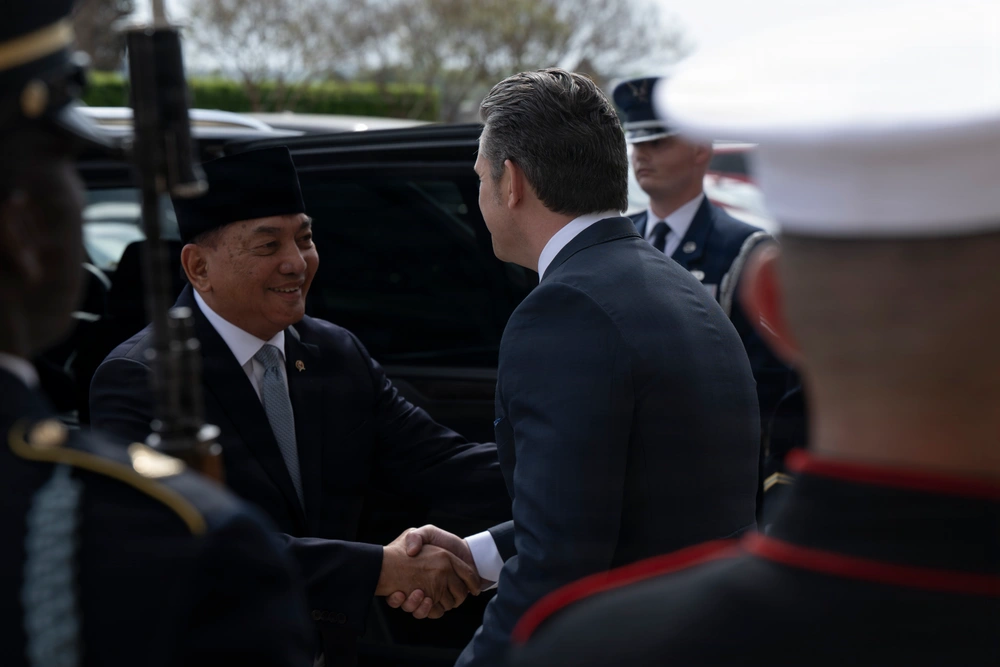
Getting into it: Both countries’ defense chiefs met at the Pentagon on April 13, where Indonesian Defense Minister Sjafrie Sjamsoeddin formally signed the agreement alongside Secretary Pete Hegseth. The partnership is organized around three priorities: building up each side’s military capabilities, deepening training and education exchanges, and expanding joint exercises and field-level cooperation. Both sides also committed to jointly developing advanced next-generation technology across undersea, unmanned, and maritime domains.

The signing landed one day after Indonesian media reported that the US was seeking blanket overflight access for US military aircraft (replacing the country’s current case-by-case approval system). This created somewhat of a media frenzy within Indonesia, resulting in a defense ministry spokesman saying that overflight discussions are still an internal preliminary draft with no legal standing. They added, “The deal is not final. It is not legally binding. It cannot be used as a basis for official government policy. Authority, control, and oversight over Indonesian airspace rest entirely in our country.”
Why US overflight access would be a big deal: The Strait of Malacca (which runs between Indonesia’s Sumatra and the Malay Peninsula) is one of the most critical chokepoints on the planet, with roughly 80% of China’s oil imports passing through it. Indonesia sits between the Philippines and northern Australia, where the US already has rotational military access, meaning Indonesian overflight rights would close the gap and give the US a continuous aerial corridor from Australia through Indonesia and straight into the South China Sea. US aircraft could patrol the strait at will, and in a conflict scenario, the US could theoretically threaten to cut off China’s oil supply at that chokepoint.
In addition to this, China’s main southern naval base on Hainan Island sits roughly 1,000 miles away, well within range, and China already considers the South China Sea its own territory.
In a statement, Secretary Hegseth said, “This partnership signifies the strength and potential of our security relationship — bolsters regional deterrence, and advances our shared commitment to peace through strength.”
Defense Minister Sjafrie said, “We are here as Indonesian delegates with very great enthusiasm to continue to develop our defence relationship, which should be enduring for our next generation in Indonesia and the United States of America.”
There’s been no comment from China.