Already a subscriber? Make sure to log into your account before viewing this content. You can access your account by hitting the “login” button on the top right corner. Still unable to see the content after signing in? Make sure your card on file is up-to-date.
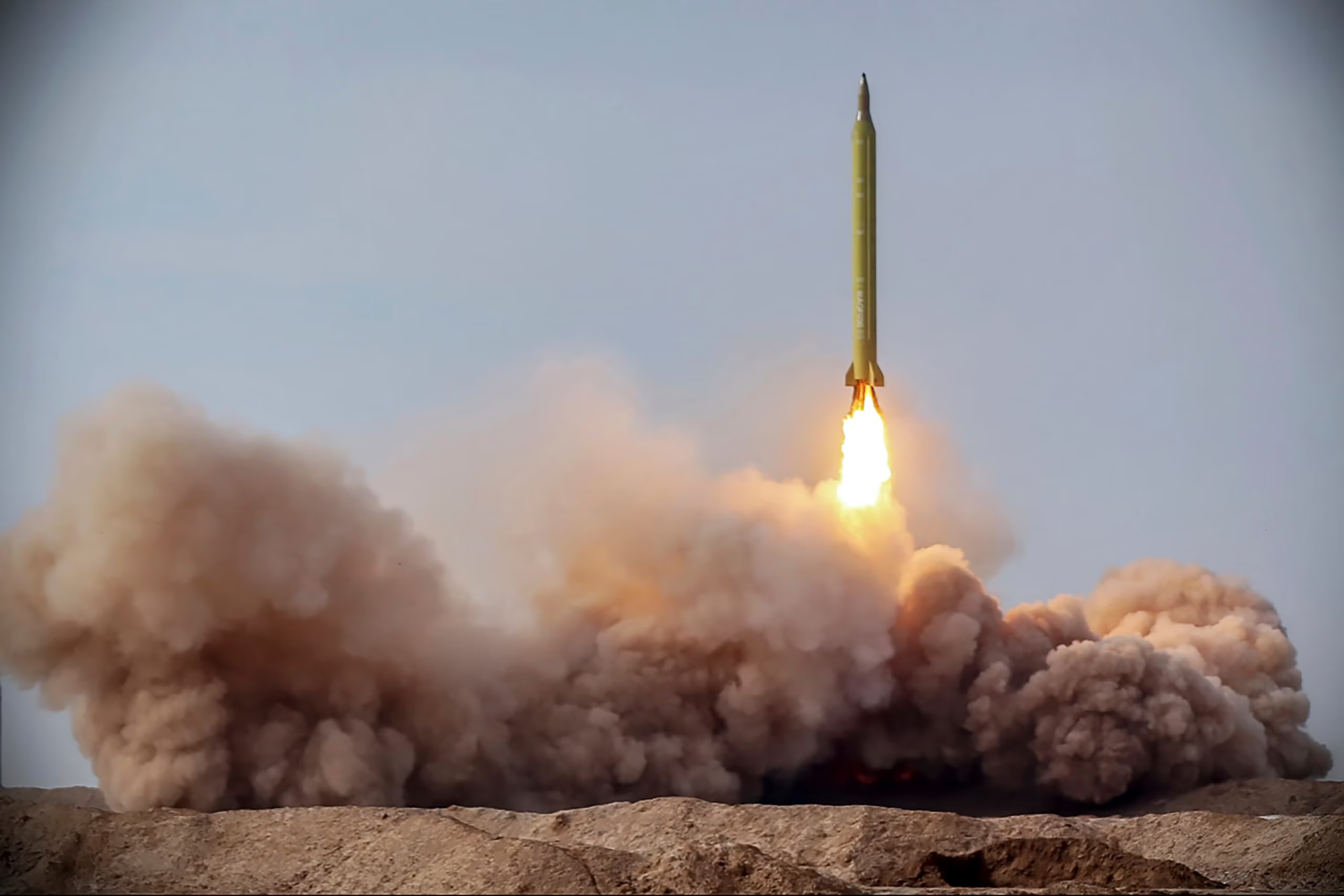
Iran has cleared 50 of 69 buried tunnel entrances across 18 underground missile facilities since the April ceasefire, according to satellite imagery reviewed by CNN.
Some shit you should know before you dig in: When the US and Israel kicked off their bombing campaign during the war, one of the main targets was Iran’s missile force, specifically the deeply buried underground bases where Tehran stores its launchers and missiles. Because Iran spent more than 20 years building that network (some of it tucked under 300 feet of rock), the facilities themselves were nearly impossible to destroy outright, so the two militaries instead pounded the tunnel entrances and the access roads leading to them, trying to bury the openings under rubble and trap the launchers inside. Some sites were hit with enough munitions to leave more than a dozen craters at a single pair of entrances. On top of that, the US and Israel went after Iran’s entire missile supply chain, striking the plants that produce everything from the guidance electronics packed inside the weapons to their fuel and the missiles themselves. The goal was to both seal off the existing arsenal and wreck Iran’s ability to build more, and for a while it worked, sharply cutting how many missiles Iran could get off.

What’s going on now: New images reviewed by CNN and other outlets show Iran has steadily undone that damage using nothing more sophisticated than bulldozers, dump trucks, and front-end loaders to fill in craters and reopen tunnels, even repaving bombed-out roads at some sites. During the war, clearing these roads was almost a guaranteed death sentence as the US and Israel would routinely hit the crews attempting to clear them. Despite this, the effort accelerated once the ceasefire took hold more than seven weeks ago. With most of those entrances reopened, Iran is once again able to send long-range missiles toward Israel and other targets around the region.
Analysts believe that Iran is still sitting on roughly 1,000 missiles buried deep underground, a stockpile largely untouched by the surface-level strikes. As long as Iran has launchers and crews, those missiles can be fired even if production has stopped. In addition to this, internal US military assessments that have been leaked to the media show that Iran has held on to about 70% of its mobile launcher fleet and that 90% of its underground sites are back up and running in at least some capacity.

US intelligence indicates Iran has also been rebuilding faster than anyone anticipated, firing its drone production back up and bringing in replacement launchers, with help from Russia and China. “The Iranians have exceeded all timelines the (intelligence community) had for reconstitution,” one US official told CNN. That undercuts a central justification for the war, since Trump repeatedly cited destroying Iran’s missile arsenal as a key objective, and Defense Secretary Pete Hegseth declared after the ceasefire that Iran would be left “digging out your remaining launchers and missiles, with no ability to replace them.”
This all comes as the two sides remain stuck in fraught negotiations, with Trump having sent back a toughened framework and Iran’s chief negotiator Mohammad Bagher Ghalibaf insisting Tehran will “not approve any agreement until we are certain that the rights of the Iranian people have been upheld.” As of this morning, Iran has announced it will not continue negotiations with the US due to ongoing Israeli strikes in Lebanon.
Related posts:
 Updates From Middle East
 Top Iranian Official Claims Country’s Drone & Missile Capabilities Are in Good Shape Following Israeli Strikes
 Iran Rules out Talks with US Until Trump Drops “Maximum Pressure” Campaign
 A Deep Dive: Influencers and “Independent” Journalists on Both Sides Being Paid to Advance Political Talking Points