Already a subscriber? Make sure to log into your account before viewing this content. You can access your account by hitting the “login” button on the top right corner. Still unable to see the content after signing in? Make sure your card on file is up-to-date.
South Korea has taken a fleeing Chinese dissident into custody after he survived more than 30 hours at sea in a small inflatable boat.
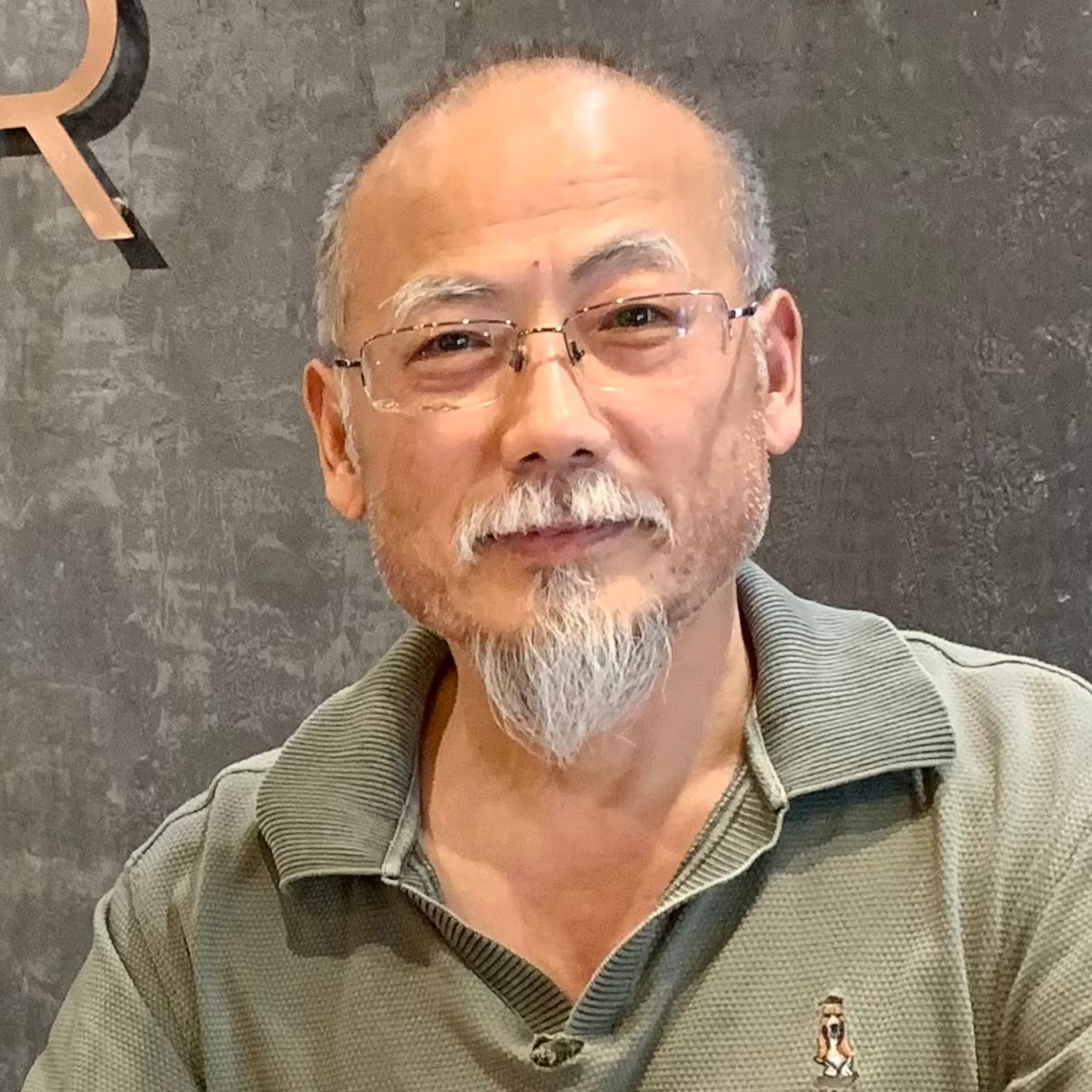
Getting into it: Dong Guangping, a 68-year-old former police officer and human rights activist, was found last week about 38 nautical miles off South Korea’s western coast near Taean after a fishing crew alerted authorities. The coast guard took him into custody on suspicion of violating immigration law. He had crossed the Yellow Sea from a coastal city in China’s Shandong province in a roughly 11-foot inflatable boat with a small motor, a journey of more than 186 miles. According to Chinese Canadian activist Sheng Xue, who spoke with him afterward, Dong was “almost unconscious” by the time he reached Korean waters, having gone more than 50 hours without sleep. She called him “too tenacious, too brave,” saying she had warned him the voyage was far too dangerous, “but he actually went through with it.”

Dong has a long history of persecution over his activism, much of it tied to the 1989 Tiananmen Square crackdown. He lost his police post in 1999 after endorsing a petition honoring the massacre, was imprisoned from 2001 to 2004 for “inciting subversion of state power,” and was jailed again in 2014 for attending a Tiananmen memorial.
The crossing marked his fourth known bid to get out of China. In 2015, he fled to Thailand with his family and was granted UN refugee status and approval to resettle in Canada, but Thai authorities deported him back to China just before he could leave. He later tried to swim to a Taiwanese island in 2019 but was intercepted, then fled to Vietnam in 2020 before being deported home again.
His fate now hangs in limbo. A South Korean court on Thursday declined to issue a formal arrest warrant, finding insufficient grounds, though the coast guard said it would hand him to immigration authorities while continuing to investigate. Dong told reporters he hopes to travel through South Korea to Canada, where his wife and daughters have resettled, but his odds are uncertain given that the country’s refugee acceptance rate has hovered below 2% in recent years.
Rights groups have pleaded with Seoul not to send him back. Human Rights in China urged South Korea to “uphold humanitarian principles” and allow Dong to seek asylum or safe passage to Canada, warning he “faces a grave risk of persecution and torture” if returned.
When asked about the case, Chinese Foreign Ministry spokesperson Mao Ning said she was “not familiar” with it.