Already a subscriber? Make sure to log into your account before viewing this content. You can access your account by hitting the “login” button on the top right corner. Still unable to see the content after signing in? Make sure your card on file is up-to-date.
A separatist movement in Canada’s oil-rich province of Alberta has submitted enough signatures to force an independence referendum that could be voted on as soon as October.
Some shit you should know before you dig in; If you’re unaware, Alberta is a western Canadian province of about 5 million people that produces most of the country’s oil and gas. The push for Alberta to separate from Canada has been around for decades and is rooted in something called “western alienation,” a long-running feeling among many Albertans that the federal government in Ottawa ignores the province’s interests despite Alberta’s outsized contribution to the national economy. The movement has been pushed harder this past year after the Liberal Party led by Prime Minister Mark Carney won Canada’s federal election, with Albertans frustrated about blocked pipelines, canceled oil and gas projects, and federal environmental regulations they say are choking their economy. Alberta Premier Danielle Smith, who leads the United Conservative Party, has said publicly that she doesn’t personally support independence but that her government will respect a citizen-led referendum if enough signatures are collected. Last year, Smith reduced the number of signatures required to trigger a constitutional referendum from 588,000 to about 178,000.

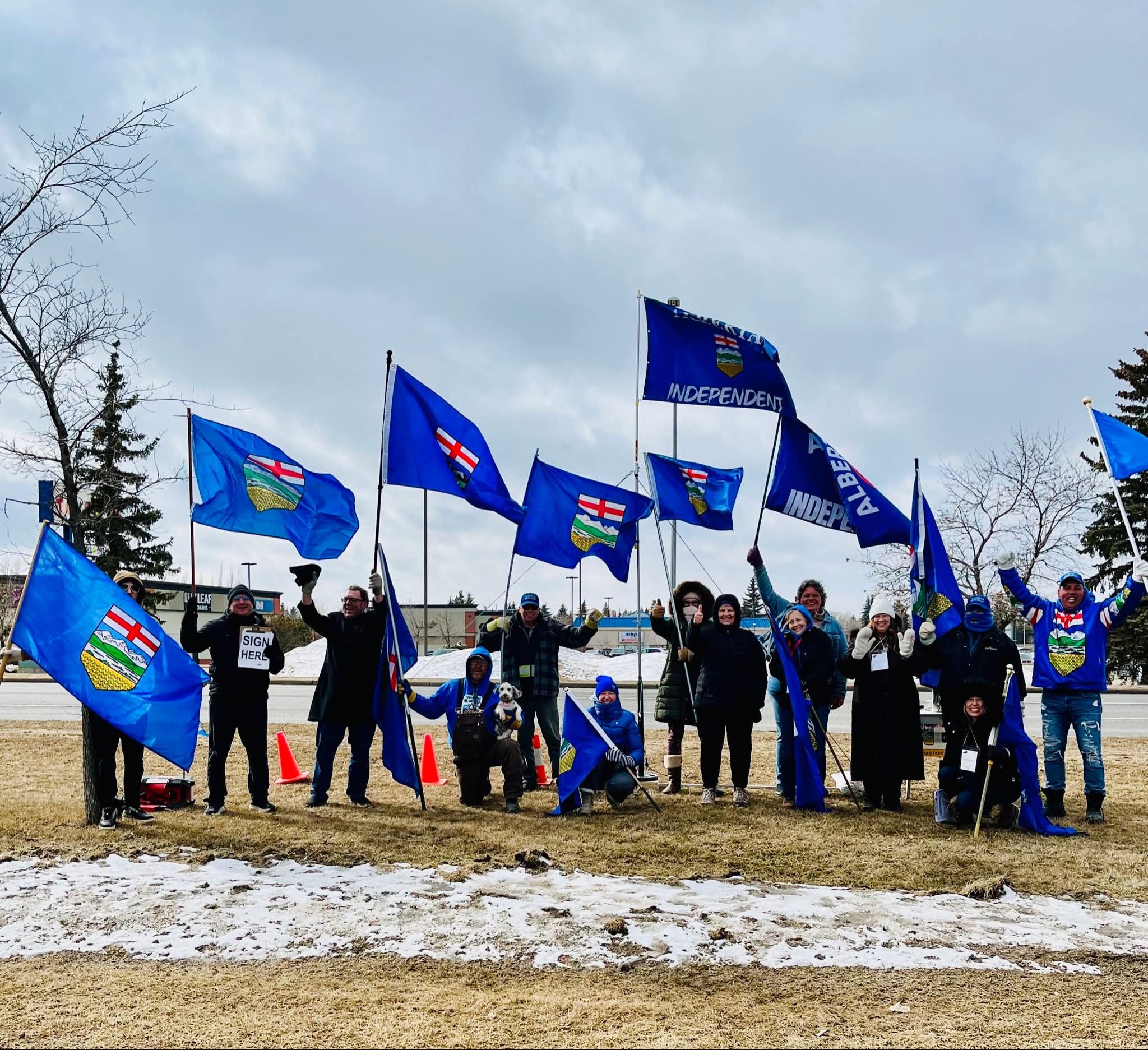
What’s going on now; Stay Free Alberta delivered nearly 302,000 signatures to Elections Alberta in Edmonton on Monday in support of putting an independence question on the October ballot. The proposed referendum question reads: “Do you agree that the Province of Alberta should cease to be part of Canada and become an independent state?” The petition still needs to be verified by Elections Alberta, and a vote in favor wouldn’t automatically trigger independence, but it would force complex negotiations with the federal government and almost certainly produce a wave of legal challenges.
Stay Free Alberta leader Mitch Sylvestre delivered the names and said, “This day is historic in Alberta history. It’s the first step to the next step…we’ve gotten by Round 3, and now we’re in the Stanley Cup final.” Sylvestre also told reporters that Alberta is fundamentally different from the rest of Canada and is being unfairly governed by federal Liberals. “We’re not like the rest of Canada. We’re 100% conservative. We’re being ruled by Liberals who don’t think like us. They’re trying to shut down our industry.”
Despite this, polling suggests separatists are still nowhere near a majority though, with surveys putting separatist support between 18% and 30%, and a recent CBC News poll finding only 27% would vote in favor while 67% would vote against. Janet Brown, the pollster who ran the CBC survey, said the movement isn’t actually growing. “The movement’s been around a long time. It’s gotten noisier in recent months, but they don’t seem to be growing their support.”
This all comes as foreign interference from Russia, China, and the US have been a major concern for Canadian officials. A new joint report released this week by DisinfoWatch, the Global Centre for Democratic Resilience, the Canadian Digital Media Research Network, and CASiLabs found that Russian and pro-Trump US actors have both been actively pushing Alberta separatism online to fray Canadian unity and sow distrust in democratic institutions.
On the Russian side, researchers tied a now-defunct website called albertaseparatist.com (along with similarly named TikTok and YouTube accounts) to a Russian covert influence network known as “Storm-1516,” which is associated with the same St. Petersburg-based “troll farm” that meddled in the 2016 US presidential election.
On the US side, Trump administration officials have openly met with Alberta independence leaders in Washington and senior administration figures have publicly backed the secessionist cause.