Already a subscriber? Make sure to log into your account before viewing this content. You can access your account by hitting the “login” button on the top right corner. Still unable to see the content after signing in? Make sure your card on file is up-to-date.
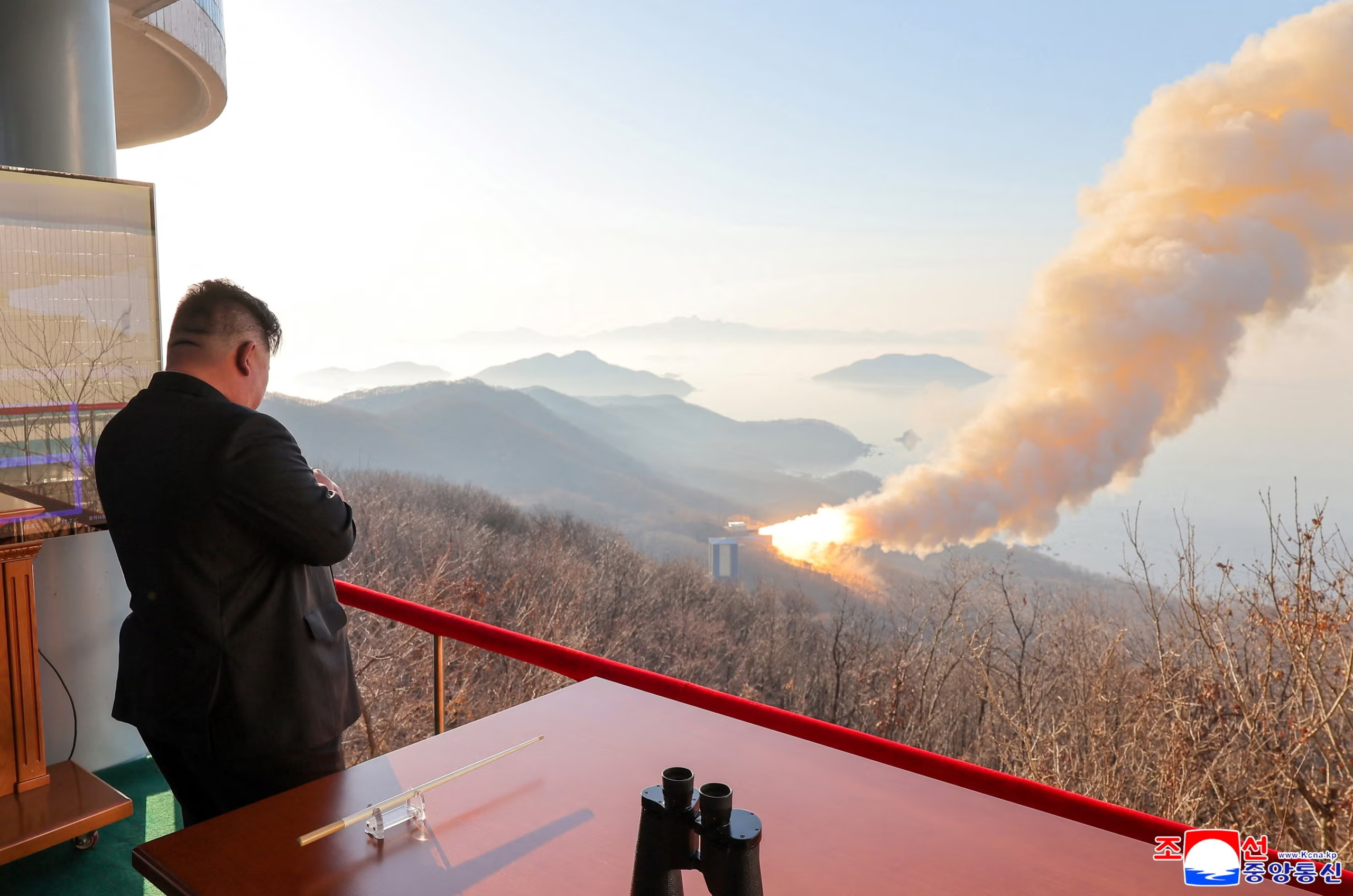
North Korea has conducted a missile engine test aimed at advancing its long-range missile capabilities.
Getting into it: The test, which was overseen by Kim Jong-un, involved a newly upgraded high-thrust solid-fuel engine made with composite carbon fiber materials, which state media (KCNA) said produced a maximum thrust of 2,500 kilonewtons (an increase from a previous test that reached about 1,970 kilonewtons). KCNA described the test as part of a broader five-year national defense plan to steadily upgrade the country’s “strategic strike” capabilities, with Kim calling it a development of “great significance” that marks a new phase in strengthening North Korea’s strategic forces.

The use of solid fuel is notable because it allows missiles to be launched more quickly and with less preparation, making them harder to detect, and the higher thrust suggests the potential for heavier payloads or more advanced intercontinental ballistic missiles.
Despite these claims, some outside experts expressed skepticism, noting that key technical details (such as total burn time) were not disclosed, raising the possibility that North Korea may be exaggerating the engine’s performance. Analysts said that while the increased thrust is meaningful, North Korea still faces hurdles in developing fully reliable long-range systems, particularly in ensuring that warheads can survive atmospheric reentry or in achieving multi-warhead capability.
Separately, KCNA reported that Kim also inspected tests of a new main battle tank, where officials claimed its protection system successfully intercepted anti-tank threats from multiple directions with a “100 percent” success rate. He also visited a special operations training base, observing drills by North Korea’s “elite” units.

There were no immediate official responses from the US or South Korea, though both countries are known to be closely monitoring North Korea’s weapons developments.
Related posts:
 US & South Korea Hold Large-Scale Military Drills, North Korea Pissed
 North Korea Rejects Personal Letter From Trump to Kim Jong Un
 Top State Department Official on North Korea Policy Warns of Closer Ties with Russia Empowering Kim Jong Un to Test New Limits with South Korea
 Top North Korean Official Condemns Joint US-Japan-South Korea Military Drills