Already a subscriber? Make sure to log into your account before viewing this content. You can access your account by hitting the “login” button on the top right corner. Still unable to see the content after signing in? Make sure your card on file is up-to-date.
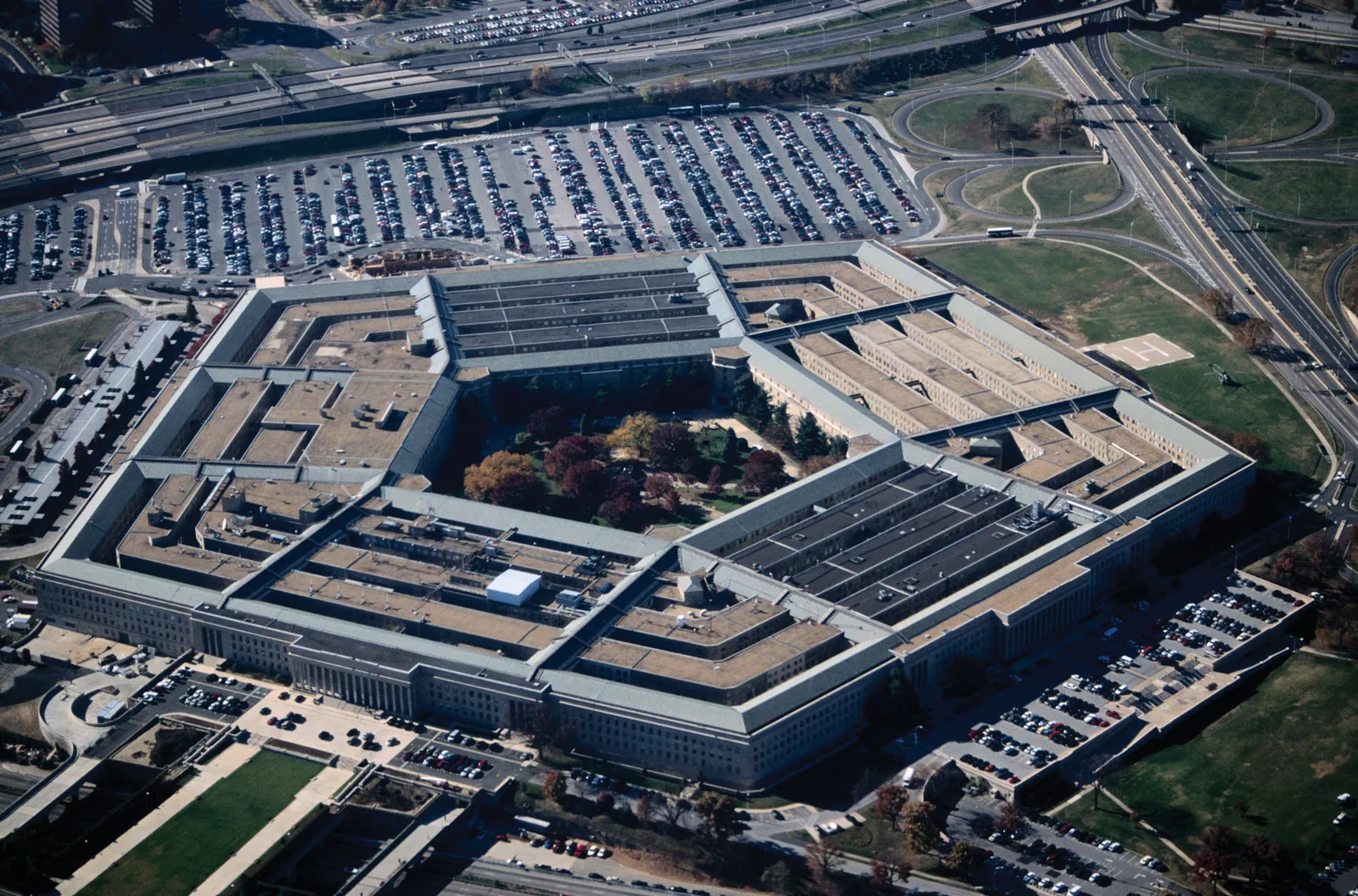
The Pentagon has released its 2026 National Defense Strategy, which shows a significant shift in US military priorities.
Some shit you should know before you dig in: If you’re unaware, the Pentagon releases a National Defense Strategy (NDS) every four years, outlining the Department of Defense’s overarching military priorities, threat assessments, and strategic objectives. Over the past decade, China has been a central focus of these strategies, often described as the primary pacing challenge due to its rapid military expansion, aggressive regional behavior, and strategic ambitions in the Indo-Pacific.

What’s going on now: This year’s NDS centers on the defense of the US homeland and the Western Hemisphere as its primary objective, placing less emphasis on expansive global military commitments. It criticizes previous administrations for prioritizing interventionism and “grandiose” global strategies over the concrete interests of the American public. Instead of attempting to police the world, the Pentagon is now doubling down on protecting US access and influence overkey territories like the Panama Canal, Greenland, and the Gulf of Mexico, while asserting military dominance closer to home.
When it comes to China, the new strategy downplays confrontation in favor of strategic balance. Unlike earlier documents that labeled China as a “revisionist power” and top threat, this strategy emphasizes deterrence through strength, while simultaneously proposing expanded military-to-military communications with Beijing to prevent conflict and promote de-escalation. The document clearly states that the US does not seek to dominate or humiliate China, but instead aims to prevent any nation, including China, from achieving military superiority over the US or its allies. Notably, Taiwan is never mentioned by name, though the strategy reaffirms America’s intent to build a “strong denial defense” along the First Island Chain, which implicitly includes Taiwan.

The strategy also redefines America’s relationships with its allies, calling for substantial burden-sharing and reduced reliance on US forces. South Korea, for example, is described as capable of taking the lead in deterring North Korea, with the US playing a “critical but more limited” support role. In Europe, the document labels Russia a “persistent but manageable” threat and suggests NATO members should take primary responsibility for regional defense.
In the Middle East, the strategy praises Israel as a model ally that can defend itself with minimal US support, and touts recent targeted US strikes in countries like Iran, Yemen, and Venezuela as examples of focused, interest-driven military actions.
The strategy also acknowledges that Iran’s nuclear ambitions remain a concern, even as the US has inflicted substantial damage to its nuclear infrastructure.
This all comes as the President is seeking a $1.5 trillion budget for defense in the upcoming fiscal year, which would be the largest in US history. The proposed budget would significantly expand investments in missile defense systems, cyber warfare capabilities, next-generation fighter jets, and naval shipbuilding, including a surge in submarine production aimed at countering Chinese influence in the Pacific. It also includes funding for enhanced homeland security infrastructure and the development of cutting-edge military technologies like AI-powered battlefield systems and hypersonic weapons.
Related posts:
 Updates From Middle East
 Annual US Threat Assessment Again Identifies China as Largest Threat to US National Security, Warns of Growing Military Power
 Pentagon-Affiliated Think Tank Warns of China’s Growing Presence in Africa, Cites Concerns Over Potential Military Use of 231 Commercial Ports
 Annual US Threat Assessment Says Russia Has ‘Upper Hand’ in Ukraine, Circumvents Sanctions via China & BRICS Nations