Already a subscriber? Make sure to log into your account before viewing this content. You can access your account by hitting the “login” button on the top right corner. Still unable to see the content after signing in? Make sure your card on file is up-to-date.
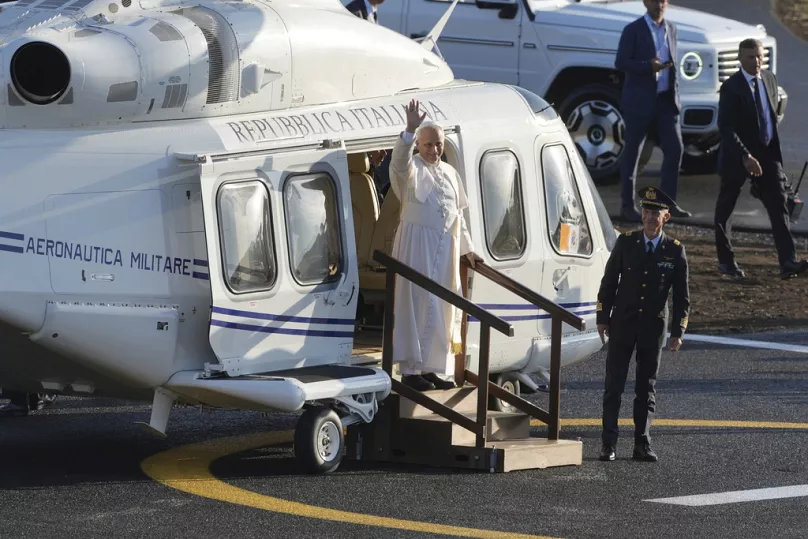
Pope Leo XIV has warned that concerns about the dangers of artificial intelligence should be “taken seriously” and are not “fake news,” putting him at odds with President Trump, who has called AI safety fears a “hoax.”
Getting into it: Speaking to reporters Monday as he flew home to Rome from a four-day visit to France, Leo said he isn’t in “panic mode” over AI but that the world can’t ignore what experts are saying. He added, “I do think that the concerns raised by many of the experts, specialists in AI, should be taken seriously. I don’t think that is fake news, as some have said, to try and cause whether financial or some other kind of benefit.”

He called on political leaders, AI executives and social organizations to come together to look at the risks, and said the Catholic Church will keep pushing for “dialogue, study, investigation” to keep AI from ever becoming a threat to humanity’s survival.
Leo, the first American pope, has made AI a central focus of his papacy, dedicating his first encyclical in May to warning that the technology could weaken people’s ability to think for themselves, widen the gap between rich and poor, cost jobs and make war “more feasible” through autonomous weapons.
The pope’s comments come as Trump has dismissed AI safety concerns as a “HOAX” and a “SICK conspiracy,” though a White House official told Axios that Trump meant Democrats were exploiting AI worries for political gain ahead of the midterms. Trump also recently told a tech summit crowd by phone that anyone fighting AI or new data centers is “playing right into the hands” of China.
Notably, US officials have accused China of funding anti-data-center rhetoric in the United States to slow the country’s progress in AI. Critics, however, say the pushback is real and point to polling showing most Americans oppose data centers.
Related posts:
 Updates From Middle East
 Annual US Threat Assessment Again Identifies China as Largest Threat to US National Security, Warns of Growing Military Power
 Global Leaders React to Assassination Attempt on Trump
 A Deep Dive: Influencers and “Independent” Journalists on Both Sides Being Paid to Advance Political Talking Points