Already a subscriber? Make sure to log into your account before viewing this content. You can access your account by hitting the “login” button on the top right corner. Still unable to see the content after signing in? Make sure your card on file is up-to-date.
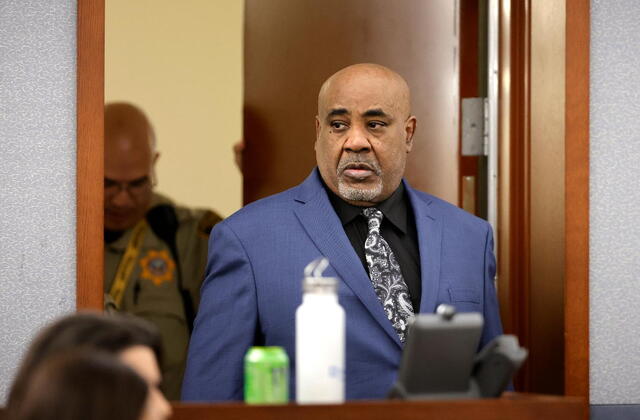
A Las Vegas jury convicted Duane “Keffe D” Davis of murder Monday for orchestrating the 1996 killing of Tupac Shakur.
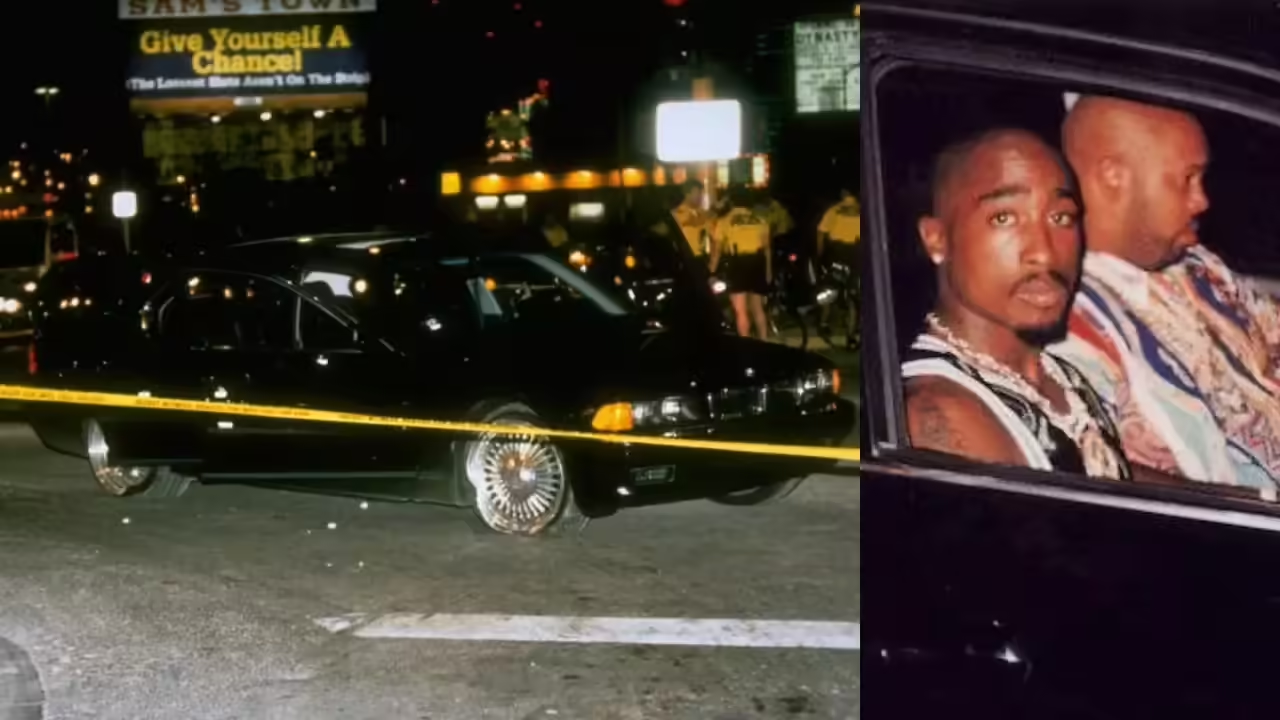
Some shit you should know before you dig in: Back in 1996, Tupac Shakur was at the height of his career. On Sept. 7, he was sitting in a BMW with Death Row Records CEO Suge Knight at a red light when a white Cadillac pulled alongside and opened fire. Knight survived with minor injuries. Shakur died six days later. The killing came out of a feud between the Mob Piru Bloods, affiliated with Shakur and Knight, and the South Side Compton Crips, where Davis was a shot caller. Orlando Anderson, long presumed to be the gunman, died in a gang shootout two years later. Davis is the only one of the four men prosecutors say were in the Cadillac who is still alive.
What’s going on now: The jury deliberated roughly three hours before convicting Davis, 63, of murder with the use of a deadly weapon, the first conviction in a case that stayed cold for nearly 30 years. Sixteen jurors sat through nine days of testimony from 24 prosecution witnesses and three defense witnesses. He faces up to life in prison and is being held without bail until sentencing Oct. 13.
The case was built almost entirely on Davis talking. In 2008 he sat for a police interview about the Notorious B.I.G. killing and described what he did the night Shakur was shot. He said it again in his 2019 memoir “Compton Street Legend,” and again on podcasts and in documentaries. In some of those accounts he refused to name the shooter, saying only that he passed the gun to the men behind him. All that talking ultimately bit him in the ass. He had an agreement with authorities that kept charges off him, but going public blew it up, and the judge let the 2008 interview into the trial.
“He’s the shot caller, in every instance in every iteration he’s the leader of the South Side Crips,” Chief Deputy District Attorney Binu Palal told jurors. “When you have the shot caller sitting shotgun when shots are fired, there’s no doubt he’s responsible.”
Under Nevada law, helping someone commit murder is enough for a conviction. “Who fired is not the question,” Palal said. He acknowledged Davis’s story shifted over the years but said the core never did: Davis always put himself inside that Cadillac. The memoir opens with a disclaimer that some facts were changed, and Palal worked around it, arguing Davis swapped out names and hotels but left the story of the murder intact. He also confronted the theory that Davis invented the whole thing for a payday. “It is an entirely different proposition to be profiting from a murder. And that is what Mr. Davis is doing.” Prosecutor Marc DiGiacomo pointed to a scrapbook of Shakur articles found at Davis’s home: “This guy’s scrapbooking his murder, for God’s sake.”
Defense attorney Michael Sanft pointed at Davis as he told jurors, “they have nothing in this case that says that man was here in Las Vegas on Sept. 7, 1996,” arguing that nothing outside Davis’s own mouth, no video, no phone records, put him at the scene. He called the memoir historical fiction and asked jurors to treat it that way.