Already a subscriber? Make sure to log into your account before viewing this content. You can access your account by hitting the “login” button on the top right corner. Still unable to see the content after signing in? Make sure your card on file is up-to-date.
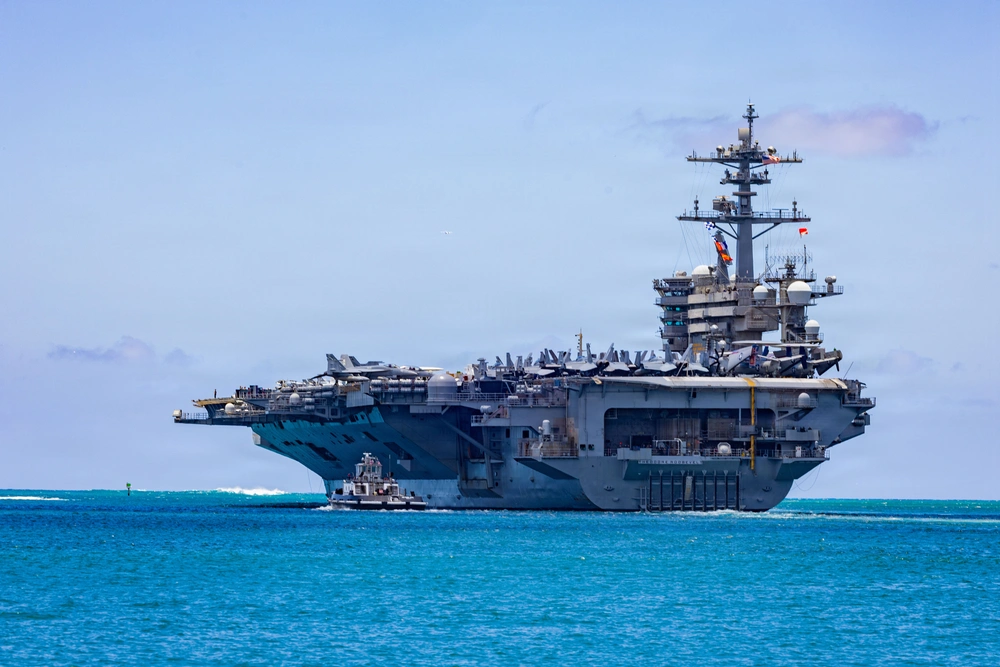
The USS Theodore Roosevelt is heading to the Middle East in the coming weeks on a deployment its crew has been told will last eight months.
Getting into it: First reported by USNI News, the Roosevelt and Carrier Air Wing 11 will sail from San Diego with about 5,000 sailors aboard to relieve the USS George Washington, which arrived in the region last week after deploying from Japan. The Pacific Fleet would not confirm any of it, telling The Hill it is Navy policy not to “discuss future operations or movements due to operations security.”

The US has kept at least one carrier in the Arabian Sea since Operation Epic Fury started Feb. 28, first for strike missions over Iran and then to enforce the naval blockade of Iranian ports. More than 20 US warships are running that blockade, and Central Command says that since resuming it last month, it has redirected 75 commercial vessels, disabled three, and boarded two.
The reason for all of this is the USS Abraham Lincoln, which the George Washington just relieved. The Lincoln left California in November 2025 bound for the South China Sea, got rerouted, and went more than 200 days without a port call, a modern record. Navy Times and Stars and Stripes reported suicide attempts, declining morale, and low supplies aboard. Defense Secretary Pete Hegseth said those reports “completely misrepresented” conditions. The ship is now heading to Thailand for a port call next week.
All of this comes as the George Washington’s move out of Japan leaves the Pacific without an American carrier, a post the Navy almost always keeps filled as a check on China. US officials and analysts have told news outlets they worry China could exploit the gap.
William Yang, senior analyst for Northeast Asia at the International Crisis Group, said, “It certainly is creating an impact on the overall effectiveness of the US-led regional deterrence against China.” He pointed to Chinese carriers pushing past the First Island Chain and an uptick in Chinese coast guard ships working the waters east of Taiwan since June. He added, “Part of it is also testing the US reaction to these operations and the US capability to respond.”
Related posts:
 Updates From Middle East
 Annual US Threat Assessment Again Identifies China as Largest Threat to US National Security, Warns of Growing Military Power
 White House Announces New Aircraft Carriers to Be Named After Presidents Bush and Clinton
 Pentagon-Affiliated Think Tank Warns of China’s Growing Presence in Africa, Cites Concerns Over Potential Military Use of 231 Commercial Ports