Already a subscriber? Make sure to log into your account before viewing this content. You can access your account by hitting the “login” button on the top right corner. Still unable to see the content after signing in? Make sure your card on file is up-to-date.
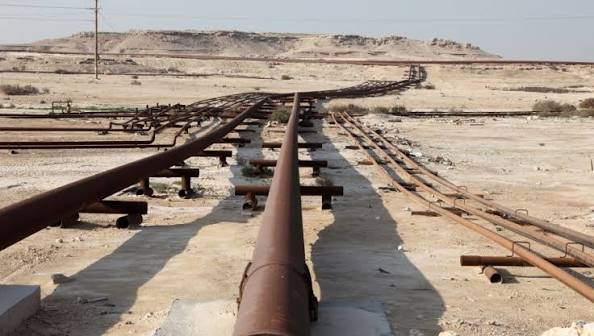
The Iraq-to-Syria oil pipeline the Trump administration is selling as a replacement to the Strait of Hormuz will take about four years to build and cost at least $15 billion.
Some shit you should know before you dig in: If you’re unaware, roughly a fifth of the world’s oil and liquefied natural gas moved through Hormuz before the war with Iran, and the strait has been mainly closed since the conflict kicked off. Out of all the countries in the region, Iraq has taken the hardest hit. Before the war it was pushing about 3.6 million barrels a day, most of that going out through Gulf terminals near Basra. By July, that was down to about 1.1 million per day. There is already a pipeline running from Kirkuk in northern Iraq to the Mediterranean port of Banias in Syria, built in 1952 and stretching about 800 kilometers, but wars in both countries wrecked it, and it has not been in use since the 1980s.

What’s going on now: First reported by Reuters citing two sources directly involved in the project, the four-year timeline is double what the administration has been telling the public. Both sources said the plan is not a rehab job at all and the current Kirkuk-Banias line does not meet current specifications and cannot be reused, so the project means building the whole thing from scratch. That means a new line tying the country’s fields in the south and the north into a central hub at Haditha out in western Iraq, and from there a run west to Banias on the Syrian coast.
Treasury Secretary Scott Bessent has been hinting that changes to how oil moves in the Middle East could be coming. He said that in the coming years “the strait is going to become irrelevant” and that pipelines would be redirecting oil out of the region. If the pipeline goes through, the US expects it to carry 2 million barrels a day, more than six times what the old pipeline could handle at roughly 300,000.
Chevron and Qatar’s UCC Holding have signed separate memorandums with Iraq and Syria to run the technical and financial studies on the pipeline. A Chevron executive said last month that the project would give Iraq another route to market through the Mediterranean, that whatever gets built has to tie into Nassiriya and West Qurna 2 down south, two fields the company is trying to get into, and that Chevron still has not figured out whether the old line gets patched up, made bigger, or scrapped for something new.
Related posts:
 US Seeking to Revive Iraq-Syria Oil Pipeline in an Effort to Cut Down Iraq’s Reliance on the Strait of Hormuz
 Iraq Signs $60 Billion in Deals With US Companies, Including Pipeline Project That Bypasses the Strait of Hormuz
 Updates From Middle East
 A Deep Dive: Influencers and “Independent” Journalists on Both Sides Being Paid to Advance Political Talking Points