Already a subscriber? Make sure to log into your account before viewing this content. You can access your account by hitting the “login” button on the top right corner. Still unable to see the content after signing in? Make sure your card on file is up-to-date.
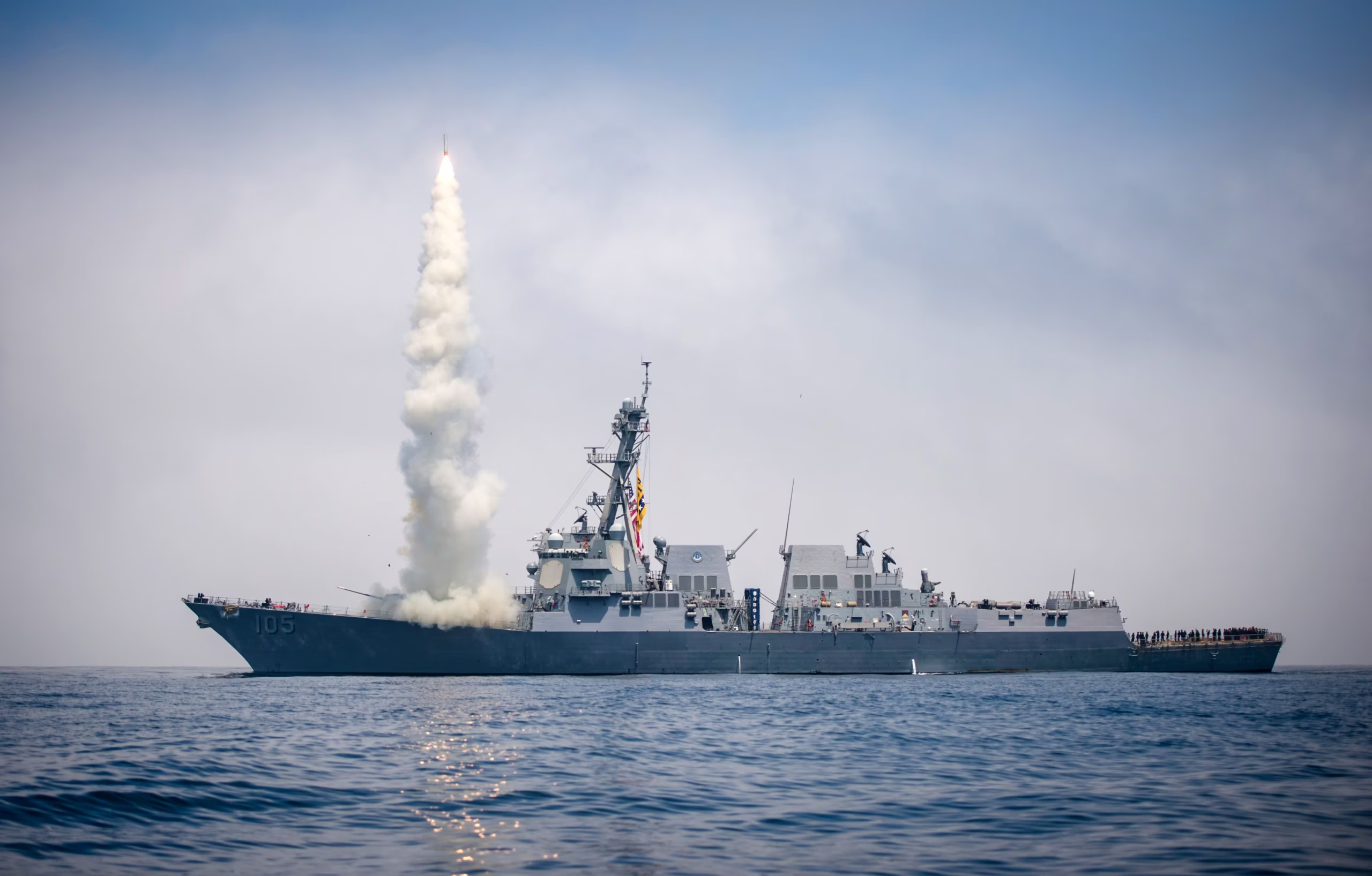
The Navy has awarded Raytheon a $22.9 billion contract Monday to ramp up Tomahawk production, a seven-year deal meant to take the company from about 60 missiles a year to more than 1,000.
Some shit you should know before you dig in: The Tomahawk is the Navy’s long-range strike weapon, fired from ships and submarines at land targets hundreds of miles out. More than six months of airstrikes on Iran have chewed through the American stockpile of that class of weapon. Reuters reported last month that the Army has burned through nearly all of its ATACMS and Precision Strike Missiles, which run north of $1 million apiece, and CNN has reported that roughly 80% of the Pentagon’s THAAD interceptors and about half its Patriots are gone. Those shortfalls have narrowed what Trump can order up in the way of major combat operations.

What’s going on now: The deal with Raytheon was announced by the Department of War on Monday, and it formalizes a framework the two sides reached back in February. RTX, Raytheon’s parent, has pushed its 2026 capital spending to $3.1 billion to build out the plants, workforce, and suppliers the new production rate requires.
“Guaranteeing our naval and joint forces have the lethal firepower they need to deter aggression and protect the homeland is paramount,” acting Navy Secretary Hung Cao said. “This landmark $22.9 billion investment will accelerate Tomahawk missile delivery to our warfighters at unprecedented speed.”
The Tomahawk award is one of many just announced in the last few weeks. The Pentagon signed agreements earlier this month with Lockheed Martin and Northrop Grumman covering Patriot and THAAD interceptor components, and says those arrangements will triple PAC-3 output and quadruple THAAD production. These multi-year contracts were key to pushing US defense contractors to agree to put billions of their own money into new factories and tooling, since a guaranteed order book for years out is the only thing that makes that kind of spending worth it to them.
This all comes as Trump has continued to deny the US is facing any real munitions problem, telling Fox News on Monday that “what we’ve used is peanuts” and that the country has “a lot of mid-level weapons.”
Related posts:
 Updates From Middle East
 Pentagon Announces Deal With Lockheed Martin and BAE Systems to 4x THAAD Interceptor Production
 A Deep Dive: Influencers and “Independent” Journalists on Both Sides Being Paid to Advance Political Talking Points
 Lockheed Martin Lands $35 Billion Contract to Rebuild US Missile Stockpiles