Already a subscriber? Make sure to log into your account before viewing this content. You can access your account by hitting the “login” button on the top right corner. Still unable to see the content after signing in? Make sure your card on file is up-to-date.
The Energy Department announced Tuesday that five states have signed preliminary agreements to explore hosting facilities that would take in nuclear waste from around the country.
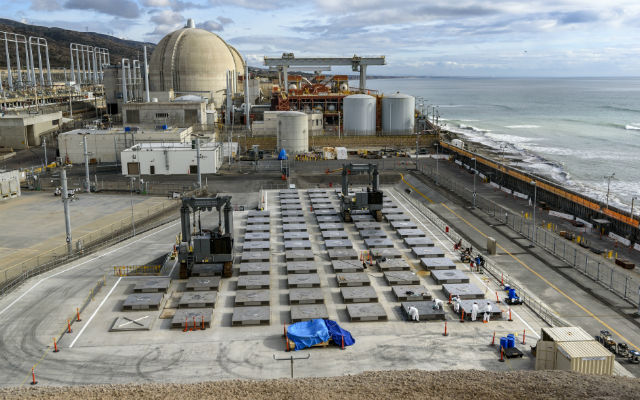
Some shit you should know before you dig in: The US has more than 95,000 metric tons of spent nuclear fuel and radioactive waste sitting around with nowhere permanent to go. This waste is spread across more than 70 sites in 35 states, and the pile grows by about 2,000 metric tons a year. Congress took its shot at this in 1987, passing a law that directed the Energy Department to study one location and one location only: Nevada’s Yucca Mountain. Formal approval did not come until 2002, and roughly a decade later lawmakers zeroed out its budget. The whole thing collapsed after significant pushback from Nevada’s elected officials, its voters and its tribal governments.

What’s going on now: Energy Secretary Chris Wright said the department reviewed 28 applications from 26 states before picking Utah, Tennessee, Oklahoma, Louisiana and Idaho as initial contenders. All five have Republican governors. The non-binding agreements cover what the department is calling Nuclear Lifecycle Innovation Campuses, which are not just waste dumps but full fuel cycle operations that would handle uranium enrichment, fuel fabrication, spent fuel reprocessing and disposal.
Depending on what each state wants, the campuses could also include advanced reactors, power generation, manufacturing, and data centers.

“These campuses will be massive generators of economic growth, create thousands of high-paying jobs, and be crucial to unleashing America’s nuclear renaissance,” Wright said. “The innovative concept is a direct result of President Trump’s leadership and ambitious directives to restore the domestic nuclear fuel cycle and get America’s nuclear industry growing again.”
The pitch to these states is money. The department says the campuses could pull in up to $50 billion in private investment, create nearly 25,000 jobs and generate as much as $10 billion in state and local tax revenue, with eligible projects able to tap billions in federal loans.
Related posts:
 Updates From Middle East
 UN + Multiple US Lawmakers Condemn Trump’s Announcement to Resume Nuclear Testing
 A Deep Dive: Influencers and “Independent” Journalists on Both Sides Being Paid to Advance Political Talking Points
 Top US Official Accuses China of Rapidly Expanding Nuclear Arsenal, Comes After Claims China Tested a Nuclear Weapon