Already a subscriber? Make sure to log into your account before viewing this content. You can access your account by hitting the “login” button on the top right corner. Still unable to see the content after signing in? Make sure your card on file is up-to-date.
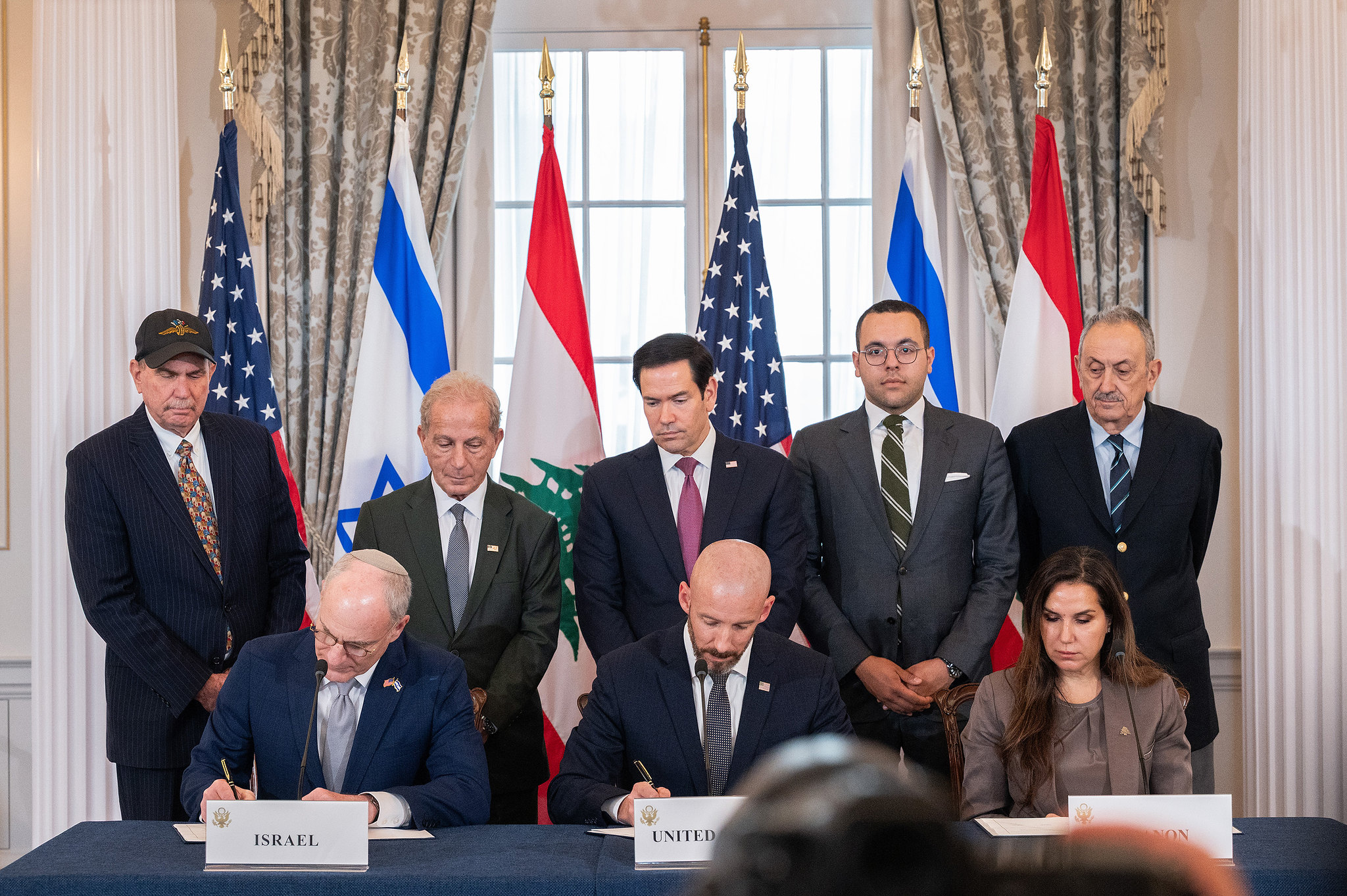
The US, Israel and Lebanon have inked a trilateral framework meant to push Iran’s influence out of the country.
Getting into it: Signed Friday, the agreement maps out how Lebanon claws back its sovereignty, strips Hezbollah of its weapons and tears down its infrastructure, while letting the IDF pull back once the threat is gone. As part of the deal, Israeli forces will withdraw from just two pockets of territory that the Lebanese army will take over as “pilot zones” to prove it can disarm Hezbollah. Israel will keep its original buffer zone in southern Lebanon, with Prime Minister Benjamin Netanyahu vowing to hold it for as long as Hezbollah stays armed and Israel still faces a threat. The framework also creates a US-facilitated trilateral Military Coordination Group for Lebanon to carry it out, with Washington putting up an immediate $100 million in humanitarian aid coordinated with the UN and pledging to reimburse the Lebanese Armed Forces more than $30 million.

Secretary of State Marco Rubio framed the agreement as a starting point rather than a finish line. “It’s the beginning of the beginning. There’s a lot of work ahead,” Rubio said.
Israel’s negotiator, Ambassador Yechiel Leiter, said the talks had nearly collapsed but still praised his Lebanese counterpart, Nada Hamadeh, as a tough negotiator who fights “like a lioness.” He added that “Iran is out, Hezbollah is out, and the road to peace between Israel and Lebanon is in.” Hamadeh called the framework an opening move toward restoring Lebanese sovereignty and letting displaced people return home.
Despite all of this, Hezbollah’s political arm downplayed the agreement and noted that nothing would change, especially with the group not at the negotiating table. Hezbollah leader Naim Qassem insisted “Israel must leave unconditionally.”
The deal follows a fresh round of fighting that kicked off when Hezbollah opened fire on Israel back on March 2, throwing in behind Iran. The conflict has uprooted roughly a million people across southern Lebanon, and Human Rights Watch puts the death toll from Israeli strikes north of 3,000.
Related posts:
 Updates From Middle East
 Israel Ramps Up Strikes in Lebanon as Netanyahu Vows “Crushing Blow” to Hezbollah, IDF Crosses Ceasefire Line to “Fortify” Buffer Zone
 US Calls on Americans in Lebanon to Leave Immediately, Follows Hezbollah Launching Rockets at Israel
 Israel Delays Withdrawal from Lebanon, Citing Hezbollah’s Ceasefire Violations; Hezbollah Blames Israel for Non-Compliance