Already a subscriber? Make sure to log into your account before viewing this content. You can access your account by hitting the “login” button on the top right corner. Still unable to see the content after signing in? Make sure your card on file is up-to-date.
The US and UK have carried out large-scale joint military exercises in Lithuania, just 20 miles from the border with Belarus, aimed at countering drones.
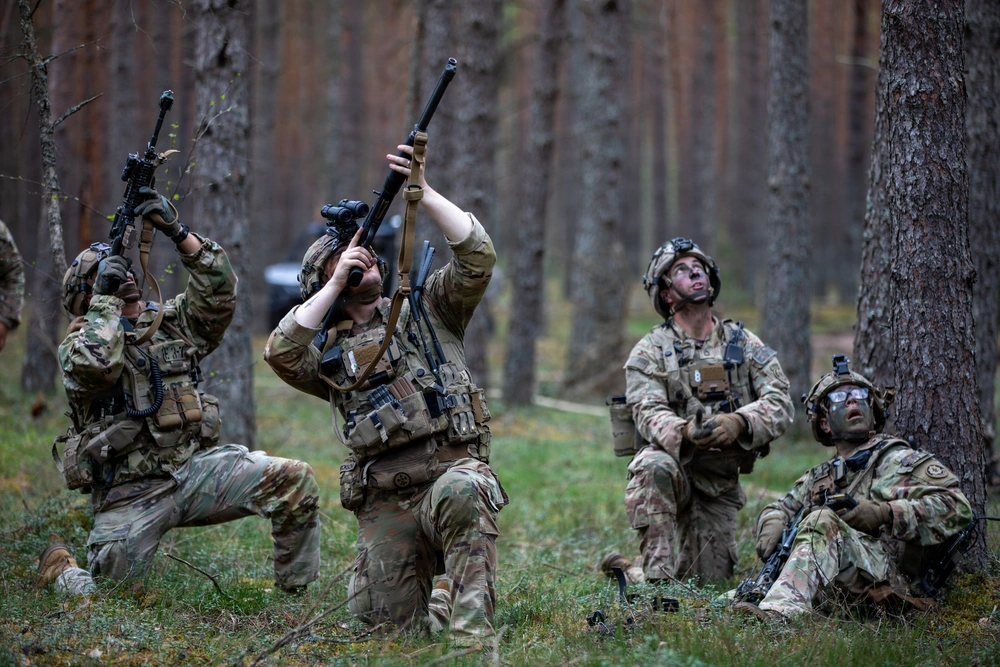
Getting into it: Known as Project Flytrap 5.0, the maneuvers put American units and British paratroopers side by side, with squadron-sized teams working to beat back drone attacks. Part of NATO’s Eastern Flank Deterrence Initiative, the Flytrap series began last year and has already run in Germany and Poland, growing in size and scope with each round as drone warfare evolves. During the latest drills, troops tested more than 50 cutting-edge systems, including interceptor drones, sensors, target-detection tools, and unmanned ground platforms, while handing manufacturers on-the-spot feedback on how the gear held up in the field. Special focus also landed on knitting the British and American data-sharing networks together so the two sides could spot and take down aerial threats in sync.

The whole point, according to US Army Chief Technology Officer Dr. Alexander Miller, is to bake anti-drone defense into mobile combat rather than just guarding fixed positions. Miller stressed that beating drones isn’t only about high-tech gadgets, pointing to old-school basics like maneuvering, camouflage, and netting as equally important pieces of the puzzle.
A big part of the effort is making counter-drone warfare cheaper. Rather than burning through pricey missiles or purpose-built interceptor drones, the Army is experimenting with proximity-fuzed rounds that can be fired from ordinary machine guns and detonate near a drone, spraying fragments to knock it down.
According to Miller, the next phase of Flytrap is set to scale up to the brigade level in what officials expect to be the largest and most complex version yet.
This all comes as the war in Ukraine has proven to be the deadliest showcase of just how lethal drones have become on the modern battlefield. By some estimates, more than 80% of casualties on both sides are now caused by drones. In March alone, the Ukrainian government claimed that 96% of the 35,351 Russian casualties it counted came from drone strikes, with artillery and small arms accounting for the rest.
Related posts:
 Updates From Middle East
 A Deep Dive: Influencers and “Independent” Journalists on Both Sides Being Paid to Advance Political Talking Points
 Top Dutch General Announces Addition of Drone & Counter-Drone Units to Every Combat Formation in the Military
 Las Vegas Man Sentenced After Making Death Threats to US Senator