Already a subscriber? Make sure to log into your account before viewing this content. You can access your account by hitting the “login” button on the top right corner. Still unable to see the content after signing in? Make sure your card on file is up-to-date.
A top US military official has announced that the US is pausing a $14 billion arms sale to Taiwan in order to conserve munitions for its ongoing war with Iran.
Some shit you should know before you dig in: If you’re unaware, the US does not officially recognize Taiwan (it recognizes only China, which claims the self-governing island as its own territory and has not ruled out taking it by force), but under the 1979 Taiwan Relations Act, the US is committed to helping the island defend itself by providing it with defensive weapons. The $14 billion package in question (which reportedly includes anti-drone equipment and air-defense missile systems) was approved by Congress back in January but has been sitting on Trump’s desk awaiting his sign-off for months, and if it clears, it’d be the biggest arms deal Taiwan has ever gotten, topping the $11 billion package Trump greenlit in December. The sale became a central topic during Trump’s recent two-day summit with Chinese President Xi Jinping in Beijing, where he confirmed he discussed it with Xi “in great detail” (a notable break from the 1982 assurance that Washington wouldn’t run Taiwan arms sales by Beijing), and he has floated using the deal as a “negotiating chip” with China. All of this comes as the Iran war, now in its 12th week since kicking off February 28, has reportedly chewed through a massive amount of US weaponry, drawing down stockpiles of Tomahawks, Patriot interceptors, and long-range cruise missiles.

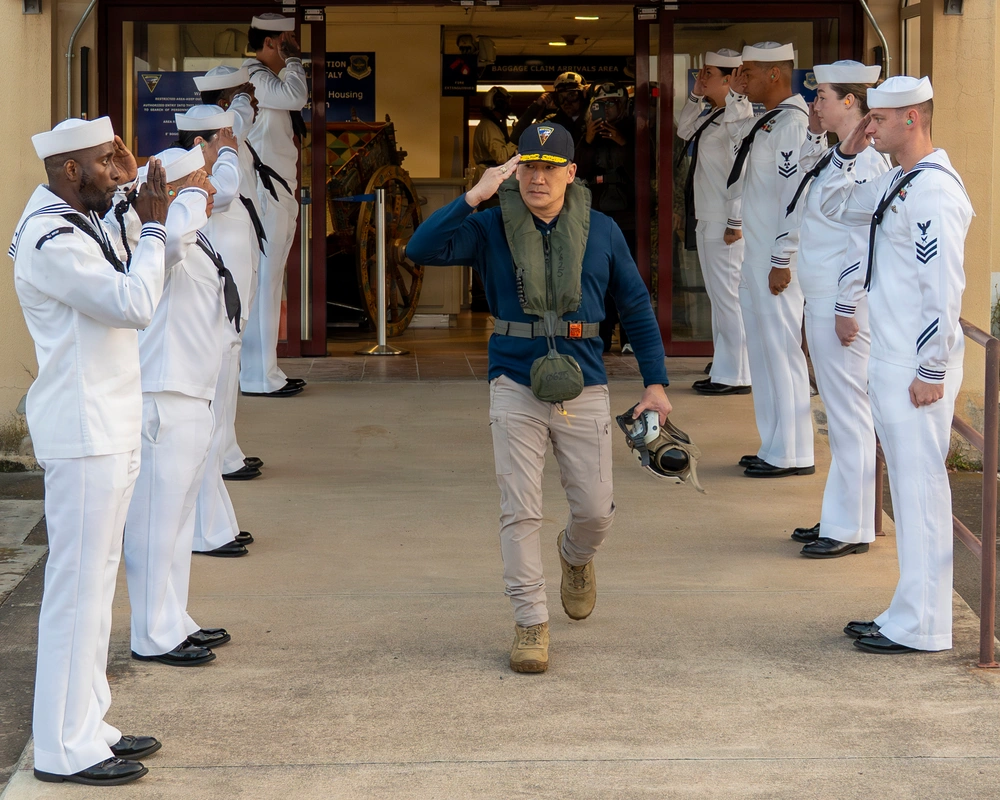
What’s going on now: Acting Navy Secretary Hung Cao confirmed the pause Thursday during a Senate Appropriations Subcommittee on Defense hearing, framing it as a temporary hold to make sure the US has the firepower it needs for the Iran fight. “Right now, we’re doing a pause in order to make sure we have the munitions we need for Epic Fury — which we have plenty. But we’re just making sure we have everything, but then the foreign military sales will continue when the administration deems necessary.”
Cao said the final call on whether the sale happens sits with Defense Secretary Pete Hegseth and Secretary of State Marco Rubio. When Sen. Mitch McConnell pressed him on whether he expected the sale to eventually go through, Cao again deferred to Hegseth and Rubio, prompting McConnell to respond: “Yeah, that’s what’s really distressing.”
The munitions question is itself contested within the administration. Cao said the US is sitting on “plenty” of missiles even as worry mounts over how low the stockpiles are running (the White House reportedly wants to hit Congress up for an $80 billion to $100 billion supplemental for the Iran war, a good chunk of it to replace the weapons already spent). Hegseth, for his part, has waved off those concerns, saying, “The munitions issue has been foolishly and unhelpfully overstated. We know exactly what we have. We have plenty of what we need.”
The pause has fueled anxiety in Taiwan and drawn bipartisan pushback in Congress, where lawmakers like Rep. Michael McCaul have argued the US must “arm Taiwan so they can defend themselves for deterrence against Chairman Xi.” Taiwanese officials have urged Trump to follow through, with Taiwan’s representative to the US, Alexander Yui, arguing that a well-armed Taiwan is the best deterrent against war. “If we want to prevent a war from happening, I think it’s best that Taiwan is strong, able to defend itself.”
This all comes as Trump has signaled he may take the extraordinary step of speaking directly with Taiwanese President Lai Ching-te about the arms deal (which would break more than 40 years of diplomatic protocol, given that no sitting US and Taiwanese leaders have held direct talks since 1979), telling reporters Wednesday, “I’ll speak to him. I speak to everybody.”
This pissed off China, with its foreign ministry saying it “firmly opposes official exchanges between the United States and Taiwan” and urging the US to “stop sending wrong signals to the separatist forces in Taiwan.”
Related posts:
 Updates From Middle East
 Taiwan’s President Pushes Back on Trump’s Taiwan Remarks After Summit in China
 China Condemns US Decision to Sell $11.1 Billion in Weapons to Taiwan, Says US Will End Up “Harming Itself”
 China Conducts Large-Scale Military Drills Around Taiwan Following Record-Breaking US Arms Sale