Already a subscriber? Make sure to log into your account before viewing this content. You can access your account by hitting the “login” button on the top right corner. Still unable to see the content after signing in? Make sure your card on file is up-to-date.
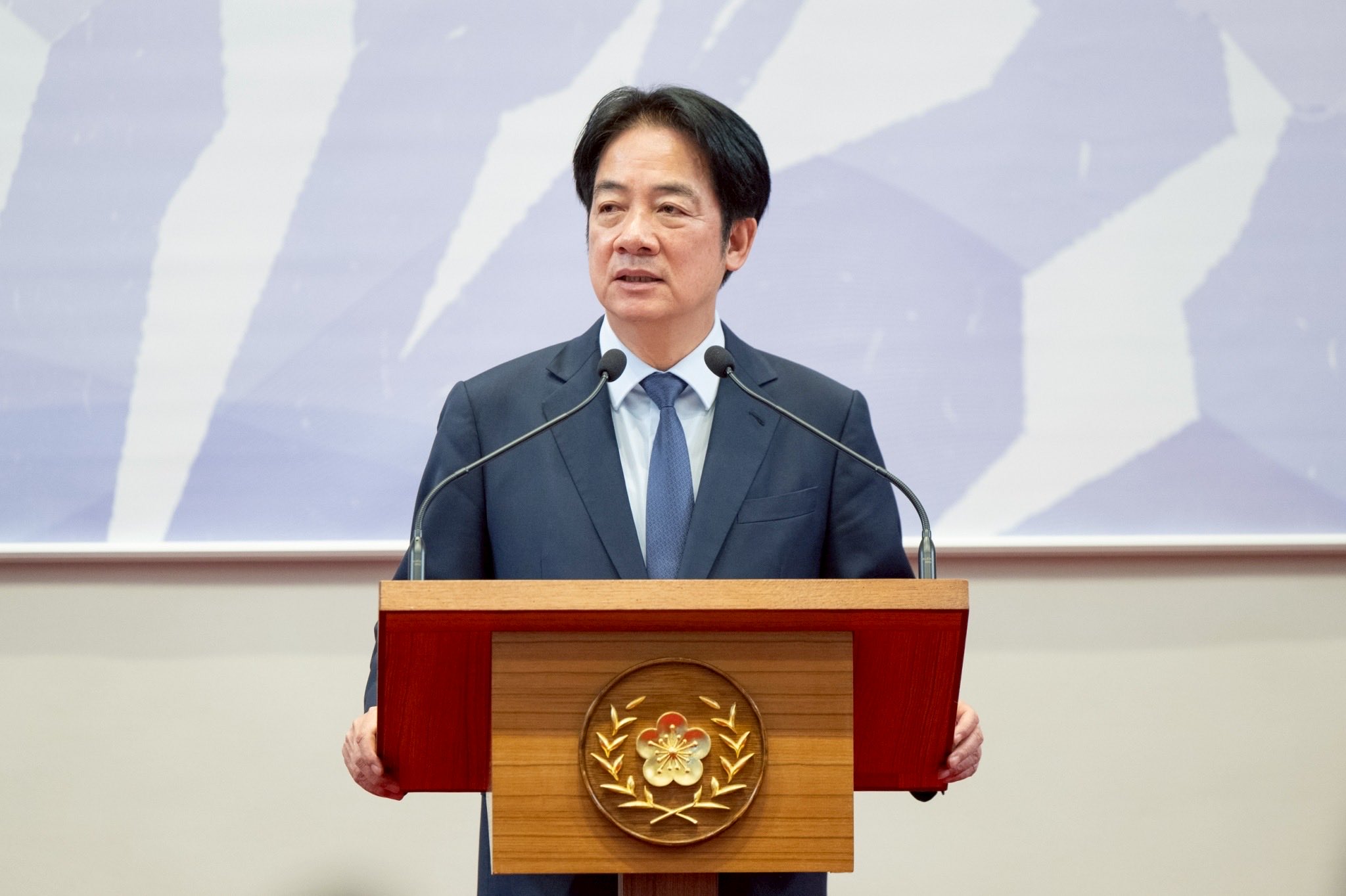
Taiwanese President Lai Ching-te has publicly pushed back against comments by President Trump following his summit with Chinese leader Xi Jinping in Beijing.
Some shit you should know before you dig in: If you’re unaware, the Taiwan issue was the central source of tension during Trump’s two-day summit with Xi in Beijing this past week, with Xi warning Trump in his opening remarks that the two countries could fall into “clashes and even conflicts” if the Taiwan question was “mishandled,” and describing Taiwan as the “most important issue in China-US relations.” For decades, US policy on Taiwan has been governed by the “One China” policy (where Washington recognizes Beijing’s stance that Taiwan belongs to China without actually backing it) and a posture of “strategic ambiguity” in which Washington has deliberately refused to say whether it would militarily come to Taiwan’s defense in the event of a Chinese invasion. The US is also legally required under the 1979 Taiwan Relations Act to sell Taiwan defensive weapons, and Trump greenlit an $11 billion weapons package for Taiwan back in December, the biggest one ever sent to the island, with a follow-up $14 billion package having already been approved by Congress but still awaiting Trump’s sign-off. Trump spent Friday’s flight home from Beijing telling Fox News and reporters on Air Force One that he had made “no commitment either way” on Taiwan, that Xi “feels very strongly” about opposing Taiwanese independence, and that he had not yet decided whether to approve the pending $14 billion arms package. “I haven’t approved it yet. We’re going to see what happens. I may do it. I may not do it.”

What’s going on now: In a notable development, Taiwanese President Lai Ching-te responded directly with a lengthy Facebook post laying out a five-point message asserting Taiwan’s sovereignty and rebuking China as the actual destabilizing force in the region. Lai framed the response with a direct rejection of any suggestion that Taiwan would back down under pressure.
He wrote, “Taiwan will not provoke or escalate conflict, but it will also not relinquish its national sovereignty and dignity, or its democratic and free way of life, under pressure. Taiwan has always been a staunch maintainer of the status quo across the Taiwan Strait, not a party seeking to change it. Taiwan will never be sacrificed or traded.”
The five-point message itself laid out Taiwan’s position as the defender of the status quo, identified China as “the root cause of regional instability and changes to the status quo,” argued that “defending the status quo of the Republic of China is not an issue of ‘Taiwan independence,'” framed Taiwan-US security cooperation and arms sales as “key elements in maintaining regional peace and stability,” and concluded that “Taiwan is at the heart of global core interests, and peace and stability in the Taiwan Strait must never be sacrificed or traded.”
Lai also thanked Trump for his “continued support for peace and stability in the Taiwan Strait since his first term in office,” citing the growing scale and value of US arms sales to Taiwan, while making clear that further weapons transfers are essential to deterring Beijing. “Given that China has never given up the use of force to annex Taiwan and continues to expand its military power to try to change the regional and cross-strait status quo, America’s continued sale arms to Taiwan and deeper US-Taiwan security cooperation is necessary and a key factor in maintaining regional peace and stability.”
Taiwan’s Ministry of Foreign Affairs had separately issued its own statement Saturday calling China’s military threat “the only real insecurity” in the region and describing US arms sales as “not only a security commitment to Taiwan, but also a joint deterrent against regional threats.” There was no immediate response to Lai’s comments from either Beijing or the White House.
This all comes as Trump told reporters on Air Force One that the pending $14 billion Taiwan arms package is a “bargaining chip” in his ongoing negotiations with Xi.
Related posts:
 Xi Jinping Meets Taiwan Opposition Leader in Beijing, Warns Against Independence
 China Condemns US Decision to Sell $11.1 Billion in Weapons to Taiwan, Says US Will End Up “Harming Itself”
 China Condemns US over Taiwanese President’s Visit to Hawaii
 Trump Says He’ll Raise Taiwan Arms Sales Directly With Xi