Already a subscriber? Make sure to log into your account before viewing this content. You can access your account by hitting the “login” button on the top right corner. Still unable to see the content after signing in? Make sure your card on file is up-to-date.
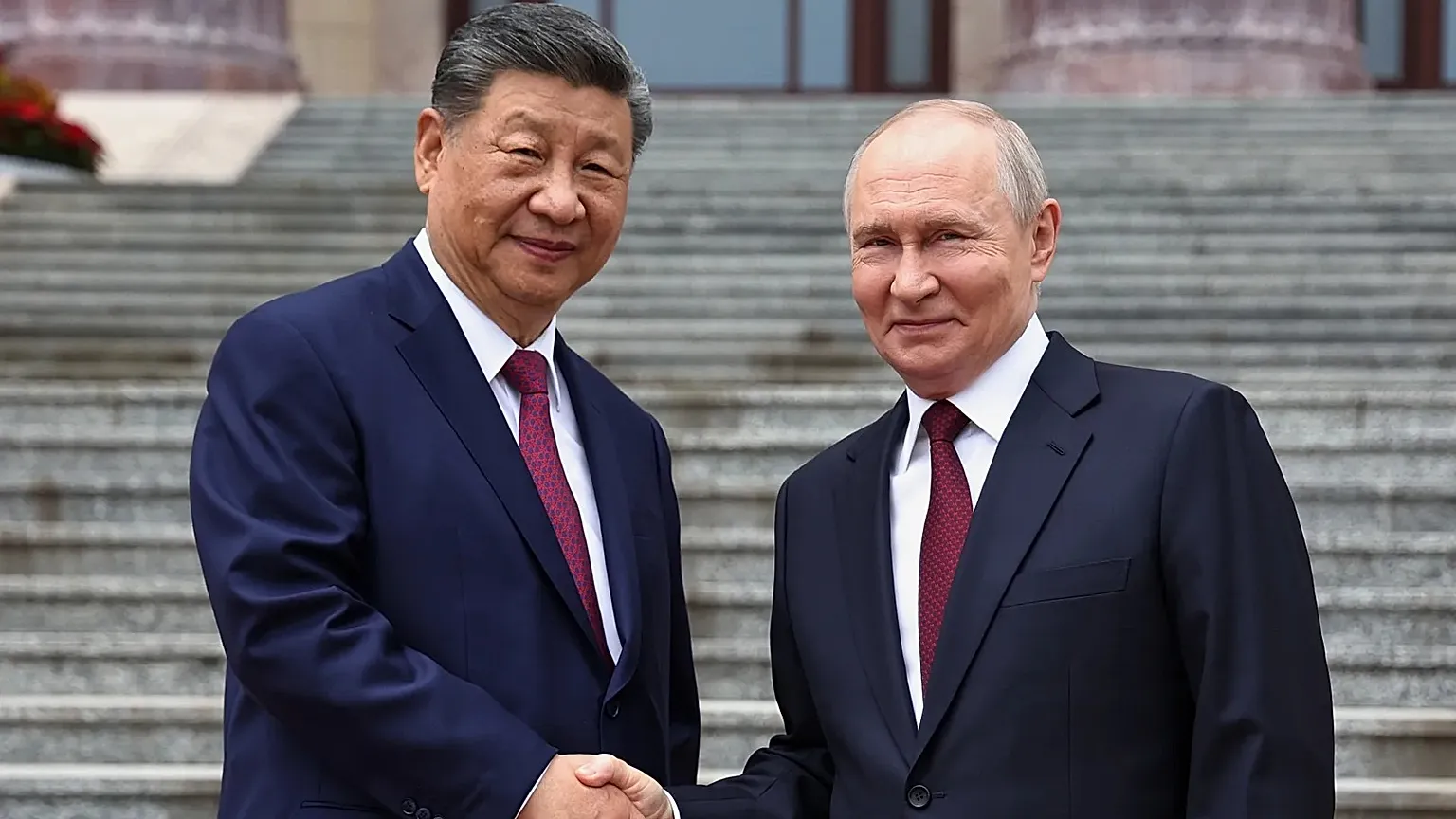
Chinese President Xi Jinping and Russian President Vladimir Putin have issued a joint statement condemning President Trump’s Golden Dome missile defense system during a two-day Beijing summit just days after Trump’s own visit to the Chinese capital.
Some shit you should know before you dig in: If you’re unaware, the Golden Dome is a massive next-generation missile defense system that Trump announced in 2025 with a price tag of roughly $175 billion and a goal of having it operational before the end of his term in January 2029 (though independent estimates have pegged the true long-term cost far higher). Loosely inspired by Israel’s Iron Dome but vastly larger in scope, it’s designed to be a layered shield capable of defending the entire US homeland against a range of incoming threats, including ballistic missiles, hypersonic weapons, and cruise missiles. The system would combine ground-based interceptors (including a new missile field planned for the Midwest), sea-based sensors, and (most controversially) a network of space-based interceptors and tracking satellites intended to detect and destroy enemy missiles in the early “boost phase” of their launch, with the Space Force tapped to oversee the project. Both Russia and China have repeatedly slammed the program since it was first unveiled, having previously issued a joint statement calling it “deeply destabilizing in nature” and warning that its space-based components would effectively turn outer space into a “weapons frontier,” fuel a new arms race, and undermine global strategic stability. China’s foreign ministry has separately argued the plan heightens the risk of space becoming a battlefield.

What’s going on now: In a joint statement following their face-to-face meeting, Xi and Putin took fresh aim at the Golden Dome, framing it alongside the death of the last remaining US-Russia arms control treaty as evidence of a dangerously destabilizing US approach to global security. While neither leader named the United States directly, the criticism of the missile shield fed into a broader declaration on “global multipolarity” that warned of “a danger of fragmentation of the international community and a return to the ‘law of the jungle,'” and argued that “attempts by a number of states to unilaterally manage global affairs, impose their interests on the entire world, and limit the sovereign development of other countries, in the spirit of the colonial era, have failed.”
The two-day summit also resulted in around 40 separate cooperation documents covering trade, energy, technology, media, and education. Putin, who said bilateral ties were now at an “unprecedentedly high level,” framed the partnership as a constructive rather than adversarial one. “We are not aligning against anyone, but working for the cause of peace and universal prosperity.”
The summit also produced a separate joint declaration on the Iran war, published on the Kremlin’s website. “The sides agree that military strikes by the United States and Israel on Iran breach international law and fundamental norms of international relations and seriously undermine stability in the Middle East.”
The two leaders also condemned what they described as “treacherous military strikes against other countries, the hypocritical use of negotiations as cover for preparing such strikes, the assassination of leaders of sovereign states… and the brazen kidnapping of national leaders for trial.”
On the economic front, energy cooperation was front and center, with Putin calling the sector the “locomotive of economic cooperation” and pledging that Russia would remain a “reliable supplier” to China (two-way trade ran past $240 billion last year and was up another 20 percent or so through the opening months of 2026). However, the talks notably failed to produce a breakthrough on the long-discussed “Power of Siberia 2” natural gas pipeline, a project Moscow has been chasing for years to replace its lost European export market. Kremlin spokesman Dmitry Peskov said the two sides had reached a “basic understanding” on the pipeline’s route and construction but that there was still no “clear timeline” and “some details to be worked out,” a reflection of Beijing’s reluctance to lean too hard on any one supplier and the pricing leverage that reluctance hands it.
Related posts:
 Top US Military Official Warns of China’s Rapidly Advancing Space Capabilities, Calls China America’s “Biggest Threat”
 Updates From Middle East
 Pentagon Announces Cost Increase & Timeline Extension for Golden Dome Missile Defense System, Now Tops $185 Billion
 Trump to Announce More Details on “Golden Dome” Missile Defense Initiative