Already a subscriber? Make sure to log into your account before viewing this content. You can access your account by hitting the “login” button on the top right corner. Still unable to see the content after signing in? Make sure your card on file is up-to-date.
The US military disabled an Iranian-flagged oil tanker that tried to break the US naval blockade of Iranian ports.
Some shit you should know before you dig in: If you’re unaware, the US imposed a naval blockade on Iranian ports on April 12 in response to Iran’s effective closure of the Strait of Hormuz, which normally handles about 20% of the world’s oil and liquefied natural gas. Trump launched “Project Freedom” Sunday to escort stranded commercial ships through the strait, but he abruptly paused the operation Tuesday after just one day, citing “Great Progress” toward a final agreement with Iran. The pause came after a rocky first day in which US forces destroyed six to eight Iranian small boats, the UAE intercepted Iranian missiles and drones, and a French container ship was damaged in the strait, wounding multiple crew members. Around 1,600 commercial ships and 20,000 seafarers remain stranded in or near the strait.

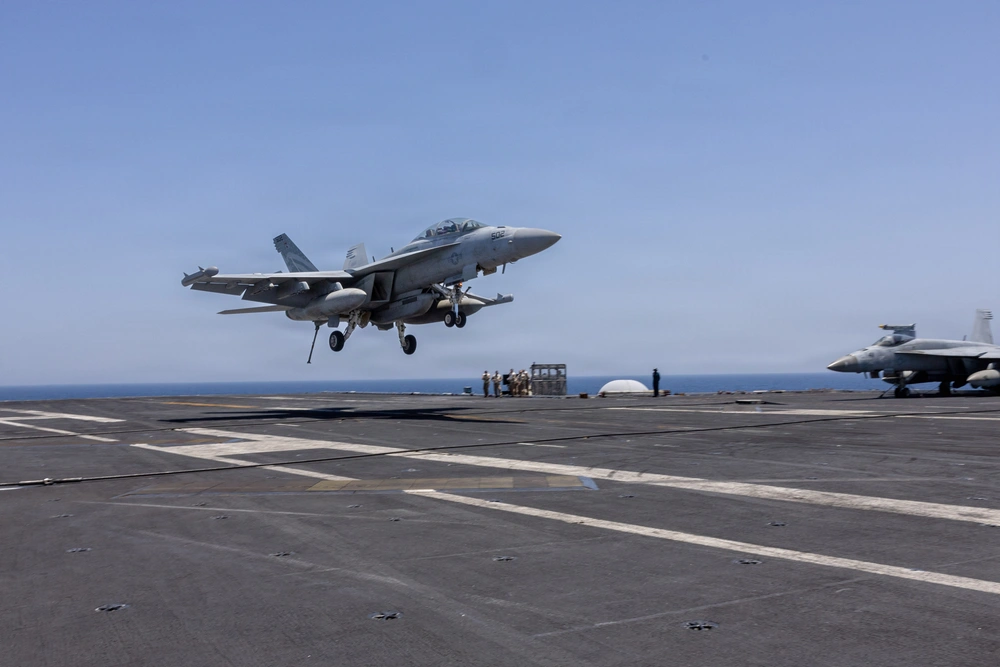
What’s going on now: US Central Command said Wednesday morning that an F/A-18 Super Hornet launched from the USS Abraham Lincoln (CVN 72) disabled the rudder of the M/T Hasna by firing several rounds from its 20mm cannon after the unladen Iranian-flagged tanker tried to sail toward an Iranian port in the Gulf of Oman in violation of the blockade.
Centcom said the crew failed to comply with repeated warnings before US forces opened fire, and confirmed in a separate post that “Hasna is no longer transiting to Iran.” Centcom also reported Wednesday that US forces have now turned back or rerouted 52 commercial ships since the blockade began last month.
The disabling came just hours after Trump publicly endorsed a one-page peace deal proposal and warned of renewed bombing if Iran rejects it. Trump posted on Truth Social that if Iran accepts the proposal, “the already legendary Epic Fury will be at an end, and the highly effective Blockade will allow the Hormuz Strait to be OPEN TO ALL, including Iran.” He also issued a direct threat. “If they don’t agree, the bombing starts, and it will be, sadly, at a much higher level and intensity than it was before.”
The one-page proposal surfaced through Axios reporting and has since been backed by additional outlets. Per those reports, the deal would put Iranian uranium enrichment on hold, roll back US sanctions, free up frozen Iranian assets, and pry the Strait of Hormuz back open for all traffic. Defense Secretary Pete Hegseth said Tuesday morning that the Pentagon is prepared to restart kinetic action if Iran refuses to follow through.
Iran has publicly rejected the framing of the proposal. Esmaeil Baghaei, a spokesman for the Iranian Foreign Ministry, told state TV that Tehran had “strongly rejected” the US proposals reported by Axios but was still reviewing the latest version. Ebrahim Rezaei, a spokesperson for Iran’s parliamentary national security committee, dismissed the leaked details on social media. “More of an American wish list than a reality.” Rezaei added that the US will “not gain anything in a losing war that they did not gain in face-to-face negotiations.”
Related posts:
 Updates From Middle East
 Cargo Ship Attacked by Small Boats Off Iranian Coast Near Strait of Hormuz
 Trump Announces Pause to Naval Escort Operation in Strait of Hormuz, Operation Lasted One Day
 Trump Says US Will Escort Stranded Commercial Vessels Through Strait of Hormuz, Iran Threatens to Take Action