Already a subscriber? Make sure to log into your account before viewing this content. You can access your account by hitting the “login” button on the top right corner. Still unable to see the content after signing in? Make sure your card on file is up-to-date.
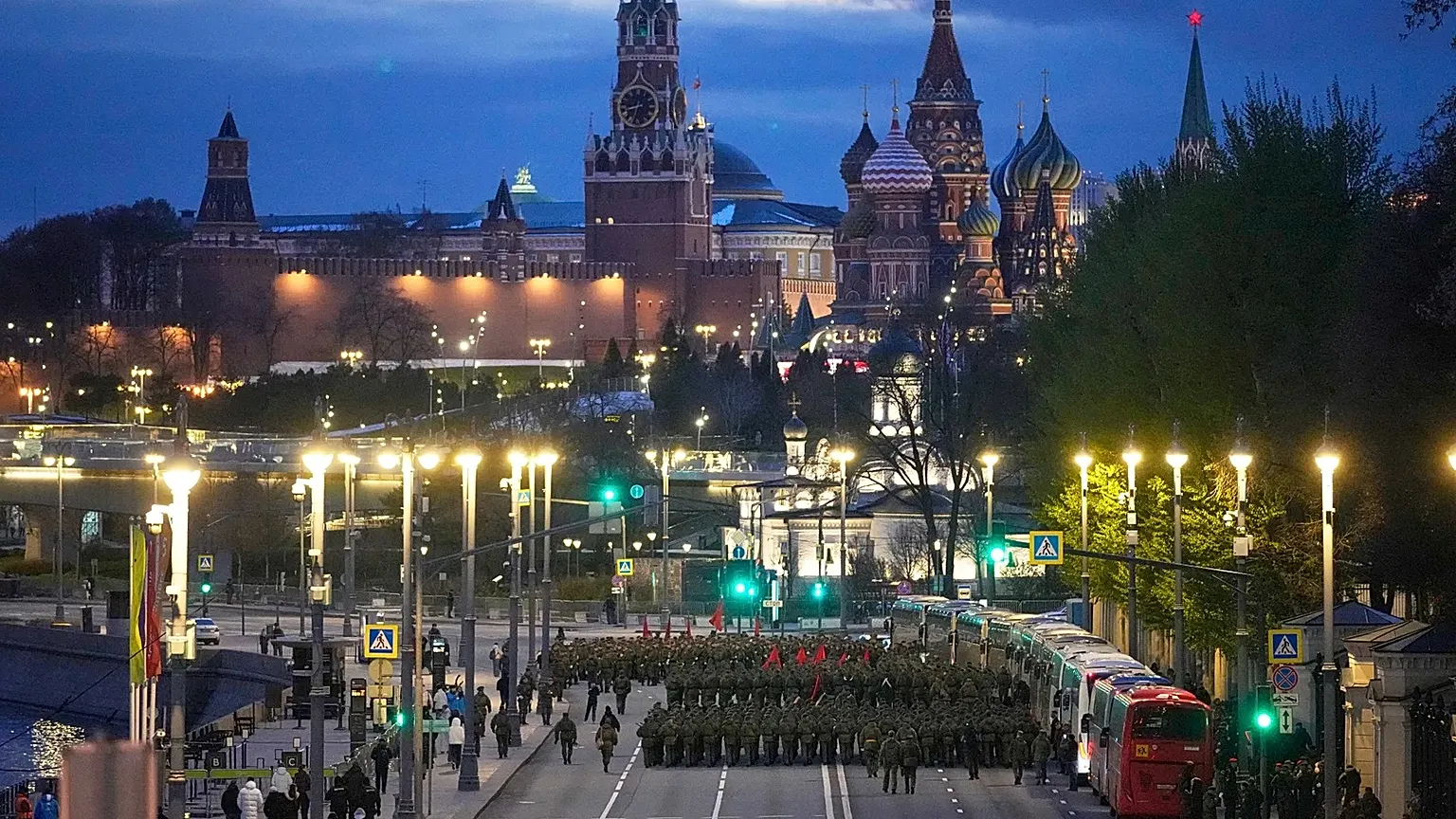
Russia temporarily shut down mobile internet services across Moscow and other major cities ahead of the country’s annual May 9 Victory Day parade.
Some shit you should know before you dig in: If you’re unaware, May 9 is Victory Day in Russia, the country’s most important national holiday, marking the Soviet Union’s defeat of Nazi Germany in World War II. Russian President Vladimir Putin has used the holiday as a central pillar of his more than 25 years in power and has leaned on it especially hard since launching his full-scale invasion of Ukraine in 2022 to frame and justify the war. This year’s parade has already been scaled down significantly, with the Kremlin saying cadets and heavy military hardware (tanks, missiles, artillery) will be cut from the lineup due to security concerns over Ukrainian drone strikes. Russia and Ukraine are currently fighting the largest drone war in history, with both sides hammering the shit out of long-range targets far behind the front lines. Last year Ukraine threw waves of explosive-packed drones at Moscow around the parade, grounding thousands of flights in the process. Russia announced a unilateral ceasefire for May 8-9 to protect the parade and warned of a “massive missile strike” on central Kyiv if Ukraine violated it, while Ukrainian President Volodymyr Zelenskyy fired back with a separate ceasefire starting May 6 and called the Russian offer “not serious.”
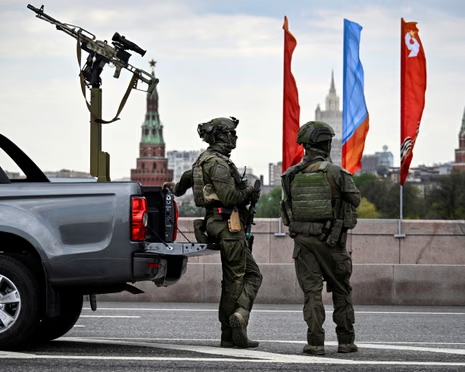
What’s going on now: Russia’s Ministry of Digital Development confirmed Tuesday that it had implemented a “temporary mobile internet block” in Moscow “for security reasons,” with the disruption also reported in St. Petersburg, Kazan, Perm, and other regions across European Russia. The outages took down credit card payments at shops, ATMs, taxi services, and online maps. Reuters had six reporters posted around Moscow who all said they couldn’t get any mobile internet, though voice calls were still going through.
Service was mostly back up by around noon, with the digital ministry saying operators were restoring access to “whitelisted” government-approved websites and that the “targeted” outages helped “to reduce the accuracy of drones and to counterattack.”
This all comes as a European intelligence report claims that Russia’s Federal Protective Service (FSO) has ramped up Putin’s personal security in recent months, with the president now reportedly holed up in underground bunkers more often and pulling back from civilian life.
Related posts:
 Annual US Threat Assessment Says Russia Has ‘Upper Hand’ in Ukraine, Circumvents Sanctions via China & BRICS Nations
 Updates From Middle East
 Ukraine & Russia Announce Dueling Temporary Ceasefires
 A Deep Dive: Influencers and “Independent” Journalists on Both Sides Being Paid to Advance Political Talking Points