Already a subscriber? Make sure to log into your account before viewing this content. You can access your account by hitting the “login” button on the top right corner. Still unable to see the content after signing in? Make sure your card on file is up-to-date.
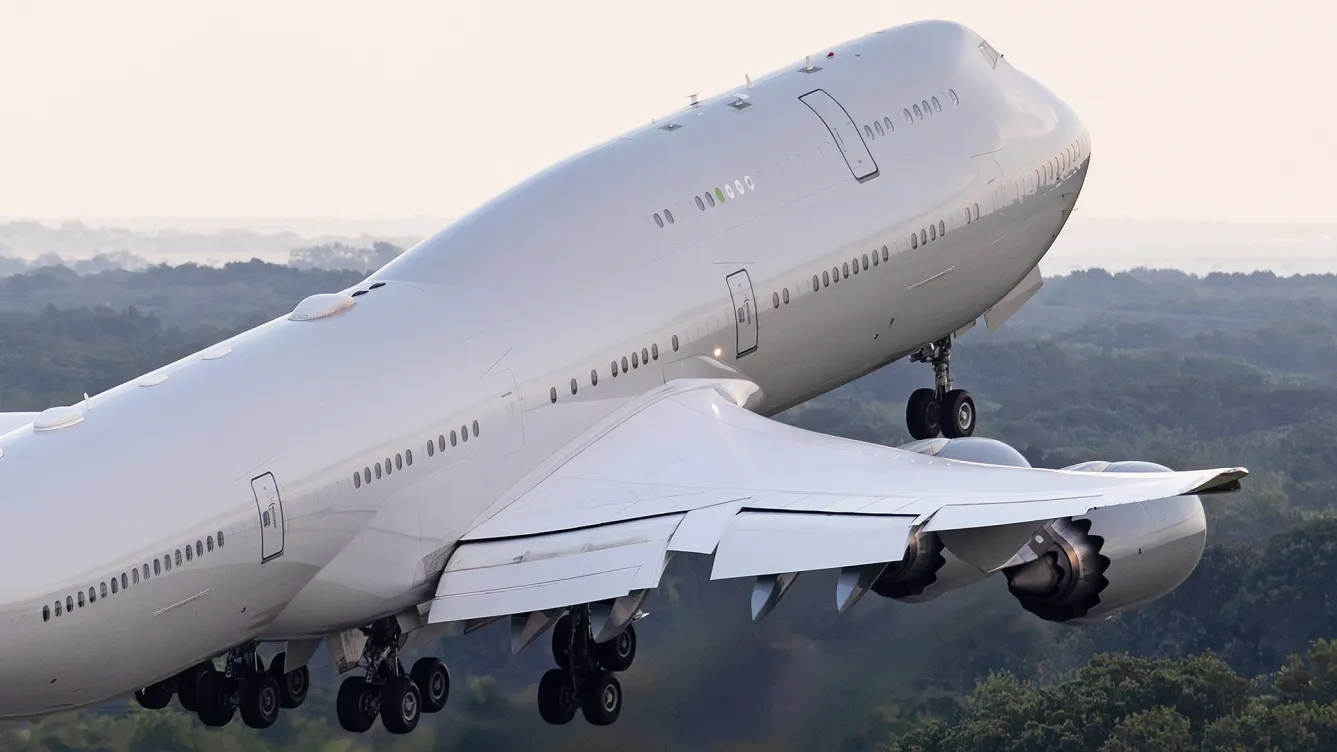
The US Air Force says the Boeing 747 gifted by Qatar last year will be ready to serve as Air Force One this summer.
Some shit you should know before you dig in: If you’re unaware, the Qatari royal family donated the luxury Boeing 747-8 to the US last May after Trump complained that the existing Air Force One jets (which are nearly 40 years old) were too small and too dated compared to what other world leaders fly. The gift pissed off some US lawmakers who raised ethical and security concerns, with some pointing to the Constitution’s Emoluments Clause that bars officeholders from accepting gifts from foreign governments without congressional approval. Trump dismissed the concerns and said he’d be “stupid” to turn down a free plane, adding that he plans to donate it to his future presidential library when his term ends. The plane is meant to serve as a “bridge” until Boeing finishes the two new full-time Air Force One jets it’s been building, a project that’s now nearly a decade behind schedule. Those new jets aren’t expected until 2028.

What’s going on now: The Air Force announced Friday that all modifications and flight testing on the jet are done, and the plane is now in the paint shop. Trump personally picked the red, white, and blue exterior.
After Qatar transferred the plane in May of last year, the Air Force flew it to an L3Harris Technologies plant in Texas and reportedly spent $400 million to retrofit the aircraft (tearing the interior apart to scan for any hidden Qatari surveillance tech, and installing classified communications systems so the jet can function as a flying command post).
The lavish Qatari interior was largely left intact to keep modification costs down and avoid triggering an FAA recertification process. Arabic exit signs and contemporary artwork are out, US presidential seals are now on the walls, and the rest (oversized leather seats, plush couches, faux library bookcases) is staying.
Gen Dale White, the four-star Air Force officer running the project, told the Wall Street Journal, “By and large, the airplane that we’re getting is in the same condition from an interior perspective.” He also pushed back on the idea that any of the security work got rushed. “This is going to be an airplane that’s going to carry the president of the United States. We did not take any shortcuts as it relates to making sure security was exactly what it needed to be.”

The Qatari jet is missing some hardware the current Air Force One fleet has. It carries fewer onboard refrigerators, has a single set of self-deploying air stairs (the Air Force decided against cutting larger doors into the fuselage to fit more), and there’s no walled-off press cabin. Reporters will sit behind a heavy curtain partition instead, because building out a proper press section would have significantly extended the delivery timeline.
The Air Force hasn’t confirmed which security capabilities (like anti-missile countermeasures or air-to-air refueling) made it onto the new jet, and lawmakers suggested last year that the total cost of modifications could ultimately top $1 billion.
This all comes as Boeing’s two permanent Air Force One replacements remain stuck in a delayed buildout. The first of the pair isn’t expected until 2028, roughly four years past the original December 2024 contract deadline.