Already a subscriber? Make sure to log into your account before viewing this content. You can access your account by hitting the “login” button on the top right corner. Still unable to see the content after signing in? Make sure your card on file is up-to-date.
The Trump administration has sanctioned a major Chinese oil refinery and roughly 40 shipping firms and vessels for buying and transporting Iranian oil.
Some shit you should know before you dig in: If you’re unaware, China is by far the world’s largest buyer of Iranian oil, purchasing somewhere between 80 and 90% of all Iranian oil exports before the US-Israeli war began in February. Chinese independent refineries (known as “teapot” refineries because of their smaller size relative to state-owned giants) have been the primary buyers, purchasing Iranian crude at steep discounts to international Brent prices, sometimes 10 to 20 dollars per barrel below market rate, because Iran has few other buyers willing to risk US sanctions. That discount has given Chinese manufacturers and industries a significant cost advantage (cheaper energy means cheaper production), which feeds directly into China’s ability to undercut competitors on the global market. Some believe Trump’s Iran policy is not only about Iran’s nuclear program but also a strategic economic play against Beijing, since cutting off China’s access to discounted Iranian oil would force it to buy at full market prices from Gulf states or elsewhere. If this is the case, it would raise Chinese production costs and narrow the competitive gap with American industry.

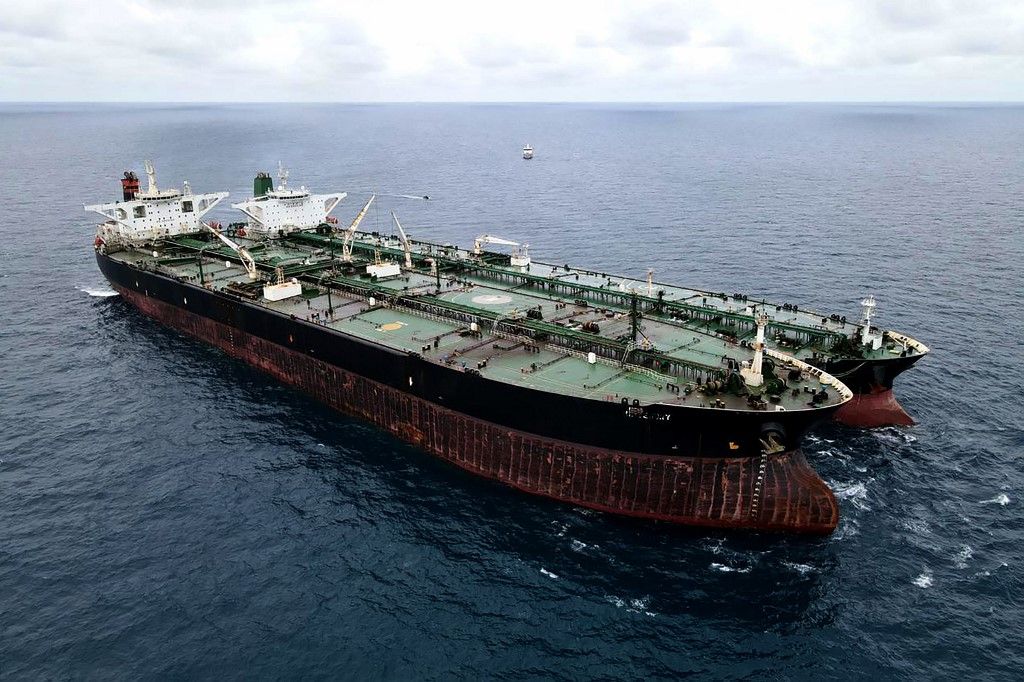
What’s going on now: The Treasury Department announced new sanctions Friday targeting Hengli Petrochemical (Dalian) Refinery (China’s second-largest independent teapot refinery), which the Treasury says has purchased billions of dollars worth of Iranian oil since at least 2023, including crude directly tied to Iran’s Armed Forces, generating hundreds of millions of dollars in revenue for the Iranian military. The 40 shipping firms and vessels sanctioned alongside Hengli are part of Iran’s shadow fleet (a network of aging tankers that obscure the origin of Iranian oil, often labeling it as coming from Malaysia or other countries before delivering it to China).
In a statement, Treasury Secretary Scott Bessent said, “At President Trump’s direction, Treasury will continue to constrict the network of vessels, intermediaries, and buyers Iran relies on to move its oil to global markets. Any person or vessel facilitating these flows—through covert trade and finance—risks exposure to U.S. sanctions.”
As of now, China has not responded to Friday’s sanctions, though it has consistently pushed back on similar US measures in the past, with its embassy previously saying the measures “undermine international trade order” and “infringe upon the legitimate rights and interests of Chinese companies.”
This all comes as the US has slapped sanctions on more than 1,000 people, vessels, aircraft, and businesses since the start of the conflict with Iran.