Already a subscriber? Make sure to log into your account before viewing this content. You can access your account by hitting the “login” button on the top right corner. Still unable to see the content after signing in? Make sure your card on file is up-to-date.
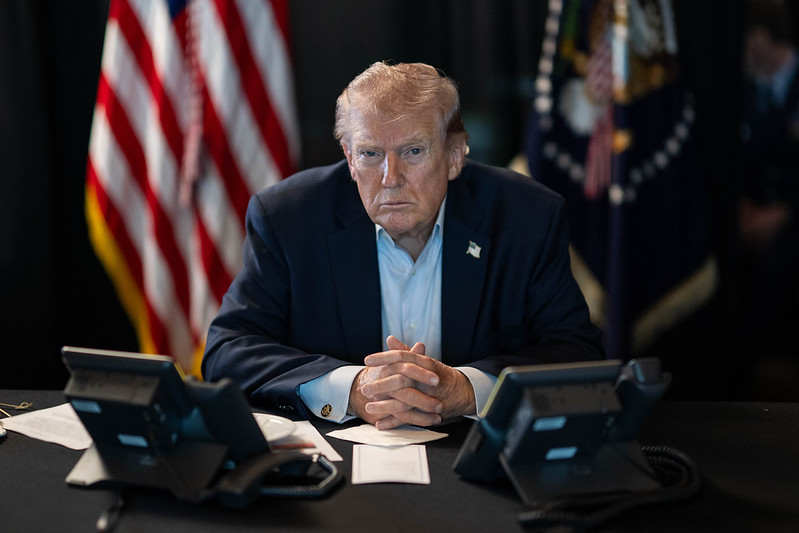
President Donald Trump has again not ruled out deploying US ground troops to Iran amid his deadline for Tehran to reopen the Strait of Hormuz or face potential military strikes on key infrastructure.
Some shit you should know before you dig in: Earlier today, President Trump issued another deadline for Iran to open the Strait of Hormuz or he would begin carrying out “massive” strikes on Iran. Trump wrote, “Tuesday will be Power Plant Day, and Bridge Day, all wrapped up in one, in Iran. There will be nothing like it!!! Open the Fuckin’ Strait, you crazy bastards, or you’ll be living in Hell – JUST WATCH! Praise be to Allah.” His threats to target critical infrastructure like power plants and bridges have raised concerns among some legal experts, who warn that such strikes could amount to war crimes if they disproportionately impact civilians. Despite this, others argue that such strikes could be justified if that infrastructure is supporting Iran’s military operations. Notably, Trump has repeatedly shifted and extended his deadlines over the past few weeks, often citing ongoing “negotiations,” despite Iranian officials publicly denying that any direct talks are taking place.

What’s going on now: During an interview with The Hill, President Donald Trump made clear he is keeping all military options on the table, explicitly declining to rule out sending US troops into Iran. When asked directly about the possibility of ground forces, Trump responded, “No,” before adding, “Normal people would make a deal. Smart people would make a deal… If they were smart they would make a deal.” He also signaled that there would be virtually no limits on potential targets if diplomacy fails, reinforcing that infrastructure strikes remain under consideration.
This has set off alarm bells on Capitol Hill, particularly among lawmakers wary of a prolonged or expanded conflict. Rep. Mike Lawler questioned the rationale for putting “boots on the ground,” saying “the only purpose that I could see” would be to secure Iran’s enriched uranium, and stressing that such a move “does need to be discussed with Congress in a classified setting.” Others echoed similar concerns, with Sen. Josh Hawley warning, “I would hope that we wouldn’t see ground troops in combat… I hope we wouldn’t escalate it with ground troops.”
Still, not all Republicans are outright opposed to escalation. Some lawmakers have indicated conditional support if the administration can clearly justify the objective and strategy. Sen. Thom Tillis said he is “OK with using this as another lever to get Iran to come to the table,” though he cautioned that if troops are deployed “in a dangerous setting, clearly members of Congress need to understand what that is.” Almost all democrats have voiced their opposition to ongoing military operations against Iran, with Senator John Fetterman being one of the only publicly supporting the move.
This all comes amid growing pressure in Congress to assert its authority over the conflict.
Related posts:
 Updates From Middle East
 Democratic Lawmakers Say US May Deploy Troops Into Iran After Classified Briefing
 Top Iranian Official Says Iran is Prepared to Capture & Kill US Soldiers if Trump Puts Boots on the Ground
 Trump Says Iran is Possibly Open to Direct Talks with the US over Nuclear Program, Russia Criticizes US Over Threats to Bomb Iran