Already a subscriber? Make sure to log into your account before viewing this content. You can access your account by hitting the “login” button on the top right corner. Still unable to see the content after signing in? Make sure your card on file is up-to-date.
The United States has officially lifted sanctions on Venezuela’s interim president Delcy Rodríguez.
Some shit you should know before you dig in: Back in 2018, the United States placed sanctions on Delcy Rodríguez through the Treasury Department’s Office of Foreign Assets Control, adding her to its Specially Designated Nationals list due to her ties to Nicolás Maduro’s government and allegations that she played a role in weakening democratic processes. These sanctions cut her off from any assets under US authority, blocked her ability to enter the country, and banned US individuals and businesses from having financial or commercial dealings with her, effectively isolating her from the US financial system. The measures were part of a broader effort aimed at officials within Maduro’s inner circle, and also included sanctions against her brother, Jorge Rodríguez, along with other senior officials accused by US authorities of corruption and consolidating authoritarian control. When the sanctions were initially imposed, Rodríguez condemned them as illegitimate and accused the United States of interfering in Venezuela’s internal affairs.
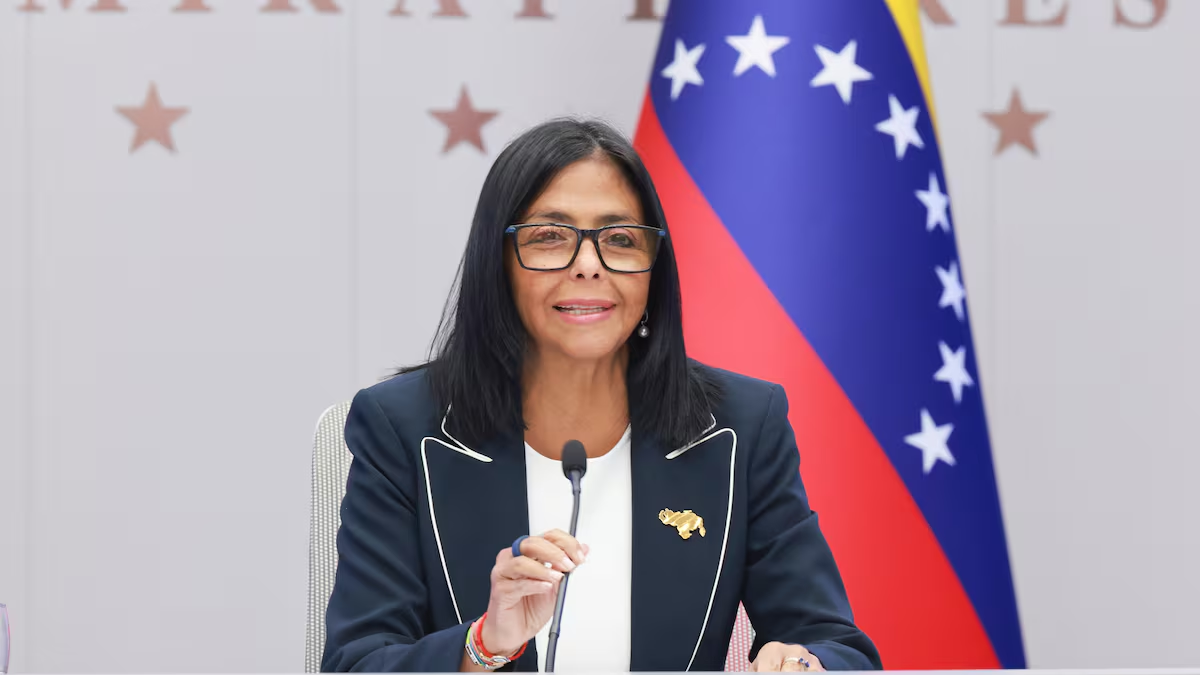
What’s going on now: In a notable development, the US Treasury has removed Delcy Rodríguez from the Specially Designated Nationals (SDN) list, with the move described by officials as part of a broader effort to improve relations between the US and Venezuela. US officials have characterized the decision as an indication of forward movement in stabilizing Venezuela and expanding cooperation, particularly as Rodríguez has taken on a leading role following the removal of Nicolás Maduro.
The lifting of sanctions significantly changes what Rodríguez is able to do: she is no longer restricted from interacting with US businesses or financial institutions, meaning she can now pursue investment opportunities, manage economic agreements, and potentially travel to the United States for official engagements. More broadly, it opens the door for direct economic collaboration, especially in Venezuela’s energy sector, as the US has also recently allowed certain US and European companies to restart operations in the country.
Rodríguez is currently the only high-ranking figure from Maduro’s inner circle known to have received sanctions relief, while others (including her brother) remain under restrictions. The move comes as she has been working closely with Donald Trump’s administration, taking steps to open Venezuela’s economy and attract foreign investment.
There has also been talk that Rodríguez had been engaging with US officials even before Maduro’s capture, helping lay the groundwork for the current shift in policy.