Already a subscriber? Make sure to log into your account before viewing this content. You can access your account by hitting the “login” button on the top right corner. Still unable to see the content after signing in? Make sure your card on file is up-to-date.
Spain has officially expanded its restrictions on US military operations by banning not only access to its bases but also the use of its airspace for any missions related to the conflict with Iran.
Some shit you should know before you dig in: Earlier this month, President Trump made headlines after threatening to cut off trade with Spain and even impose an embargo after the Spanish government denied US forces permission to use key military bases for operations tied to the war with Iran. While speaking alongside German Chancellor Friedrich Merz, Trump said “We’re going to cut off all trade with Spain. We don’t want anything to do with Spain,” and warned he could “stop everything having to do with Spain… Embargoes. Do anything I want with it.” At the time, the dispute centered on Naval Station Rota and Morón Air Base, which are jointly used by the US and Spain but remain under Spanish control, with officials in Spain saying the bases cannot be used for operations outside the bilateral defense agreement or international law. This move forced at least 15 US aircraft involved in the Middle East military buildup to leave the bases and relocate to Ramstein Air Base in Germany. These bases in Spain are strategically important to the US as they sit at the gateway between the Atlantic and Mediterranean and serve as a secure logistics hub for US operations toward the Middle East.

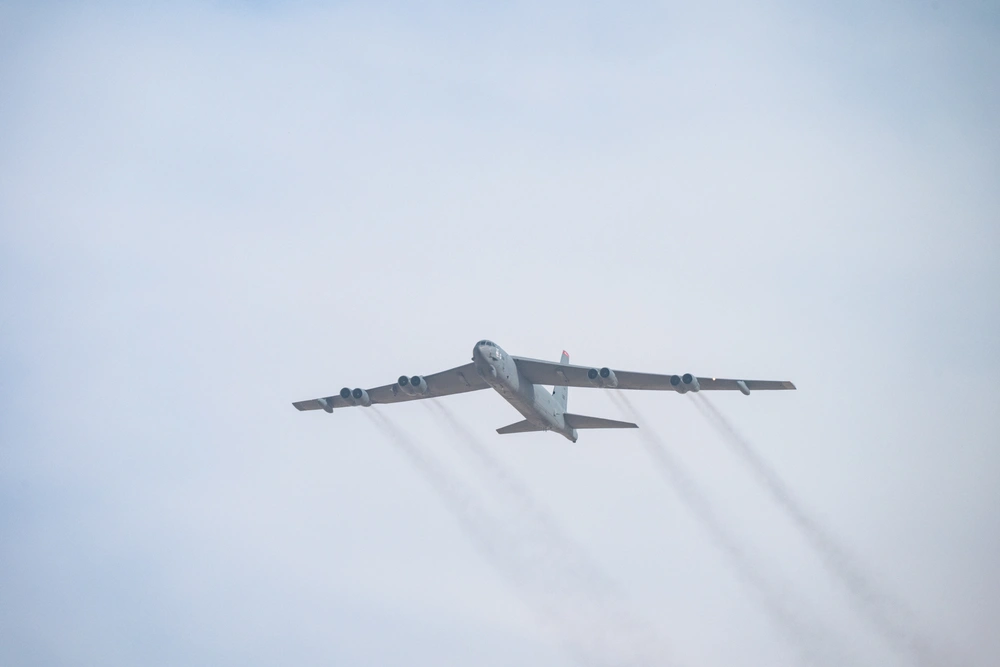
What’s going on now: In a notable development, Spanish Defense Minister Margarita Robles confirmed that the restrictions are already in effect and go further than before, saying Spain will not “authorize either the use of military bases or the use of airspace for actions related to the war in Iran.” Previously, Spain had only blocked the use of the Rota and Morón bases, but US aircraft could still transit Spanish skies; now, that airspace access is also denied, effectively removing Spain as a logistical corridor for operations tied to the conflict. The policy includes all mission-related flights (such as bombers and refueling aircraft), with the only exception being emergency situations.
In a statement, Spain’s Economy Minister Carlos Cuerpo said, “This decision is part of the decision already made by the Spanish government not to participate in or contribute to a war which was initiated unilaterally and against international law.” Foreign Minister José Manuel Albares added the goal is to “not do anything that could encourage an escalation in this war.”
Prime Minister Pedro Sánchez has been even more direct, stating Spain is “not going to be complicit in something that is bad for the world,” reinforcing that the shift from base restrictions to full airspace denial is intended to distance Spain entirely from operational involvement.
The expanded restrictions have forced the US to adapt quickly. Aircraft that would have routed through Spain are now bypassing the country by flying over the Atlantic or through other European nations, while refueling and staging operations have been moved to bases in places like Germany, France, and the United Kingdom. Some bomber missions are operating out of RAF Fairford in England, supported by tanker aircraft repositioned elsewhere in Europe, which adds complexity and distance to missions that were previously more direct through the Iberian Peninsula.
As of now, Trump has not commented on this news, though US officials have downplayed its impact to US military operations.
Related posts:
 Trump Threatens to Cut Off All Trade with Spain After Spanish Officials Refuse US Access to Military Bases for War with Iran
 Spain Denies Claims From White House That it Has Agreed to Allow US Military Operations Against Iran From Its Airbases
 Updates From Middle East
 Top Spanish Official Downplays Trump’s Call to Remove Spain from NATO