
Already a subscriber? Make sure to log into your account before viewing this content. You can access your account by hitting the “login” button on the top right corner. Still unable to see the content after signing in? Make sure your card on file is up-to-date.
The US government agency tasked with tracking employment data has revealed that it overestimated job growth by 911,000 positions over the 12 months, marking the largest downward revision in its history.
Getting into it: The Bureau of Labor Statistics (BLS) announced the revision this week, correcting its initial estimates for the period between March 2024 and March 2025. The adjustments, which are made annually, are based on more accurate data from a dataset derived from unemployment insurance tax records submitted by nearly all US employers.
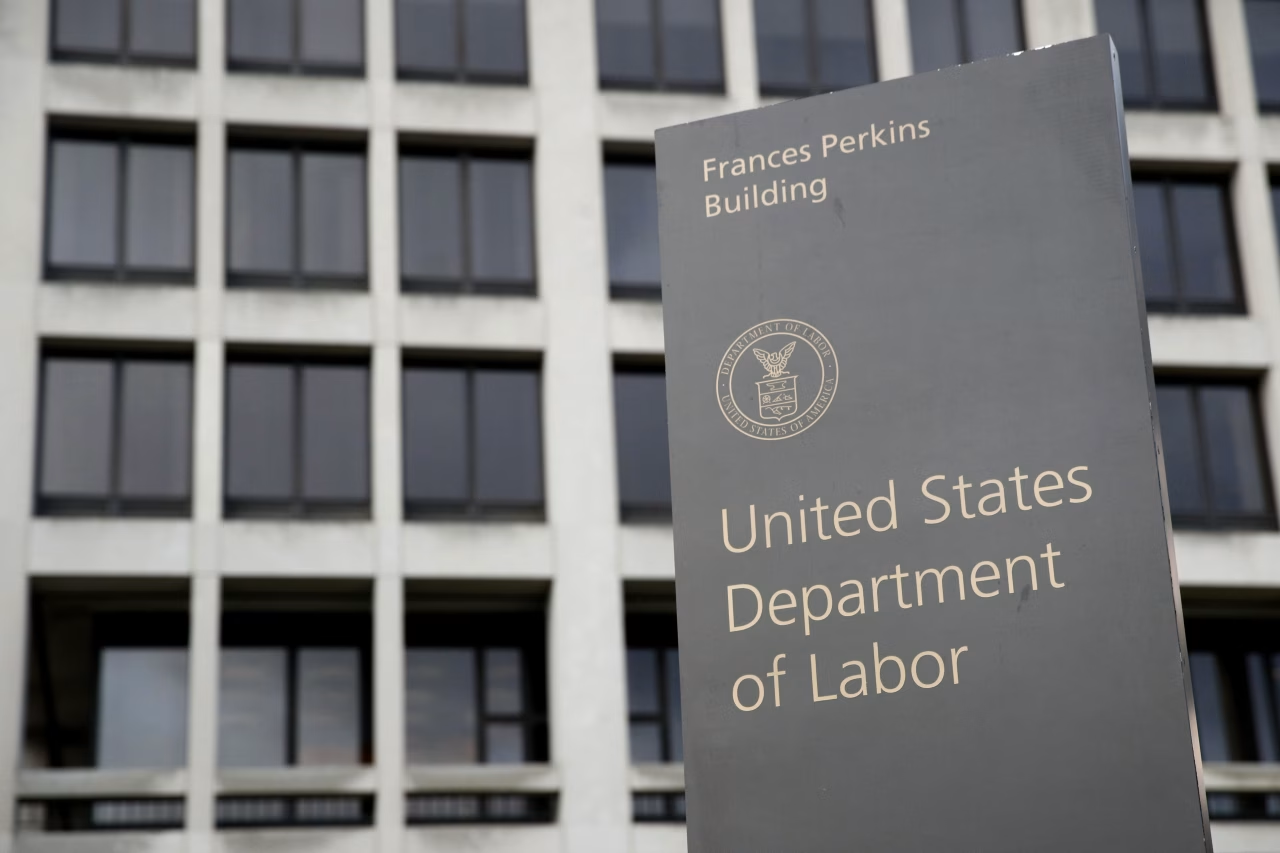
According to the BLS, the preliminary job gains reported throughout 2024 and early 2025 were significantly overstated, particularly in key sectors such as leisure and hospitality (-176,000 jobs), professional and business services (-158,000), and retail trade (-126,200). Overall, most sectors saw downward revisions, though small gains were reported in transportation and warehousing, as well as in utilities.
These revisions follow a similar move made last year, when the BLS revised its 2023 data to reflect 818,000 fewer jobs than initially reported, later adjusted to 598,000 in the final February 2025 benchmark. The agency explains that these large-scale corrections are part of its routine benchmarking process, which occurs annually and is meant to reconcile monthly survey-based estimates with more definitive employer-reported data.
This comes as criticism of the BLS has escalated, particularly from President Donald Trump, who last month fired BLS Commissioner Erika McEntarfer, accusing the agency of manipulating data for political reasons. Trump has repeatedly argued that the BLS was publishing “phony” numbers under the Biden administration to obscure economic weaknesses. Following the latest revision, the Trump White House issued a statement calling the BLS “broken” and renewing calls for agency-wide reform and leadership overhaul.
Despite this, economists and former officials have pushed back strongly on these accusations, noting that revisions are a normal and necessary part of the statistical process. They stress that the BLS operates independently and follows a transparent methodology that includes revisiting and correcting data when better sources become available.
Related posts:
 Updates From Middle East
 Annual US Threat Assessment Again Identifies China as Largest Threat to US National Security, Warns of Growing Military Power
 Trump Fires Head of Bureau of Labor Statistics After Disappointing US Jobs Report
 A Deep Dive: Influencers and “Independent” Journalists on Both Sides Being Paid to Advance Political Talking Points