Already a subscriber? Make sure to log into your account before viewing this content. You can access your account by hitting the “login” button on the top right corner. Still unable to see the content after signing in? Make sure your card on file is up-to-date.
US ports and cargo ships are under a mounting barrage of attempted cyberattacks, with some ports reporting thousands of attempts a day as officials warn AI could make the threat worse.
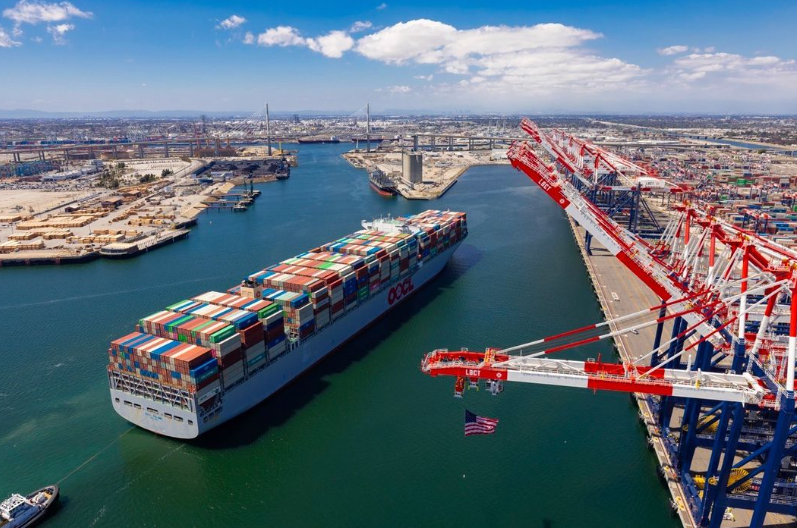
Getting into it: First reported by the Financial Times, the Port of Corpus Christi in Texas (the largest US gateway for crude oil exports at about 2.3 million barrels a day) says it’s being targeted “hundreds if not thousands” of times daily by “known bad actor” states and groups. Attackers are scanning the port’s networks for openings and impersonating top executives in emails to get employees to let them in. The Port of Los Angeles, the country’s busiest, said it stopped 120 million attempted attacks in August, almost twice what it saw in a typical month in 2023.

Some attacks have still gotten through. North Carolina Ports was hit in August, slowing gate traffic and pushing workers back to processing cargo by hand. Separately, the Coast Guard and FBI investigated breaches on two US-bound oil tankers near the Strait of Gibraltar. Maersk said this month that hackers had stolen data from its systems. The Coast Guard says maritime cyber incidents rose 17% last year, and experts have tied hacking campaigns against the shipping industry to Iran, North Korea and China.
In response, ports are ramping up their defenses. Corpus Christi, which had zero cyber staff just four years ago, is also keeping “very analogue” backup plans, including radios, binoculars, paper logs and even hand signals to guide traffic through the channel if systems go down.
This all comes after a string of major tech outages in the US, including the FAA ground stop and outages at Microsoft and Chase, none of which have been linked to cyberattacks. It also comes as the FBI last week flagged an AI tool called Artex that hackers are using to run attacks on autopilot.
Related posts:
 Updates From Middle East
 Pentagon-Affiliated Think Tank Warns of China’s Growing Presence in Africa, Cites Concerns Over Potential Military Use of 231 Commercial Ports
 A Deep Dive: Influencers and “Independent” Journalists on Both Sides Being Paid to Advance Political Talking Points
 Panama Seizes Two Ports Operated by Hong Kong–Based Company, China Pissed