Already a subscriber? Make sure to log into your account before viewing this content. You can access your account by hitting the “login” button on the top right corner. Still unable to see the content after signing in? Make sure your card on file is up-to-date.
A top Republican lawmaker is calling on Secretary of War Pete Hegseth to review how the military ships equipment through commercial carriers after F-35 fighter jet parts were diverted to Hong Kong and taken by Chinese authorities.
Getting into it: Sen. Tom Cotton, chairman of the Senate Intelligence Committee, sent Hegseth a letter Tuesday asking the Pentagon to examine five areas: chain-of-custody rules for gear handed off to contractors and commercial shippers, whether it can actually see where a shipment is and which way it’s headed, how route changes get signed off on and reported, what the rules are for sending military cargo through other countries, and protections to stop military gear from ending up in or passing through China and other adversary countries. Cotton, who also sits on the Senate Armed Services Committee, outranks every other Republican who has spoken up about it. The Pentagon said it will respond directly to him.

“Classified and designated sensitive components should receive heightened protections, but all U.S. military material can provide adversaries valuable insight into U.S. weapons systems, logistics, and readiness, as well as access to American troops,” Cotton wrote. “We can’t afford for U.S. military equipment to fall into the hands of a foreign adversary because of vulnerabilities in commercial transportation.”
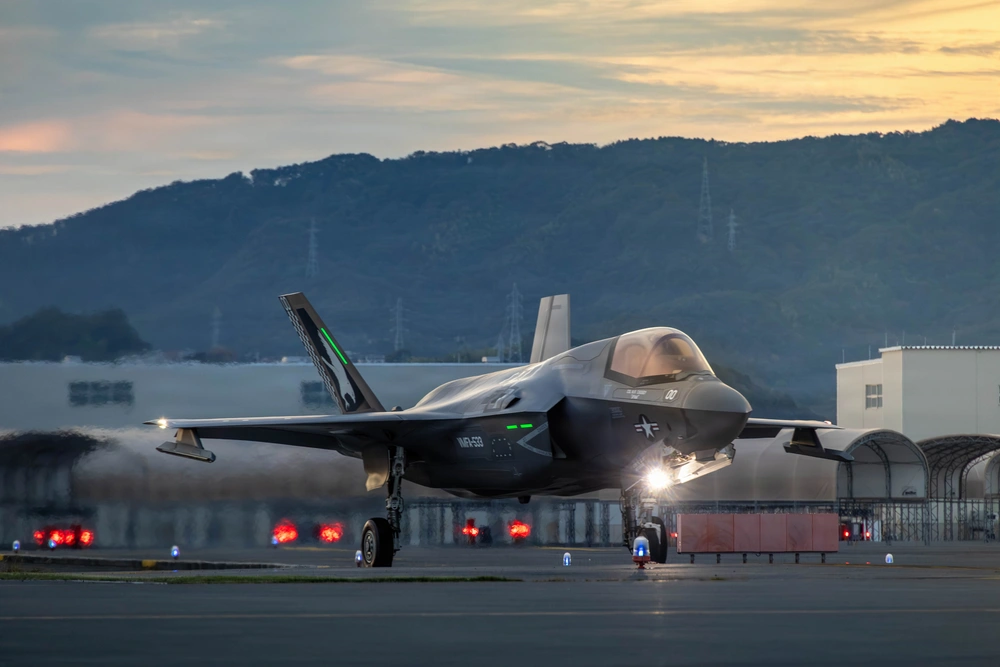
The parts, a cockpit canopy and weapons bay door pulled off one of Australia’s F-35As, were flown by UPS on behalf of Lockheed Martin in late May to be checked out and either fixed or scrapped, but the shipment stopped in South Korea and was rerouted to Hong Kong, where Chinese authorities took them and have not given them back. Both components are reportedly coated with radar-absorbing material tied to the jet’s stealth design, though Australian Defense Minister Richard Marles has said he understood the shipment didn’t contain sensitive parts.
It’s still unclear why the parts were diverted, and nothing public so far shows China had a hand in it. Lockheed says it follows US rules for shipping aircraft parts, and the F-35 Joint Program Office says it is working to recover the components and put “safeguards to avoid a future occurrence” in place.
Related posts:
 Updates From Middle East
 Report: Chinese Government Took Possession of F-35 Stealth Fighter Parts Diverted to Hong Kong
 Pentagon-Affiliated Think Tank Warns of China’s Growing Presence in Africa, Cites Concerns Over Potential Military Use of 231 Commercial Ports
 A Deep Dive: Influencers and “Independent” Journalists on Both Sides Being Paid to Advance Political Talking Points