Already a subscriber? Make sure to log into your account before viewing this content. You can access your account by hitting the “login” button on the top right corner. Still unable to see the content after signing in? Make sure your card on file is up-to-date.
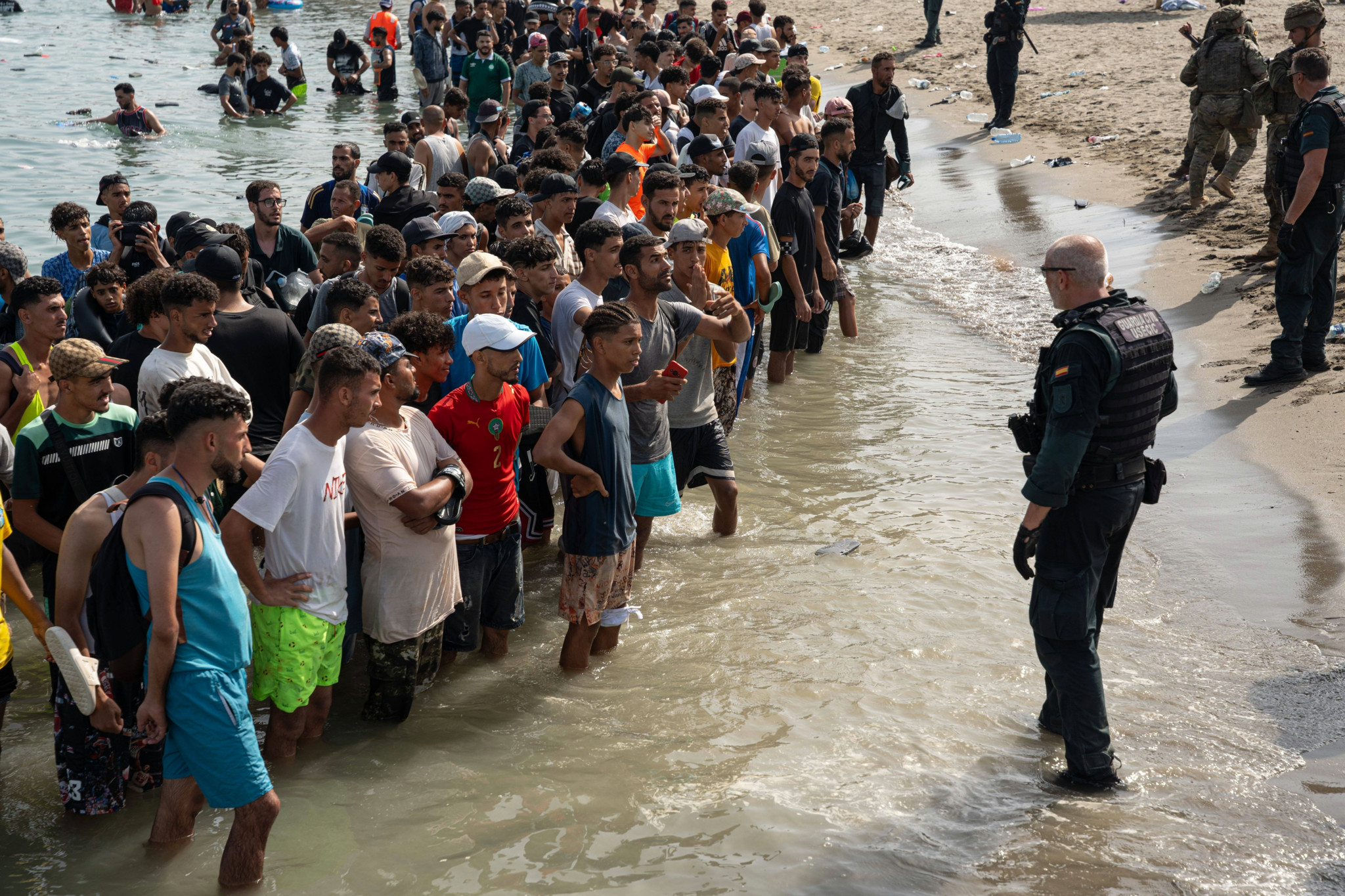
Morocco has denied claims from Spain that its government was involved in the mass illegal crossing into Ceuta in July.
Getting into it: In a statement, Morocco’s foreign ministry said, “Why continue to level accusations against Morocco when no evidence, facts, or reports establish any involvement on the part of Moroccan authorities? Why are illegal migrants not being returned, even though the Moroccan government has officially committed to readmitting them? Why are unaccompanied minors being kept away from their families, when Morocco has urgently requested their return? The answer to these questions is not to be found in Morocco, but rather with the relevant Spanish stakeholders.”

The ministry also said their country would not be “used as a pre-election political pawn, nor does it accept being made the scapegoat in political score-settling,” and accused certain parties and media of an irrational and populist escalation.
Despite all of this, Spain’s prime minister released 40 intelligence and security files Wednesday that included a border police report from July 29 which flagged internal communications among migrant groups trying to organize mass entries that night, and noted almost 1,000 people had swum in from Morocco between July 1 and 28, calling it a drastic upward trend and a consolidated priority threat.
An urgent National Intelligence Center memo the same afternoon warned of calls to enter Ceuta circulating in Facebook groups, one with more than 160,000 members. The CNI notified Moroccan services about those calls on July 29 and a military intelligence document from July 30 said it was “highly likely that the Moroccan authorities are not actively encouraging the migratory wave, but have so far acted in a negligent and passive manner.”
Sánchez has notably avoided blaming Morocco, saying there is no solid proof it was orchestrated. “With the information available at the time, no one could have foreseen the migration crisis that unfolded on the 30th and 31st. No competent body did so. Neither in Spain nor in the EU,” he wrote on X.
His political opposition, which is seeking to take power next year, disagrees. In a statement, Ester Muñoz, the Popular Party’s parliamentary spokeswoman said, “The government knew everything that was happening. They had the information. They are directly responsible for the invasion of Ceuta.”
Related posts:
 Updates From Middle East
 Spain’s PM Blames Russia & Israel for Fueling Last Month’s Mass Illegal Crossing Into Ceuta; Israel & Russia Deny Involvement
 A Deep Dive: Influencers and “Independent” Journalists on Both Sides Being Paid to Advance Political Talking Points
 Global Leaders React to Assassination Attempt on Trump