Already a subscriber? Make sure to log into your account before viewing this content. You can access your account by hitting the “login” button on the top right corner. Still unable to see the content after signing in? Make sure your card on file is up-to-date.
Cilia Flores, the former first lady of Venezuela, has asked a federal judge to release her from a Brooklyn detention center and place her under home confinement while she awaits trial, citing a heart condition her lawyers say has deteriorated badly in US custody.
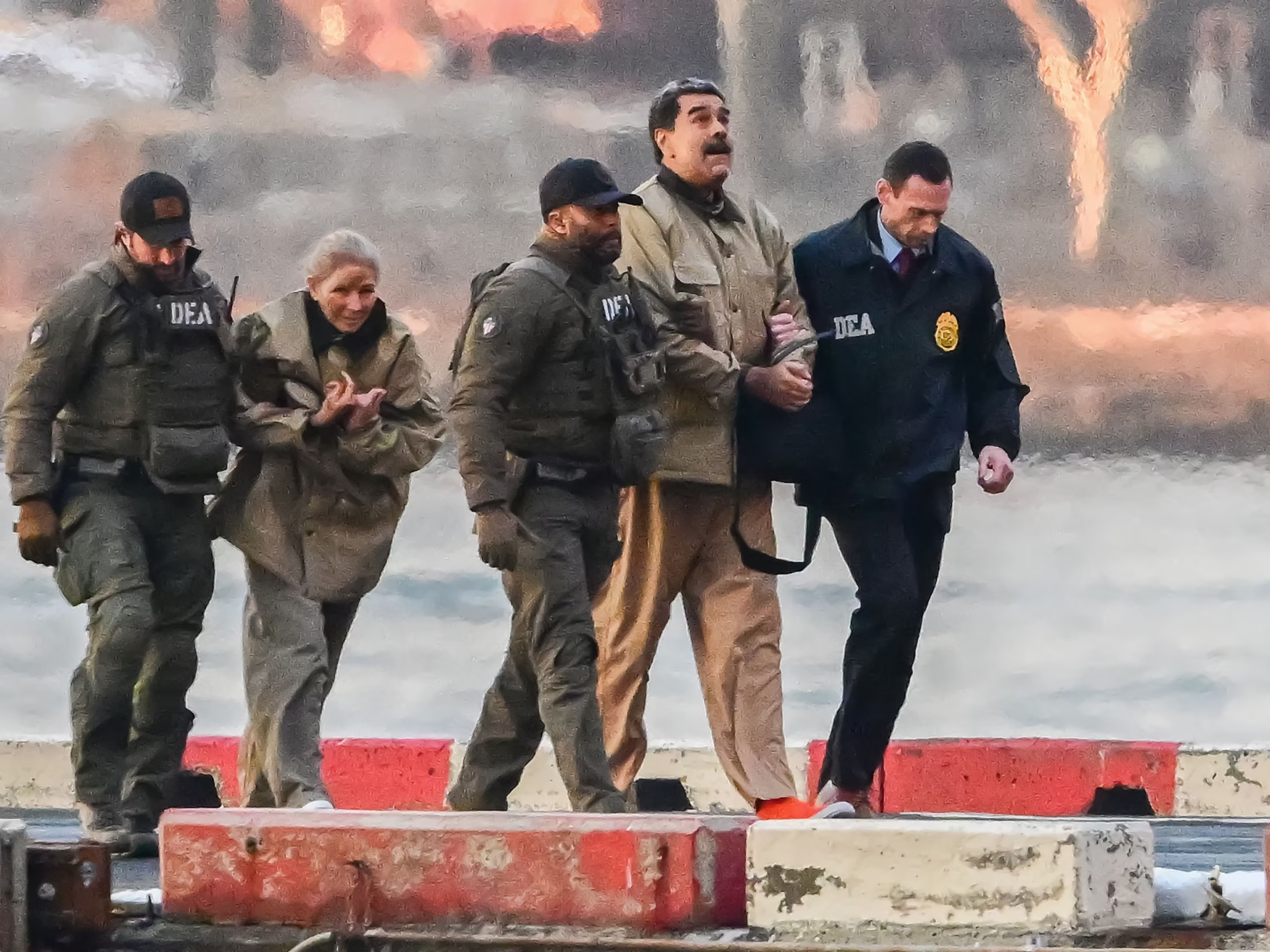
Getting into it: Flores, 69, and her husband, Nicolás Maduro, 63, have been held at the Metropolitan Detention Center since US forces seized them from their Caracas home in a nighttime raid on Jan. 3. Both pleaded not guilty to conspiracy to import cocaine and to possessing machine guns and destructive devices.
In the filing, her attorney Mark Donnelly argued that she has not received a monthly injection to help control the condition, which has now worsened. He said she has lost more than 25 pounds and two molars, sleeps three to four hours a night, and deals with reflux and gastritis.

The filing centers on a July 29 episode in which Flores experienced roughly 30 minutes of intense chest pressure and a feeling that she was not getting enough oxygen. Her legal team, after consulting outside medical experts, believes she may have had a minor heart attack. No lab tests were performed or documented at the time, so it remains unconfirmed. Detention center staff have since taken her off diltiazem and started her on the beta blocker Toprol XL, which her lawyers say reduced her palpitations.
The proposed arrangement would be privately funded by her legal team. Flores would live at an undisclosed residence in the Manhattan federal court district under 24-hour armed guard, GPS monitoring, surveillance cameras, unannounced searches and recorded phone calls except for attorney conversations. She would surrender her travel documents, see only court-approved visitors, and leave only with advance authorization and an escort.
Her lawyers said she would consent to guards using force as a last resort to stop her from fleeing, and argued that Maduro’s continued detention removes any incentive for her to run since she wants to stay and support him.
Prosecutors oppose the release, and a spokesman for the US attorney’s office in Manhattan declined to comment.
All of this comes as the two separately seek dismissal of the indictment, arguing they have immunity as the leader and first lady of a foreign country and challenging the legality of the operation that took them out of Venezuela. In court, Maduro has called himself a prisoner of war. Prosecutors allege he and his co-conspirators spent decades working with violent drug traffickers and corrupt regional officials to move tons of cocaine into the US.