Already a subscriber? Make sure to log into your account before viewing this content. You can access your account by hitting the “login” button on the top right corner. Still unable to see the content after signing in? Make sure your card on file is up-to-date.
The US military has carried out a 12th straight night of strikes on Iran as tensions between the two countries continue to spiral.
Getting into it: In a statement, US Central Command confirmed its forces wrapped up a five-hour round of strikes at 10:30 p.m. ET Wednesday, hitting ships and naval infrastructure, storage facilities holding missiles and drones, radar posts along the coast, and air defense sites. CENTCOM said the attacks were meant to “further degrade Iran’s ability to threaten civilian mariners and commercial vessels transiting regional waters.”
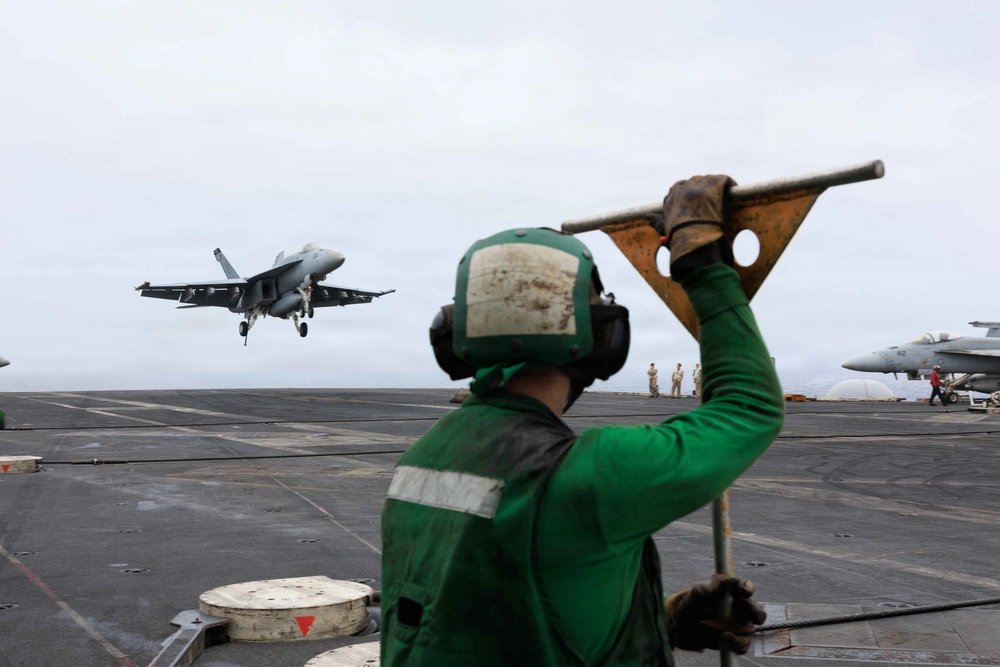
This month alone, American forces have hit hundreds of Iranian military sites on land while reimposing a naval blockade at sea, redirecting nine commercial vessels and disabling one to keep ships out of Iranian ports. More than 50,000 US service members are now deployed across the Middle East.

President Trump laid out a new rule of his own on social media. “From this point forward, any time the Islamic Republic of Iran shoots at a ship in the Strait of Hormuz, whether it be by Missile, Rocket, Drone, or any other device or weapon, the United States will bomb and destroy ONE BRIDGE OR POWER PLANT,” he wrote.
Iran’s joint military command responded that if Trump follows through, Iranian forces will start hitting economic targets around the region, including power grids and oil and gas sites. Foreign Minister Seyed Abbas Araghchi laid out an “eye for an eye” doctrine, posting that “any aggression against Iran, including our infrastructure, will compel a powerful and decisive response.” Parliament speaker Mohammad Bagher Qalibaf, who has led talks with Washington, struck a defiant note, writing that “the situation of the strait will not return to prewar conditions.”

The fighting has also spilled across the region. Iranian missiles landed near the Jordanian port of Aqaba, just across the water from Eilat on the Israeli side, with Jordan’s military saying it intercepted four missiles and four drones. Alerts have also sounded in Bahrain and Saudi Arabia, where authorities told residents of Dammam to shelter.
Secretary of State Marco Rubio said the US is still open to talks, “but right now they don’t seem to be serious about that,” and warned against letting any country seize an international waterway and charge tolls at gunpoint. Trump was blunter from the Oval Office Tuesday, saying the US has “no interest in meeting,” and hinting that Pickaxe Mountain, an unfinished nuclear facility Iran is still carving out of a mountainside near Natanz, could be next.
This all comes as Iran’s Health Ministry puts the toll from the past 11 days at 53 dead, six of them women and three of them children, plus close to 600 wounded. Separately, four US service members have been killed since the fighting resumed, bringing the US military death toll to 18 since the war began in February.
Related posts:
 Updates From Middle East
 Iranian Official Claims US is Framing Iran by Launching Drone Attacks on Gulf Countries; US Says Iran’s Claims Are Bullshit
 Report: Iran Has Rebuilt Its Underground Missile Network Faster Than US Intelligence Expected
 US Reimposes Blockade on Iranian Ports as Strikes Enter Fourth Night