Already a subscriber? Make sure to log into your account before viewing this content. You can access your account by hitting the “login” button on the top right corner. Still unable to see the content after signing in? Make sure your card on file is up-to-date.
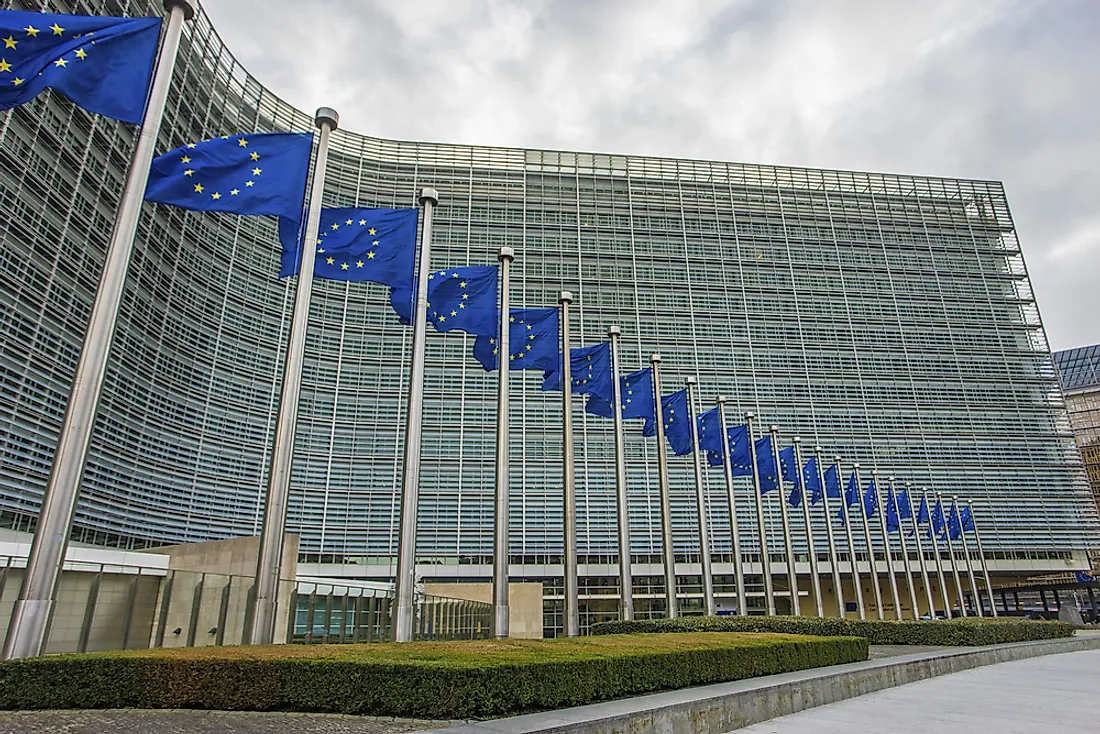
The European Union is moving to restrict children’s social media access across all 27 member states, joining a wave of countries around the world working to get kids off the platforms.
Some shit you should know before you dig in: Back in December, Australia became the first country in the world to put a social media ban into force, blocking children under 16 from platforms like Facebook, Instagram, YouTube, X, Snapchat, and TikTok, with fines up to 49.5 million Australian dollars for noncompliant platforms. The UK followed with its own under-16 ban, which Prime Minister Keir Starmer said could go further than Australia’s, and at least 10 EU countries have announced national plans, with France pledging a ban for under-15s, Spain eyeing under-16 restrictions, and Greece’s under-15 curbs entering force January 1, 2027. Estonia is the lone EU holdout, with its education minister arguing kids “will very quickly find a way to go around” bans. This appears to track with a report conducted in Australia that found a large number of teens were skirting the ban by using VPNs or other means to mask their true identities.

What’s going on now: During a press conference on Monday in Brussels, Commission President Ursula von der Leyen announced the push alongside a 156-page report from an expert panel co-chaired by German child psychiatrist Jörg Fegert and French epidemiologist Maria Melchior. The panel recommended a tiered approach: no screens at all for children under 3, time-limited internet use with a parent, caregiver, or teacher present for ages 3 to 12, and access for ages 13 to 18 only to platforms with safety features already built in, like limits on endless scrolling.
The experts targeted what they call “social media plus,” which sweeps in video games and AI chatbots that use similar addictive features, and also called for an influencer code of conduct, a ban on addictive design, a “youth mode” disabling targeted ads, and ethical standards for AI “companions.” One expert explained that ages 10 to 13 are a “very vulnerable phase” with US research showing “quite a lot of harm,” especially for girls around body image, while the report flagged 13 to 15 as “the peak of vulnerability to mental health problems.”
In a statement, von der Leyen said, “It is clear we need age-appropriate restrictions to platforms. This is not about whether children can access social media. It is about whether and when social media can access our children.” She added, “Childhood is a period of extraordinary and delicate brain development, and during this stage, our children need time in the real world. Time to play, time to build friendships face-to-face, time to make mistakes. Time to shape their own identity before an algorithm shapes them instead.”
Von der Leyen declined to set a specific minimum age but called the panel’s “staged approach” of age-based recommendations “very convincing,” and she’s expected to unveil the draft law at her State of the European Union address in September. From there, the proposal needs sign-off from a majority of member states and the European Parliament, and is expected to draw drawn-out fights over age verification, privacy, and enforcement before any of this actually takes effect.
This all comes as some social media platforms are already pushing back. TikTok’s Northern Europe policy chief Ali Law downplayed concerns in an interview with CNBC. He noted that TikTok was built with “safety by design,” and has over 50 preset safety settings for under-16s, including a one-hour screen time limit and a 10 p.m. “screen takeover,” though younger users can opt to keep scrolling past the warnings.
Meta and YouTube have not responded to requests for comment.
Related posts:
 Surgeon General Calls for Warning Labels on Social Media to Protect Youth
 Group Representing Major Tech Companies Files Lawsuit Against Georgia Over Social Media Law Requiring Age Verification
 Updates From Middle East
 42 Attorneys General Urge Congress to Add Surgeon General’s Warning Label to Social Media