Already a subscriber? Make sure to log into your account before viewing this content. You can access your account by hitting the “login” button on the top right corner. Still unable to see the content after signing in? Make sure your card on file is up-to-date.
Israel has escalated its military campaign against Hezbollah in Lebanon, pounding the country with more than 100 strikes overnight and pushing ground troops past the ceasefire line after Prime Minister Benjamin Netanyahu ordered the military to ramp up attacks.
Some shit you should know before you dig in: If you’re unaware, Hezbollah is an Iran-backed Lebanese political party and armed militia rolled into one, with its own weapons, fighters, tunnels, and command structure. Despite being a designated terrorist organization by the West, Hezbollah holds seats in Lebanon’s parliament and also runs a massive military wing that operates totally independently of the Lebanese state (with many agreeing it is more powerful than Lebanon’s official army). The current Lebanese government actually came to power on a platform of disarming Hezbollah, and Israel has made the group’s disarmament a central demand in any long-term peace deal. The pressure isn’t new. Back in 2006, the UN Security Council ordered Hezbollah to disarm, but the group has consistently refused. They’re dragging their feet now too, saying they won’t even discuss laying down their weapons until Israel stops striking Lebanon and withdraws its troops entirely.

What’s going on now: In a late night address, Netanyahu said, “We are at war with Hezbollah” and vowed to “press on the pedal even more” and deliver “a crushing blow.” Shortly after Netanyahu’s comments, the Israeli air force followed up by hitting over 100 Hezbollah targets in southern Lebanon and the Bekaa Valley to the east in a single overnight blitz, taking out arms depots, command hubs, and other locations, marking one of the most intense rounds of bombing Israel has run since the truce mediated by Washington took hold back in April.
Lebanon’s health ministry said at least 31 people were killed in the latest attacks, including several children, with 12 killed in the Bekaa Valley town of Mashghara (among them members of a single family) and 14 more in the southern town of Burj al-Shamali. The IDF also issued mass evacuation orders covering the major southern city of Nabatieh and more than a dozen surrounding towns, with Israel’s Arabic-language military spokesman saying Hezbollah’s repeated ceasefire violations had left “no choice but to act.”
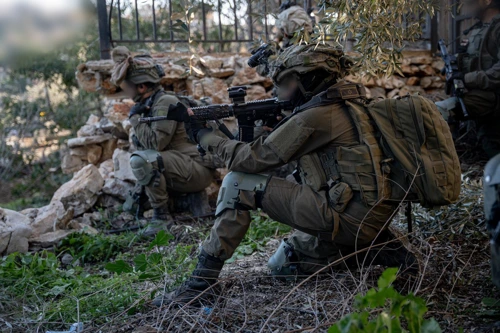
On the ground, Israel confirmed for the first time that its troops have crossed the so-called Yellow Line, the buffer area established under the April ceasefire that extends several miles into southern Lebanon, with officials saying forces are now operating beyond it to push Hezbollah further back from the border. Netanyahu suggested Israel may hold onto some of the newly seized terrain to “fortify the security buffer zone” protecting northern Israeli communities.

Driving the escalation is Hezbollah’s growing use of cheap fiber-optic drones, which Israel’s jamming tech can’t really touch and which have killed Israeli soldiers and battered northern villages. One IDF official admitted to Israeli media that Israel is essentially “defenseless” against the threat, with the country resorting to “makeshift methods” while its largest defense contractor, Elbit Systems, races to develop laser-based countermeasures.
The Lebanon escalation lands just as the US and Iran inch closer to a deal to end the broader US-Israeli war on Iran, with Iranian officials telling The New York Times any deal would need to shut down combat everywhere at once, Lebanon included. Worth noting, military reps from both Israel and Lebanon are sitting down at the Pentagon on Friday with the US running point, and a different batch of political negotiations is on the calendar for the following week.
This all comes as the cumulative toll of the war (which erupted on March 2 when Hezbollah fired rockets in solidarity with Iran) has now reached at least 3,213 dead and more than 9,700 wounded in Lebanon, with over a million Lebanese displaced. Israel has lost 23 troops, one defense contractor, and two civilians.
Related posts:
 Updates From Middle East
 Israel Renews Strikes in Lebanon, Vows to Maintain Permanent Military Presence in Gaza Until All Hostages Are Released
 US Calls on Americans in Lebanon to Leave Immediately, Follows Hezbollah Launching Rockets at Israel
 Israel Delays Withdrawal from Lebanon, Citing Hezbollah’s Ceasefire Violations; Hezbollah Blames Israel for Non-Compliance