Already a subscriber? Make sure to log into your account before viewing this content. You can access your account by hitting the “login” button on the top right corner. Still unable to see the content after signing in? Make sure your card on file is up-to-date.
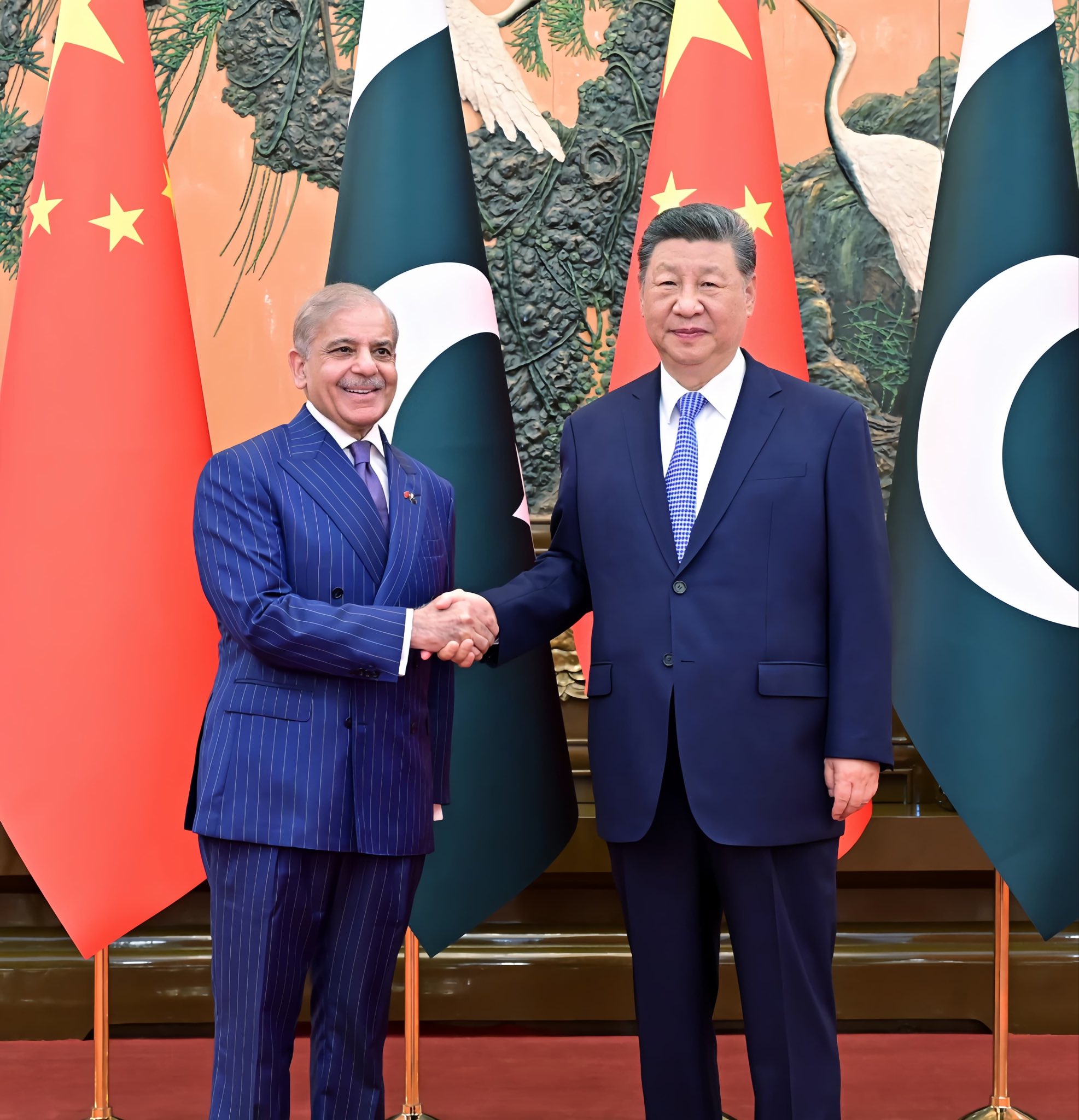
Chinese President Xi Jinping and Pakistani Prime Minister Shehbaz Sharif have vowed to deepen their countries’ ties amid new agreements to expand their joint economic corridor and develop Pakistan’s Gwadar port into a regional connectivity hub.
Getting into it: The two leaders reached what they called a “new broad consensus” on deepening the China-Pakistan Strategic Cooperative Partnership in a joint statement issued Tuesday, as Sharif wrapped up a four-day visit to China. Both sides agreed to push forward the China-Pakistan Economic Corridor (CPEC), one of the marquee pieces of Beijing’s Belt and Road program, including upgrading the 1,300-kilometer Karakoram Highway and building out the Gwadar port (which sits close to the Strait of Hormuz).
The visit comes at a pivotal moment for Pakistan, which is chasing Chinese money even as it manages friction with Afghanistan and plays mediator in the US-Israel war on Iran. Notably, China used the occasion to praise Pakistan’s diplomatic role, saying it “appreciated Pakistan’s efforts in facilitating the temporary ceasefire between the US and Iran and holding the Islamabad Talks.”

The statement also leaned heavily into shared geopolitical positioning, with both countries agreeing to promote “an equal and orderly multipolar world” while opposing “unilateral actions” by other nations. Pakistan, for its part, doubled down on the one-China principle, describing Taiwan as an “inalienable” part of China and rejecting any move toward Taiwanese independence, and it lined up behind Beijing on Xinjiang, Tibet, Hong Kong, and the South China Sea. In return, China reaffirmed its “unwavering support” for Pakistan’s sovereignty and security.
The closer alignment really pissed off India, which objected to the joint statement’s references to the disputed Jammu and Kashmir region. In the statement, Pakistan had briefed China on the “latest developments” in Kashmir, and China responded by reiterating that it views the dispute as one “left over from history” that should be “properly and peacefully resolved in accordance with the UN Charter, relevant UN Security Council resolutions and bilateral agreements.” That framing prompted India’s External Affairs Ministry to say, “The Union Territories of Jammu & Kashmir and Ladakh have been, are and will always remain integral and inalienable parts of India.” It added, “no other country has the locus standi to comment on the same.”
Indian officials also blasted the CPEC projects, some of which run through territory India claims as its own, as an attempt to “legitimize Pakistan’s illegal and forcible occupation,” and dismissed the statement’s mention of “trans-boundary water resources cooperation,” pointing out that China and Pakistan don’t even share a border (the relevant rivers pass through Indian territory).
Related posts:
 India & Pakistan Tensions Heat Up, Pakistan Says It Will Only Use Nukes if Its Existence Is Threatened
 India Downgrades Diplomatic Ties with Pakistan Following Terror Attack Killing 26 People in Kashmir, Closes Border & Warns of Response
 US Calls on India and Pakistan to De-Escalate Tensions
 Updates From Middle East