Already a subscriber? Make sure to log into your account before viewing this content. You can access your account by hitting the “login” button on the top right corner. Still unable to see the content after signing in? Make sure your card on file is up-to-date.
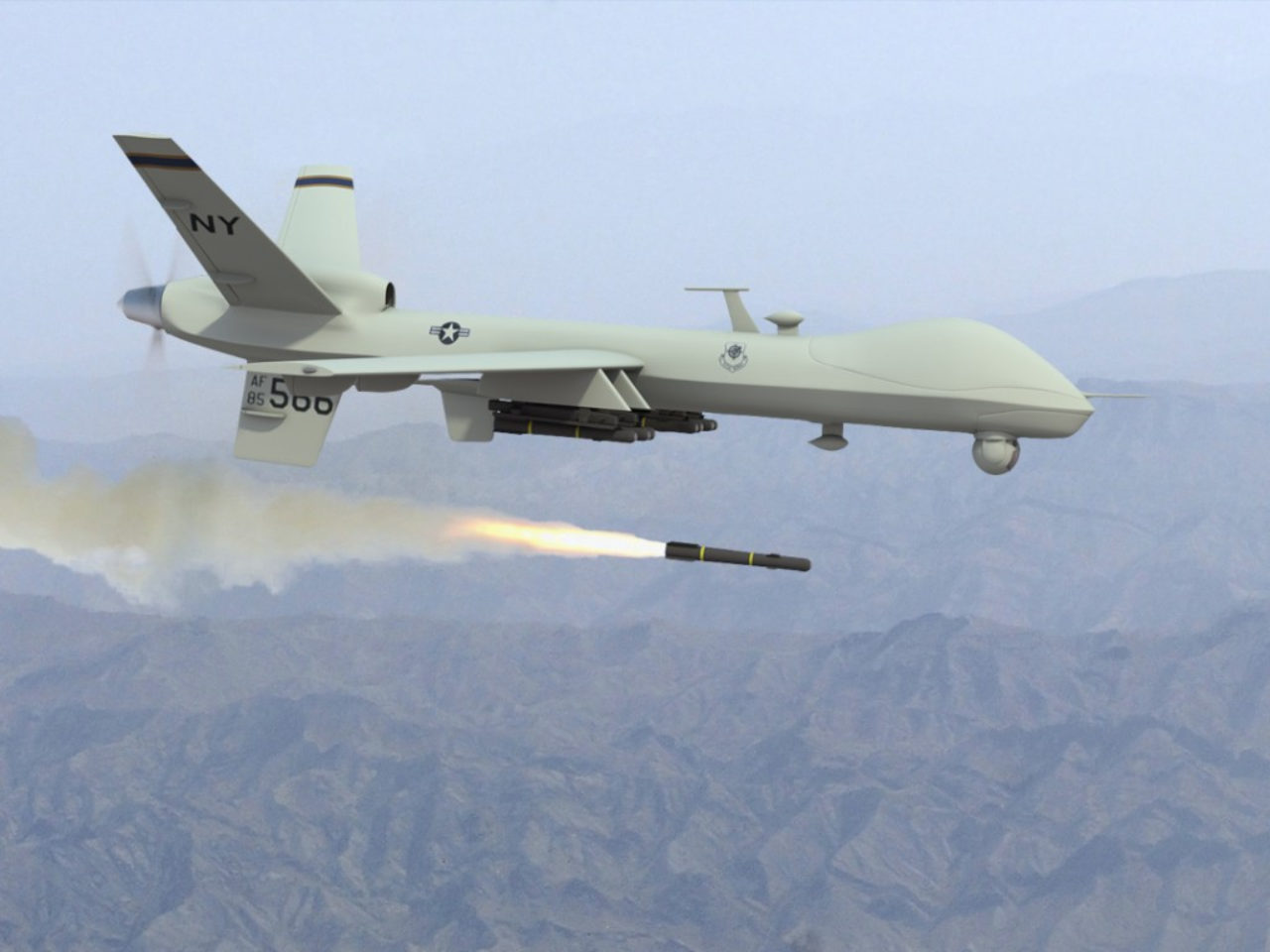
The United States and the Nigerian military have announced that they carried out additional airstrikes in northeastern Nigeria targeting ISIS just two days after another joint operation killed the group’s second in command.
Some shit you should know before you dig in: President Trump has spent the past several months publicly accusing the Nigerian government of allowing the mass killing of Nigerian Christians and has repeatedly threatened to send the US military into Nigeria “guns-a-blazing” to stop it (though the Nigerian government has rejected the broader framing, noting that people of all faiths in Nigeria have been victims of armed groups). The Trump administration first acted on the rhetoric by carrying out airstrikes against ISIS-affiliated fighters in northwestern Nigeria’s Sokoto State on Christmas Day 2025 in coordination with Nigerian forces, and has since deployed approximately 200 US troops (along with Special Operations commandos) to the country to support and train Nigerian forces in fighting jihadist groups. Over the weekend, President Trump announced the death of Abu-Bilal al-Minuki, who he described as “the second in command of ISIS globally.”
According to three US officials cited by The New York Times, the raid involved roughly two dozen American and Nigerian Special Operations forces (with the US contingent including Navy SEAL Team 6 operators) who arrived by helicopter at a pair of small islands on Lake Chad where al-Minuki was hiding with around three dozen of his fighters. A firefight ensued and went on for nearly three hours, and when it became apparent that al-Minuki had no intention of surrendering, US forces dropped an airstrike on him rather than let him slip away. Zero US or Nigerian casualties were reported.
On May 18, #AFRICOM, conducted counter terrorism efforts in coordination with Nigeria against an ISIS fighter camp in NE Nigeria. No U.S. or Nigerian forces were harmed.
— U.S. Africa Command (AFRICOM) (@USAfricaCommand) May 19, 2026
Full press release: https://t.co/uDJBlRaQAU#AFRICOM #Nigeria #CounterTerrorism pic.twitter.com/pQ1kKksbP7
What’s going on now: AFRICOM announced the Sunday follow-up strikes in a Monday statement, confirming that the additional “kinetic” operations had specifically targeted ISIS militants and that no US or Nigerian forces were harmed. “The removal of these terrorists diminishes the group’s capacity to plan attacks that threaten the safety and security of the US and our partners. AFRICOM remains committed to leveraging specialized US capabilities in support of our partners to defeat shared security threats.”
Thermal video released by AFRICOM appears to show a missile slamming into three suspected ISIS fighters during the strike. The Nigerian Defence Headquarters separately confirmed that more than 20 ISIS/ISWAP fighters had been killed in the Sunday strikes, with spokesman Samaila Uba explicitly framing the new strikes as a direct extension of the Friday operation against al-Minuki.
Military analysts noted that this weekend’s strikes are a notable departure from how the Trump administration had previously described US involvement in Nigeria, which had officially been pitched as intelligence sharing, training, and technical support rather than active combat operations on the ground in Africa.
This all comes as global conflict monitor ACLED recently flagged West Africa as the planet’s hottest zone for Islamist militant activity, with the group’s latest report showing ISIS operations across Africa hit an all-time peak in the opening months of 2026, and as Nigeria is simultaneously dealing with a separate wave of mass kidnappings by criminal gangs known as “bandits.”
Related posts:
 Updates From Middle East
 US Sends Military Personnel to Nigeria to Advise & Train Soldiers Fighting Terrorists
 US Designates Nigeria as Country “of Particular Concern” Over Persecution of Christians; Trump Blames “Radical Islamists”
 Nigeria Pushes Back on Trump’s Statements About Christian Persecution in the Country