Already a subscriber? Make sure to log into your account before viewing this content. You can access your account by hitting the “login” button on the top right corner. Still unable to see the content after signing in? Make sure your card on file is up-to-date.
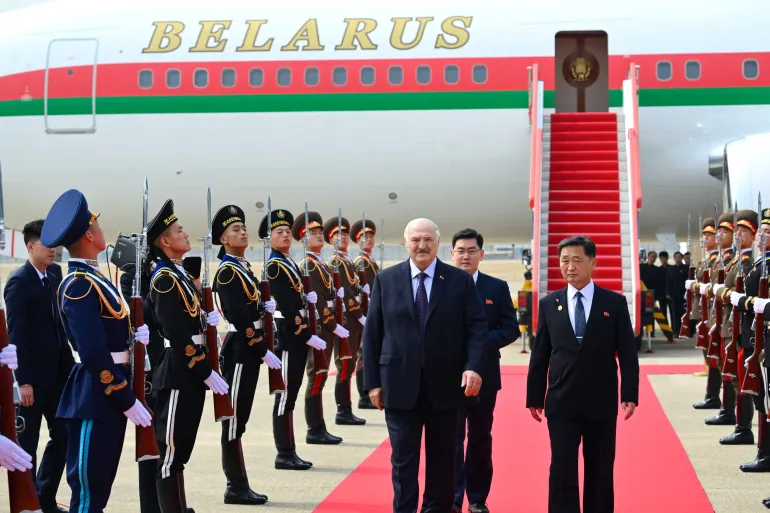
Belarusian President Alexander Lukashenko has arrived in North Korea for high-level talks with Kim Jong Un.
Some shit you should know before you dig in: One thing that North Korea and Belarus have in common is their close alignment with Russia, both politically and militarily, particularly in the context of the war in Ukraine. Russia has actively strengthened ties with North Korea in recent years, with Pyongyang supplying Moscow with artillery shells, missiles, and even troops to support its war effort, making it a key contributor on the battlefield. At the same time, Belarus has deepened its already tight relationship with Russia to the point where some describe it as a “vassal state” of the Kremlin. Belarus has allowed Russian forces to use its territory as a staging ground for the 2022 invasion of Ukraine and has continued to host Russian troops and military infrastructure since then. Additionally, Russia has deployed tactical nuclear weapons in Belarus, the only country in the world to have Russian nuclear weapons staged there.

What’s going on now: President Lukashenko touched down in Pyongyang, where he was greeted by senior North Korean officials, a military ceremony, and a personal welcome from Kim Jong Un. The two leaders held formal talks centered on expanding bilateral relations, with both sides saying that the current global climate is “pushing them closer together.” The visit marks Lukashenko’s first official trip to North Korea and follows earlier meetings between the two countries.
During the visit, Belarus and North Korea are expected to sign a “treaty of friendship” along with roughly ten additional agreements aimed at boosting cooperation across political, economic, and potentially military sectors. These deals are likely to focus on trade areas such as food, pharmaceuticals, and industrial collaboration, while also laying the groundwork for longer-term strategic coordination. Officials from both countries have framed these agreements as the start of a more structured and institutional partnership moving forward.
Each side appears to be pursuing clear goals through the meeting. North Korea is likely seeking expanded economic support, access to goods, and broader diplomatic backing as it continues to navigate heavy international sanctions. Belarus, meanwhile, is looking to diversify its economic partnerships, demonstrate it is not isolated on the global stage, and strengthen alliances outside of the Western sphere.
Related posts:
 Annual US Threat Assessment Says Russia Has ‘Upper Hand’ in Ukraine, Circumvents Sanctions via China & BRICS Nations
 Updates From Middle East
 Top State Department Official on North Korea Policy Warns of Closer Ties with Russia Empowering Kim Jong Un to Test New Limits with South Korea
 North Korea Rejects Personal Letter From Trump to Kim Jong Un