Already a subscriber? Make sure to log into your account before viewing this content. You can access your account by hitting the “login” button on the top right corner. Still unable to see the content after signing in? Make sure your card on file is up-to-date.
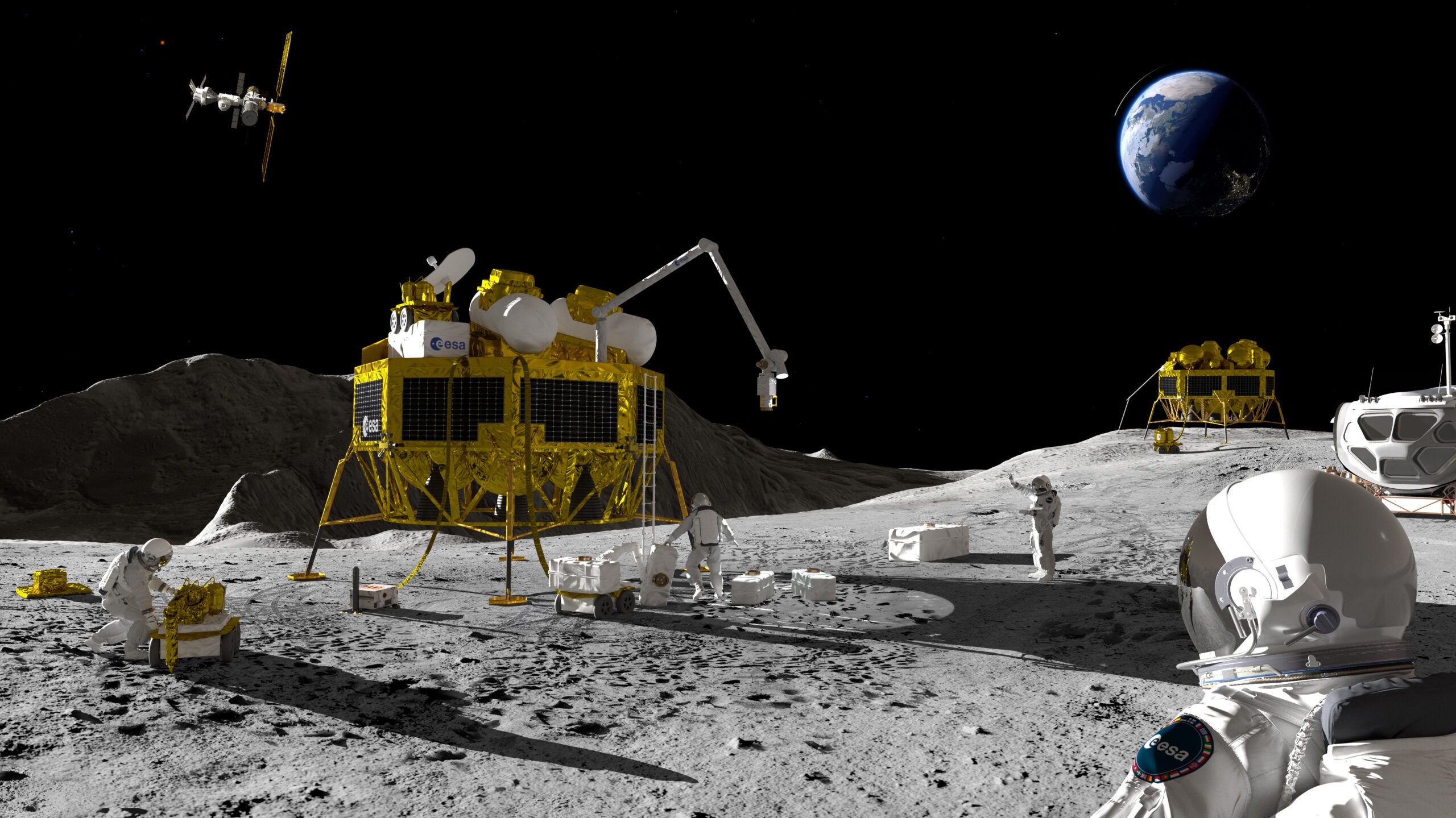
NASA has announced it will build a permanent base on the Moon’s surface in an effort to establish a sustained human presence and pave the way for future missions to Mars.
Getting into it: In a press release, NASA said it is shifting away from its original plan to build the Lunar Gateway, a space station orbiting the Moon, and will instead focus on building infrastructure directly on the lunar surface. NASA outlined a three-phase plan to build the base gradually. The first phase, described as “build, test, learn,” will rely on frequent robotic missions to deliver equipment, test technologies, and gather data. This includes sending rovers, scientific instruments, and systems for power, communications, and navigation. The second phase will establish semi-habitable infrastructure, allowing astronauts to stay on the surface for longer periods with regular supply missions. The third phase will expand that into a fully operational, long-duration base, enabling a continuous human presence on the Moon.

NASA officials stressed that the base will not be constructed all at once but will be developed step by step. NASA described this approach as incremental and modular, meaning systems will be added and improved over time as capabilities grow and lessons are learned from earlier missions.
NASA plans to invest about $20 billion over the next seven years in the first two phases, with an additional $10 billion expected for the final phase of building out a permanent base. The agency also aims to increase the frequency of missions, eventually sending astronauts to the Moon as often as every six months to support construction and operations.
This push comes as global competition in space intensifies, particularly with China aiming to land astronauts on the Moon by 2030.
In a statement, NASA Administrator Jared Isaacman said, “The clock is running in this great-power competition, and success or failure will be measured in months, not years.”