Already a subscriber? Make sure to log into your account before viewing this content. You can access your account by hitting the “login” button on the top right corner. Still unable to see the content after signing in? Make sure your card on file is up-to-date.
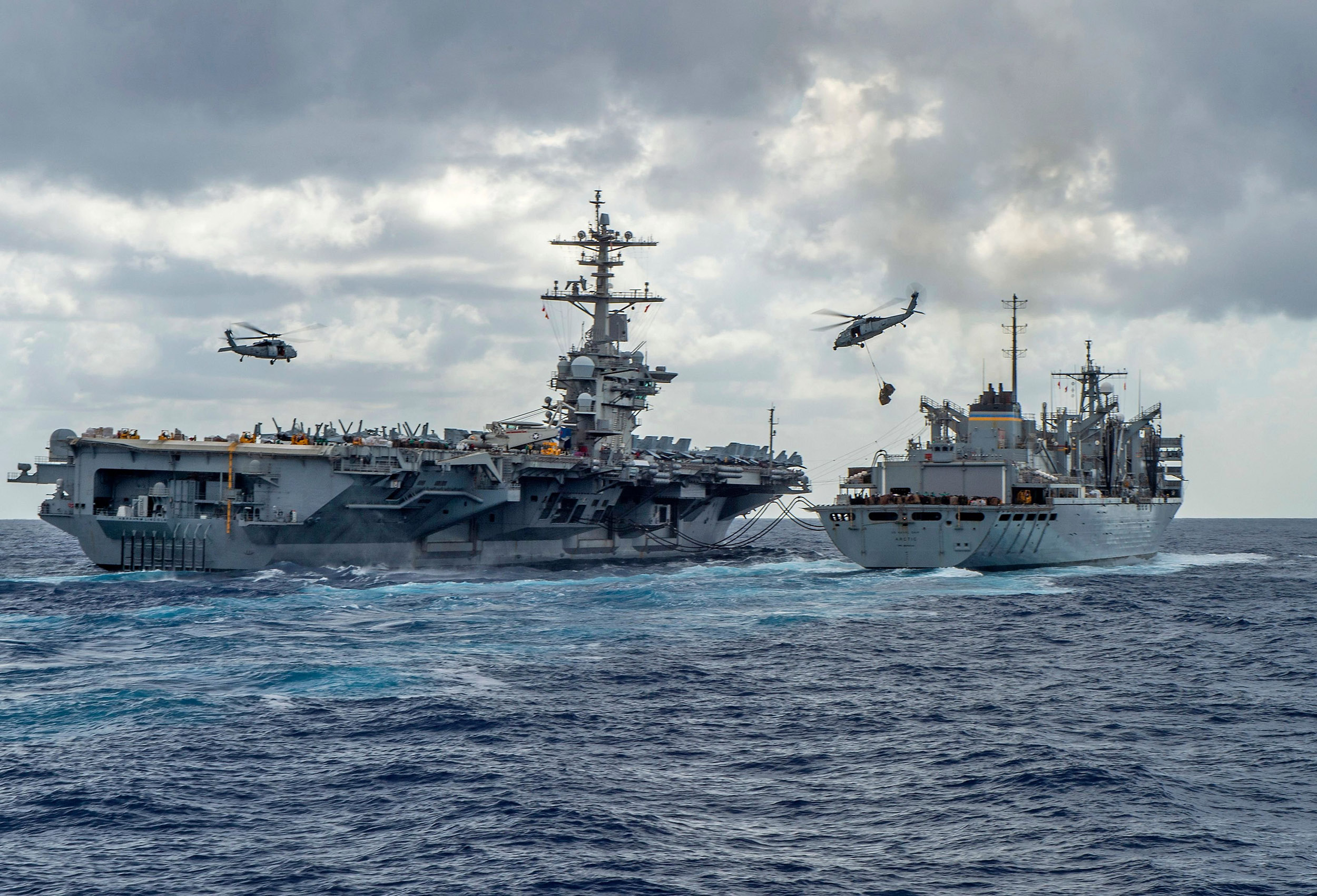
A top US official has said that the United States is now demanding international allies help escort commercial ships through the Strait of Hormuz.
Some shit you should know before you dig in: If you’re unaware, the Strait of Hormuz is one of the most vital maritime chokepoints in the world. Located between the Persian Gulf and the Gulf of Oman, this narrow waterway, which is only about 21 miles wide at its narrowest point, handles roughly 20% of the world’s petroleum and about a third of all seaborne oil shipments. Every day, roughly 100 oil tankers and merchant vessels pass through it, transporting crude oil from major producers like Saudi Arabia, Iraq, the UAE, and Kuwait to markets in Asia, Europe, and beyond. Since the conflict with Iran broke out, there have been no vessels moving through the strait due to concerns that they could become “legitimate targets” for Iran. Over the last few days, multiple tankers have been targeted, with some hit by Iranian one-way attack drones.

What’s going on now: US Ambassador to the United Nations Mike Waltz said the US is pressing other countries to help escort ships through the Strait of Hormuz, arguing the burden of protecting the waterway should not fall solely on the United States. Speaking to CNN’s Jake Tapper on State of the Union, Waltz said the administration wants nations whose economies depend on the route to take part in naval escorts. Waltz said, “Iran can’t hold your economies hostage, and we certainly welcome, encourage and even demand their participation to help their own economies.” He added that conversations with partner countries about potential escort operations are “ongoing.”
President Trump has also publicly pushed allies and major economies to contribute naval forces to secure the strait. Over the weekend, he said “many countries will be sending warships” to patrol the waterway and argued that nations who rely heavily on oil flowing through the route should help protect it. Speaking to reporters, Trump said, “I’m demanding that these countries come in and protect their own territory, because it is their own territory.” He also noted that the United States receives relatively little oil through the route compared with other nations.
Trump specifically pointed to several countries he believes should participate in escort operations, including China, the United Kingdom, France, Japan, and South Korea, along with other partners.
So far the responses from some governments have been cautious. In Japan, Prime Minister Sanae Takaichi said Tokyo has not committed to sending ships, telling parliament: “We have not made any decisions whatsoever about dispatching escort ships. We are continuing to examine what Japan can do independently and what can be done within the legal framework.”
Australia has also ruled out participation for now, with government minister Catherine King saying, “We won’t be sending a ship to the Strait of Hormuz… that’s not something we’re contributing to.”
South Korea’s presidential office said any decision would come after discussions with Washington, stating, “We will communicate closely with the US regarding this matter and decide after a careful review.”
The UK and France have indicated they are still discussing options with allies, while China has not directly responded to Trump’s request and has instead called for a ceasefire in the conflict.