Already a subscriber? Make sure to log into your account before viewing this content. You can access your account by hitting the “login” button on the top right corner. Still unable to see the content after signing in? Make sure your card on file is up-to-date.
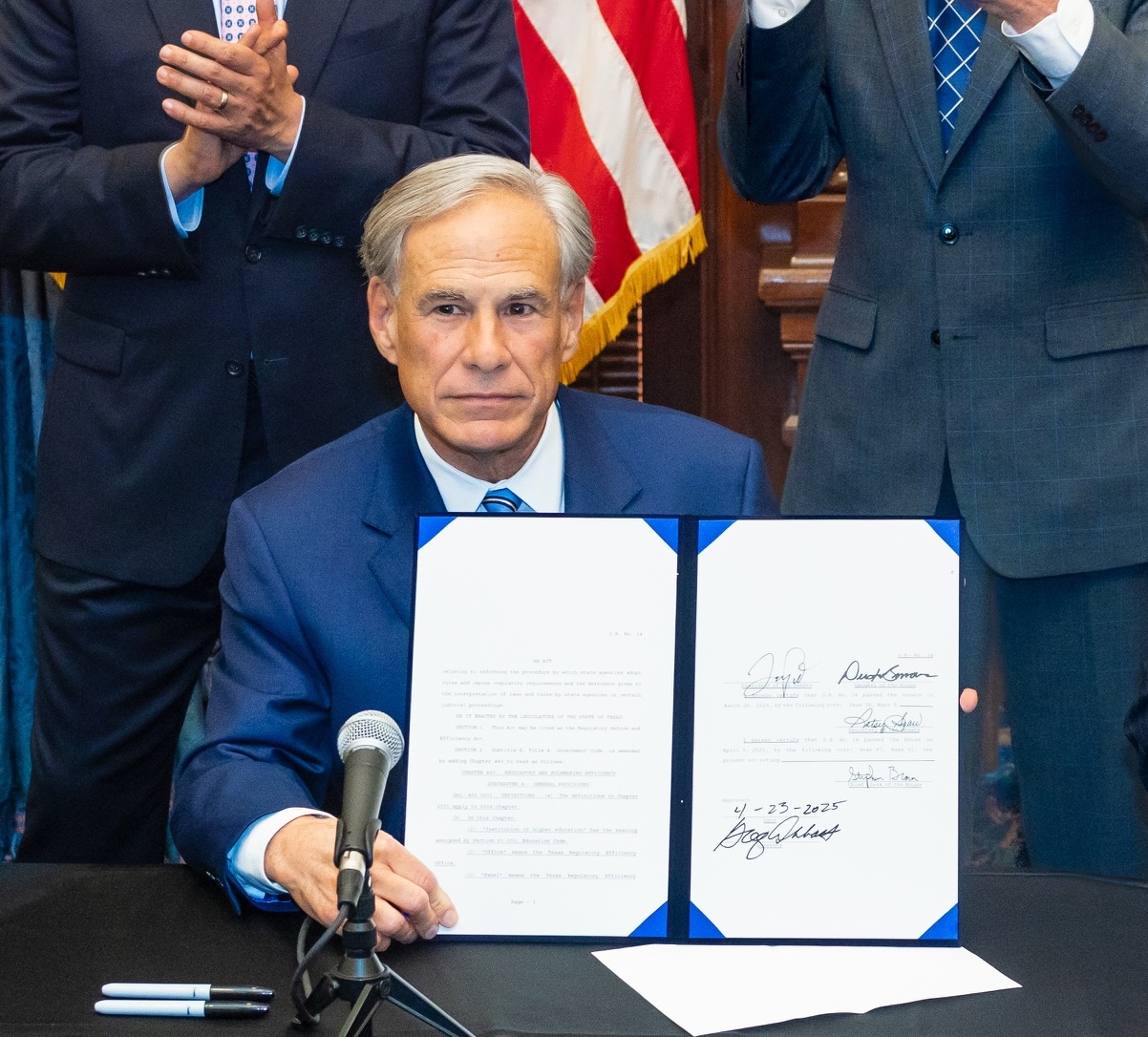
Texas Governor Greg Abbott has announced an investigation and freeze on all new and renewed H-1B visa petitions by state agencies and public universities.
Some shit you should know before you dig in: If you’re unaware, an H-1B visa is a type of US work visa that allows companies to hire foreign workers for “specialty occupations” (typically jobs that require a high level of skill, like tech or engineering). To qualify, the job must usually require at least a bachelor’s degree or equivalent in a specific field, and the employer must prove there’s a genuine need for the worker’s expertise. H-1B visas are granted for an initial period of up to three years and can be extended to a maximum of six years. Critics of the program argue that companies exploit it to replace American workers with cheaper foreign labor, potentially depressing wages and outsourcing jobs that could be filled by US citizens. On the other hand, supporters say H-1B visas are essential for filling talent gaps in highly specialized fields, driving innovation, and keeping American companies globally competitive when qualified domestic workers are not available.

What’s going on now: In a notable development, Governor Abbott has directed all Texas state agencies and public universities to immediately halt any new or renewed H-1B visa petitions until May 31, 2027. This freeze is part of a broader investigation he initiated into alleged abuse of the H-1B visa program, which he described as a “controversy” during a radio interview. Abbott’s administration did not cite a specific incident of fraud but referenced a growing body of“reporting” and concern around how the federal program is being used. The pause, he stated, is intended to ensure that“employment opportunities, particularly those funded with taxpayer dollars, are filled by Texans first.”
To enforce this directive, Abbott ordered all affected institutions to submit detailed reports to the Texas Workforce Commission by March 27, 2026. These reports must include the number of H-1B visa holders currently employed, how many applications and renewals were filed, the visa holders’ countries of origin, their job roles, when their visas expire, and any proof that the agency first attempted to hire a qualified Texas candidate. While the Texas Workforce Commission doesn’t typically oversee or track H-1B visa data (since it’s a federal program), it has been tasked with managing the compliance process and may grant exceptions in writing on a case-by-case basis.
This move has pissed off a lot of universities and hospitals, which warn that the freeze could seriously disrupt operations. Organizations like the Texas AAUP-AFT say the decision threatens the quality of education and research, especially in medical and scientific fields where highly specialized talent is often sourced globally. Immigration attorneys have also raised legal concerns, arguing that the governor may not have the authority to restrict access to a federal visa program and could be overstepping his jurisdiction.
Supporters of the freeze, however, see it as a necessary safeguard against misuse and an opportunity to reevaluate how the H-1B system is applied at the state level. Abbott and other Republicans argue that too many jobs are going to foreign workers when equally capable Texans are available to do the work.
Related posts:
 Updates From Middle East
 A Deep Dive: Influencers and “Independent” Journalists on Both Sides Being Paid to Advance Political Talking Points
 White House Clarifies H-1B Visa Fees After Major US Companies Trip Out
 Trump Administration to Impose New Time Limits on Visas for Foreign Students & Journalists