Already a subscriber? Make sure to log into your account before viewing this content. You can access your account by hitting the “login” button on the top right corner. Still unable to see the content after signing in? Make sure your card on file is up-to-date.
Haiti’s Transitional Presidential Council has officially voted to remove the country’s Prime Minister after a warning from Secretary of State Marco Rubio.
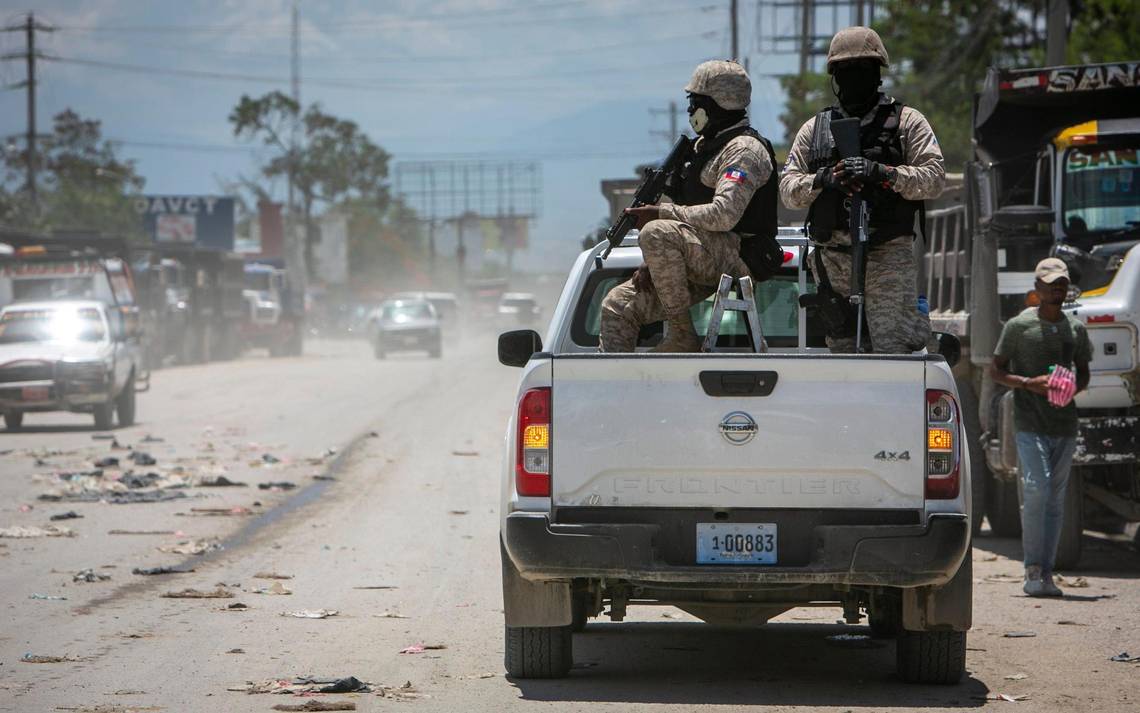
Some shit you should know before you dig in: If you’re unaware, Haiti has been dealing with a multitude of severe security crises, with powerful gangs now controlling over 70% of the capital, Port-au-Prince, and large areas of the central region. These gangs have taken over key infrastructure, displaced millions, and are responsible for at least 8,000 deaths in 2025 alone. In response, Haiti’s government, under the leadership of Prime Minister Alix Didier Fils-Aimé, has attempted to launch a counteroffensive including drone strikes and support from an underfunded UN-backed Kenyan-led gang suppression force. Despite these efforts, many within the Transitional Presidential Council have expressed frustration over the lack of progress in reclaiming gang-occupied territory and restoring public safety. They have openly warned that the council could reconsider Fils-Aimé’s role if the security situation did not improve.

What’s going on now: Earlier today, Haiti’s Transitional Presidential Council announced that a majority of its voting members had approved a resolution to remove Prime Minister Alix Didier Fils-Aimé, a decision taken during a closed-door vote and revealed at a press conference by council members Edgard Leblanc Fils and Leslie Voltaire. They said the council plans to name a replacement within 30 days, arguing that while Fils-Aimé demonstrated competence and energy, the population has not seen tangible improvements in security or daily life. Leblanc emphasized that the decision was made “in the interest of the country,” insisting that Haiti’s international partners would have to respect a sovereign, Haitian-led process.
The vote came just after US Secretary of State Marco Rubio personally called Fils-Aimé to express the United States’ support for him remaining in office. Rubio told the prime minister that Haiti’s gang-driven violence can only be addressed through consistent, strong leadership backed by the Haitian people, and he warned that abrupt changes at the top risk creating a dangerous power vacuum.
The United States has paired that support with warnings to Haiti’s political class, noting that it would view any destabilizing political maneuvers as benefiting gangs, and warned of “steep costs” for politicians who undermine security or the democratic transition.
Other international actors have largely aligned with the United States’ concerns. The United Nations, along with the European Union, Canada, France, Germany, Spain, and the Organization of American States, have urged Haiti’s transitional authorities to act responsibly, avoid power struggles, and prioritize stability and elections.
More to come
Related posts:
 Updates From Middle East
 US Slaps Top Haitian Official With Visa Restrictions Over Alleged Support of Gangs, Official Says Accusations are Bullshit
 UN Launches New Security Mission for Haiti Aimed at Taking on Gangs
 A Deep Dive: Influencers and “Independent” Journalists on Both Sides Being Paid to Advance Political Talking Points