Already a subscriber? Make sure to log into your account before viewing this content. You can access your account by hitting the “login” button on the top right corner. Still unable to see the content after signing in? Make sure your card on file is up-to-date.
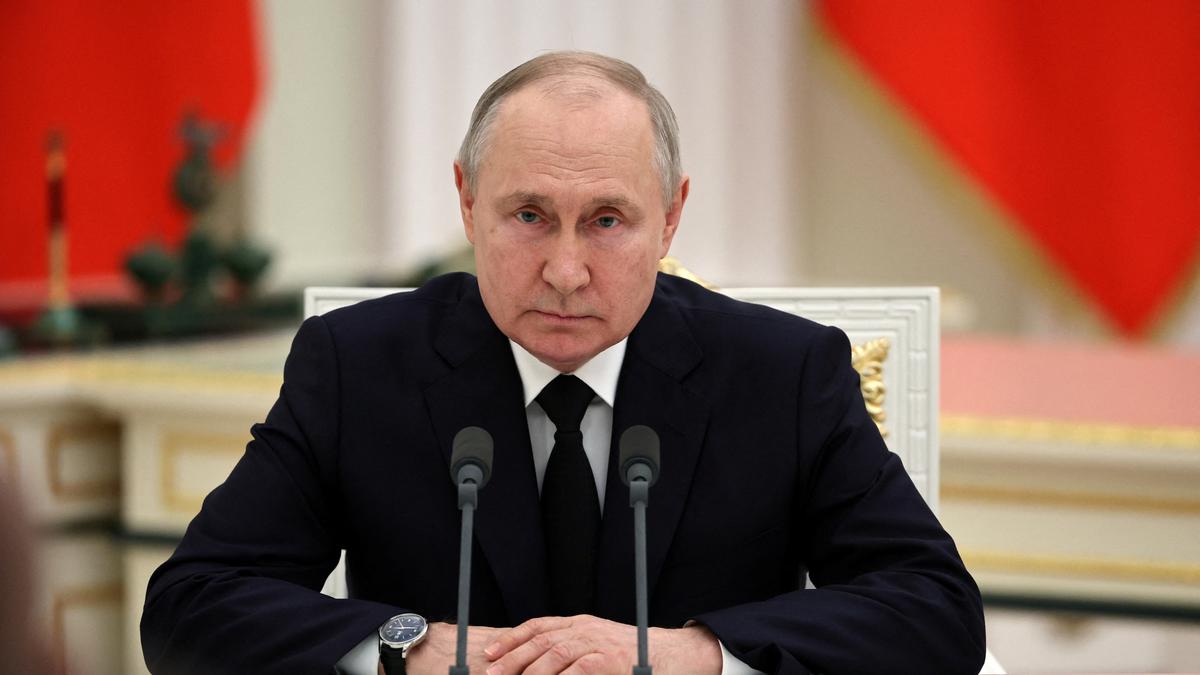
Ukraine has denied allegations by Russia that it attempted a drone attack on President Vladimir Putin’s personal residence.
Here’s what Russia is saying: According to Russian officials, the Ukrainian military launched a coordinated overnight assault using 91 long-range kamikaze drones targeting Putin’s state residence in the Novgorod region. The residence, a secluded and heavily fortified complex often used by Putin, lies deep in Russia’s northwest and is considered one of his most private retreats. Russia claims all incoming drones were intercepted and destroyed by air defense systems, with no casualties or structural damage reported.

Russian Foreign Minister Sergey Lavrov called the attack “reckless” and described it as a sign that Ukraine had fully adopted “a policy of state terrorism.” He warned that the attempted strike marked a significant escalation, saying, “Such reckless actions will not go unanswered. The targets for retaliatory strikes and the timing of their implementation by the Russian armed forces have been determined.” Other senior Russian lawmakers echoed the sentiment, with Sergey Mironov saying, “This was not a warning, it was an attempt at the physical elimination of the president.” Leonid Slutsky, chair of the State Duma’s Foreign Affairs Committee, labeled the strike “an act of state terrorism” and a “provocation not only against Russia but also an effort to undermine the American side’s peace efforts.”
Kremlin aide Yuri Ushakov noted that Putin informed President Trump of the incident in a phone call early the following morning.
Here’s what Ukraine is saying: Despite Russia’s claims, Ukrainian officials have denied any involvement in the alleged drone attack on President Putin’s residence, calling the accusation a politically motivated fabrication. President Volodymyr Zelensky dismissed the incident as “typical Russian lies,” arguing that Moscow is attempting to sabotage progress made in peace negotiations. “It is critical that the world doesn’t stay silent now. We cannot allow Russia to undermine the work on achieving a lasting peace.” He further warned that the Kremlin is likely using the alleged false flag incident to justify renewed strikes against government buildings in Kyiv and other civilian infrastructure.
Notably, some residents living near Putin’s Valdai residence reportedly told independent outlet SOTA that they did not hear any air defense activity overnight. In a region known for tight airspace control and multiple overlapping layers of radar and missile defenses, Ukrainian officials noted that it would be “virtually impossible” for such a massive swarm of 91 drones to penetrate undetected, let alone all be intercepted without a trace.
Other reactions: This all comes as some countries and US officials have issued mixed reactions to Russia’s claims, with responses ranging from skepticism to expressions of support. Rep. Don Bacon (R-NE) openly criticized Trump for appearing to accept Putin’s account, adding that “President Trump and his team should get the facts first before assuming blame. Putin is a well-known boldface liar.” In contrast, the United Arab Emirates condemned the “deplorable attack” and expressed full solidarity with Russia. Nicaragua called the incident a “terrorist act” by Ukraine aimed at undermining peace efforts. Meanwhile, some European officials have privately dismissed Russia’s narrative as implausible, suggesting it could be a calculated effort to sabotage ongoing negotiations rather than a legitimate security breach.
Related posts:
 Updates From Middle East
 Annual US Threat Assessment Says Russia Has ‘Upper Hand’ in Ukraine, Circumvents Sanctions via China & BRICS Nations
 Russia Launches More Drones & Missiles into Ukraine after Trump Criticism; Ukraine Says Civilians Are Being Targeted, Russia Denies It
 Trump & Putin Hold Phone Call Over War in Ukraine