Already a subscriber? Make sure to log into your account before viewing this content. You can access your account by hitting the “login” button on the top right corner. Still unable to see the content after signing in? Make sure your card on file is up-to-date.
Japan and South Korea have confirmed that they scrambled fighter jets in response to a joint air patrol by Russian and Chinese military aircraft near their respective air defense identification zones.
Getting into it: The first incident occurred on Tuesday morning, when two Russian Tu-95 nuclear-capable bombers flew from the Sea of Japan toward the East China Sea to rendezvous with two Chinese H-6 bombers. The aircraft then conducted a coordinated “long-distance joint flight” through the Pacific Ocean, passing between Japan’s Okinawa and Miyako islands. These waters include the Miyako Strait, which is considered international territory, but the route taken was highly sensitive due to its proximity to Japanese airspace. As the bombers moved through the region, they were joined by four Chinese J-16 fighter jets and later accompanied by a Russian A-50 early-warning aircraft and two Su-30 fighters.

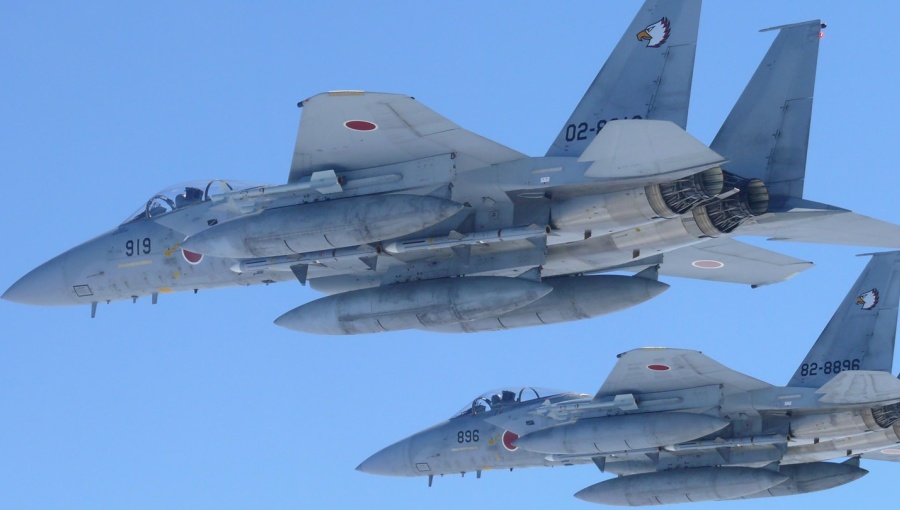
Japan’s Defense Ministry closely monitored the operation and scrambled its own fighter jets to intercept and observe the aircraft. Defense Minister Shinjiro Koizumi condemned the flights as a “show of force” intended to intimidate Japan, calling them a “serious concern” for national security. He also reported that earlier in the week, Chinese aircraft from the Liaoning aircraft carrier locked fire-control radar onto Japanese jets near Okinawa (a hostile act typically interpreted as preparation for missile targeting).

South Korea reported that seven Russian and two Chinese aircraft briefly entered its Air Defense Identification Zone (ADIZ), prompting Seoul to deploy fighter jets as a precaution. Unlike national airspace, an ADIZ is a broader, self-declared buffer zone where foreign aircraft are expected to identify themselves for security purposes, though it does not carry legal weight under international law. South Korea stressed that the aircraft did not violate sovereign airspace but still lodged formal complaints with the Russian and Chinese embassies, citing the frequency and timing of such incursions.
In response, both China and Russia downplayed the significance of the patrols. Beijing said the drills were part of “annual cooperation plans” and intended to “safeguard regional peace and stability.” Moscow echoed that sentiment, describing the exercise as routine and noting that it lasted for eight hours.