Already a subscriber? Make sure to log into your account before viewing this content. You can access your account by hitting the “login” button on the top right corner. Still unable to see the content after signing in? Make sure your card on file is up-to-date.
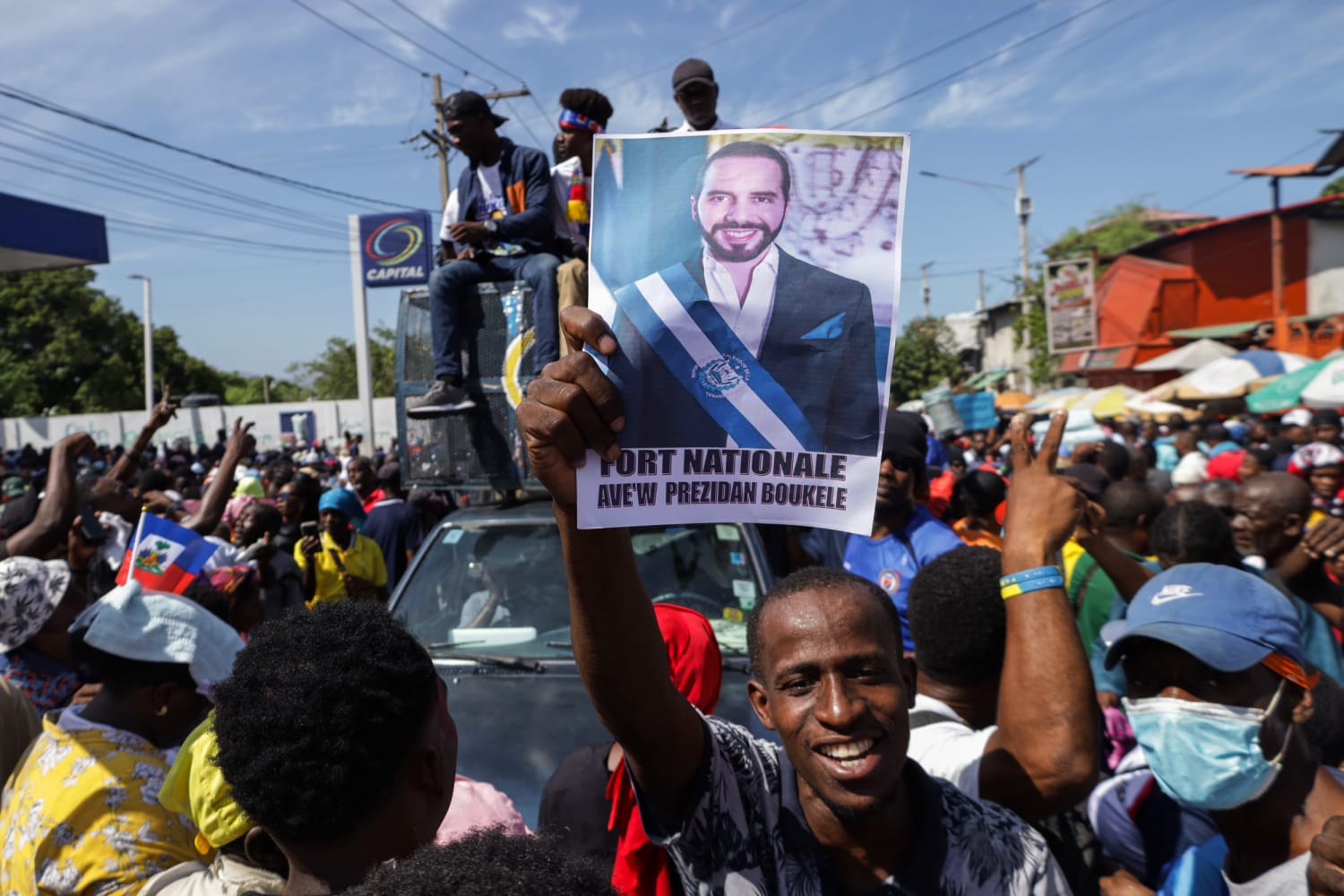
Thousands of Haitians have taken to the streets of Port-au-Prince and several other cities to back Salvadoran President Nayib Bukele and the roughly 2,500 troops he sent to fight Haiti’s gangs.
Getting into it: Marchers carried signs reading “Long live Bukele” and “Down with the gangs,” with some begging him not to pull out, in what was the biggest crowd Haiti’s streets have seen since 2019. A day later, Bukele said his troops used attack helicopters to blow up the mansion of gang leader Jeff Larose, known as “Talibant,” calling it his “gift to the Haitian people” on the anniversary of the country’s final battle for independence.

Bukele sent the troops after four Salvadoran aviation technicians working with the UN-backed Gang Suppression Force were ambushed near Port-au-Prince on Oct. 18 and went missing. El Salvador says its forces will leave once the four are found, but Haitian Justice Minister Patrick Pélissier said there’s “no date” for a pullout and that Haiti will need them at least until next year’s elections. Haiti’s cabinet approved a cooperation deal with El Salvador, though the Salvadoran government says it won’t make the agreement public.
Critics say the operation lacks a long-term plan, and that Bukele’s hardline tactics, which slashed crime in El Salvador but drew pushback from human rights groups, could put civilians at risk. Amnesty International has pressed both governments to spell out when troops are allowed to use force and has called on El Salvador not to target civilians.
Supporters say the deployment is already delivering results Haiti hasn’t seen in years. Pélissier said there have been no civilian casualties in the recent raids and called the operations professional. Salvadoran Vice President Félix Ulloa defended the operation as “legitimate,” brushing off Amnesty’s demand to make the deal public as “false concern for human rights” and saying there’s “a hidden agenda to criticise our operation.”
Related posts:
 El Salvador Changes Nation’s Constitution to Eliminate Presidential Term Limits
 Venezuela Launches Investigation Into El Salvador Over Allegations That Hundreds of Deported Venezuelan Migrants Were Tortured in Prison
 Updates From Middle East
 Democratic Senator Travels to El Salvador to Meet Kilmar Abrego Garcia, Denied Meeting but Meets Vice President Instead